



Roll-ups are when a company acquires smaller companies in the same (or adjacent) industry and merges them into a single entity. This strategy can boost market share and consolidate operations, leading to operational efficiencies, cost reductions, and outsized organic growth.
But executing a successful roll-up is more than just acquiring companies. It takes a solid commitment to education, communication, and collaboration from start to finish. What’s more, sellers have to understand the long-term investment thesis and align with that vision.
In this article, I cover key discussion points, including three tips for scaling your roll-up strategy to build trust with sellers and achieve optimal growth.
#1 Address internal challenges before scaling deal volume
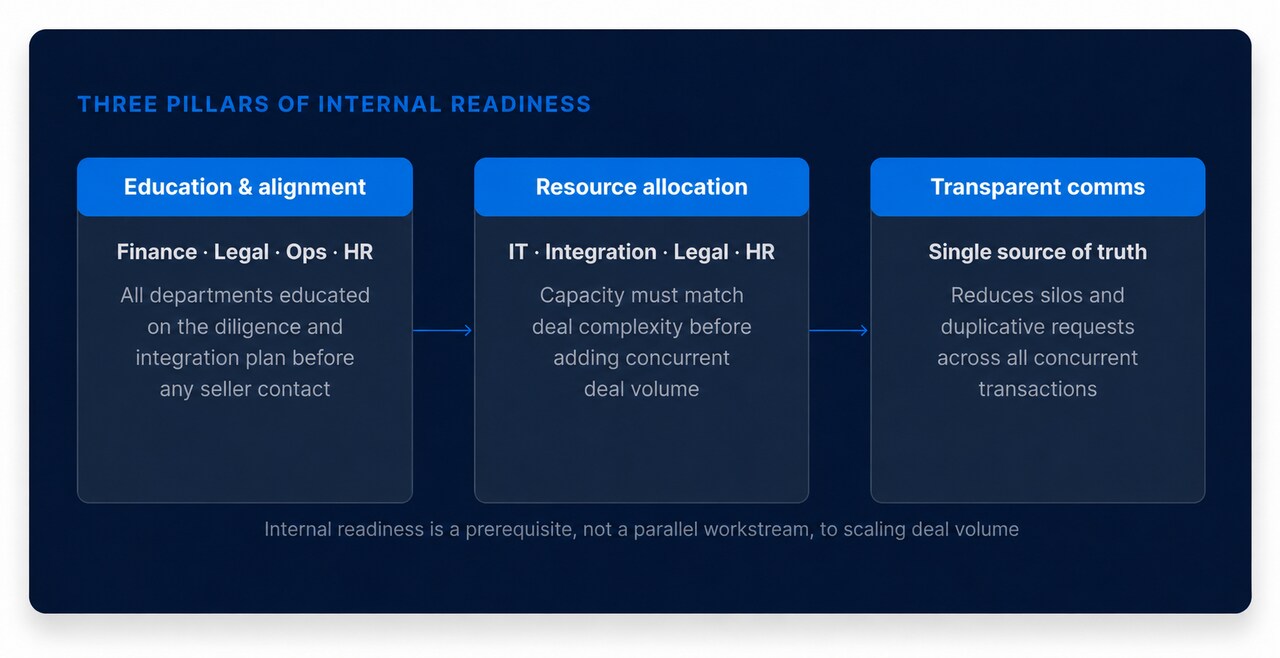
In buyer-led transactions, internal misalignment can be deadly. Below are some common internal challenges Corp Dev teams must overcome if they hope to be successful.
Education and strategy alignment
Internal education, communication, and collaboration are essential for internal alignment. Buyers must clearly communicate direction to sellers and align on the company's goals to avoid complications.
To maintain consistency, each department of your internal team (finance, legal, operations, HR) must know the diligence and integration plan forward and backward. This reduces the risk of confusion and creates a more cohesive transaction.
Allocating resources
When deal sizes increase or become more complex, the resources have to match the transaction. This might mean adapting operations to prepare for any changes that come from an acquisition.
Say a company completes an acquisition without the resources for IT integrations post-close. This leads to system outages and data loss, disrupting day-to-day operations and affecting performance. Investing in more IT integration resources upfront could have mitigated that risk and driven a stronger outcome.
Without the right resources, companies risk extended timelines, inefficiencies, or failed integrations. In a buyer-led transaction, it’s critical to invest in the right technology and resources to support a smooth outcome.
Transparency in communication
Cross-functional collaboration is important to managing concurrent M&A transactions. Transparent communication builds trust and keeps everyone on the same page. In any transaction, multiple teams (HR, Legal, Finance, and Operations) will become involved, each with an important role supporting the deal. Effective communication reduces silos, prevents misaligned goals, and cuts duplicative requests.
Technology can help information flow smoothly throughout the M&A lifecycle. For teams managing concurrent acquisitions, a unified execution platform keeps diligence, integration tasks, and communication in one place so each deal does not restart from zero.
#2 Improve the seller experience during integration
By prioritizing the seller's experience, the Buyer-Led M&A™ framework ensures that both buyers and sellers can use their talent and skills in the post-close entity. This creates a win-win scenario, making the deal mutually beneficial with optimal results.
A successful integration benefits the buyer by creating a more efficient transition and helping the combined business capture integration value sooner. The buyer gains access to the seller's deep knowledge of their business and customer base, which provides new opportunities for growth. The seller benefits from a supportive integration process that ensures their contributions are leveraged to maximize the organization's potential.
When both parties are aligned, the transaction runs more smoothly, reduces post-close friction, and improves overall outcomes. A strong relationship drives sustainable growth for both parties involved.
Two key components of building this relationship are creating a seller's playbook and establishing an integration concierge.
Creating a seller's integration playbook
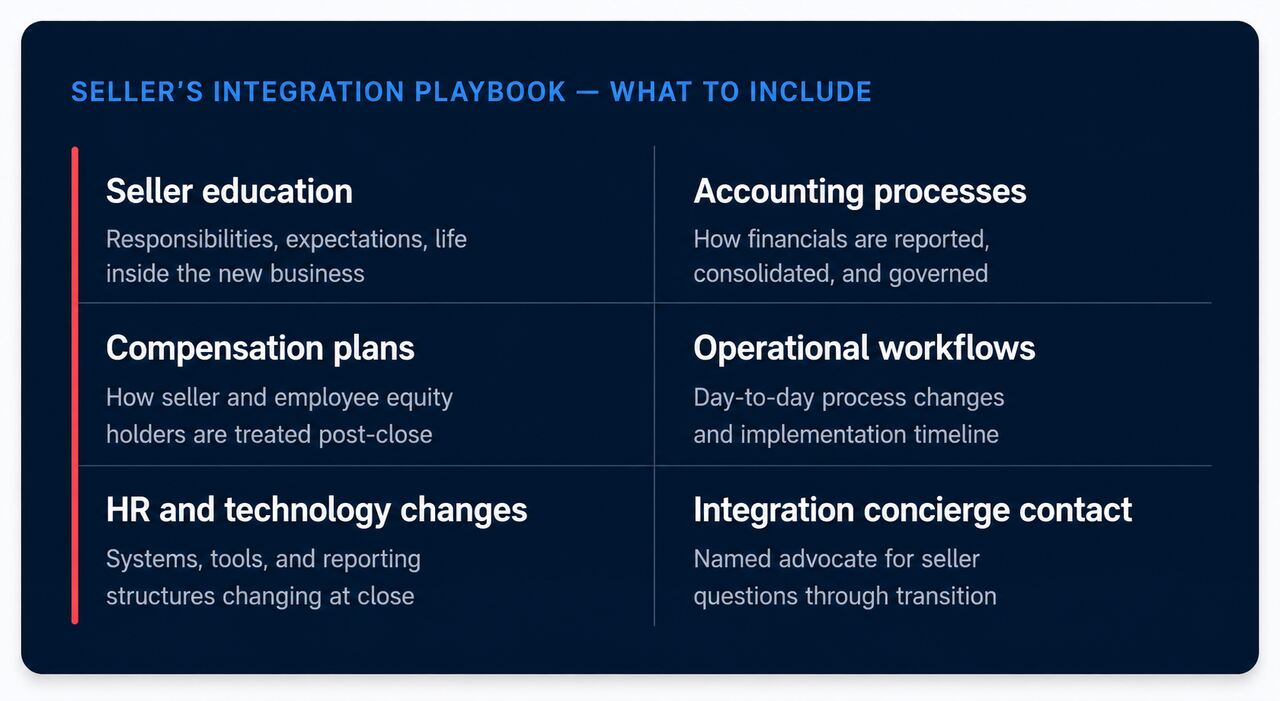
A seller's integration playbook sets clear expectations for acquisition and post-close responsibilities and guides the integration process. It aligns everyone on both sides and helps bridge the gap between pre-close negotiations and post-close integration.
The playbook offers valuable insight into what life will look like within the new business. For example, in cases where a company has a distributed equity model where employee shareholders own a significant portion of the business, the playbook becomes a useful tool for providing clarity and aligning conversations with sellers.
Your playbook should include relevant information and strategies applicable to your business and M&A goals. When building your playbook, consider including the following:
- Seller education
- Seller responsibilities
- Compensation plans
- HR changes
- Technology changes
- Accounting processes
- Operational and workflow implementation
The playbook creates a single resource that aligns all stakeholders. This single source of truth reduces communication gaps, supports better decision-making, and contributes to a smoother integration.
Integration concierge
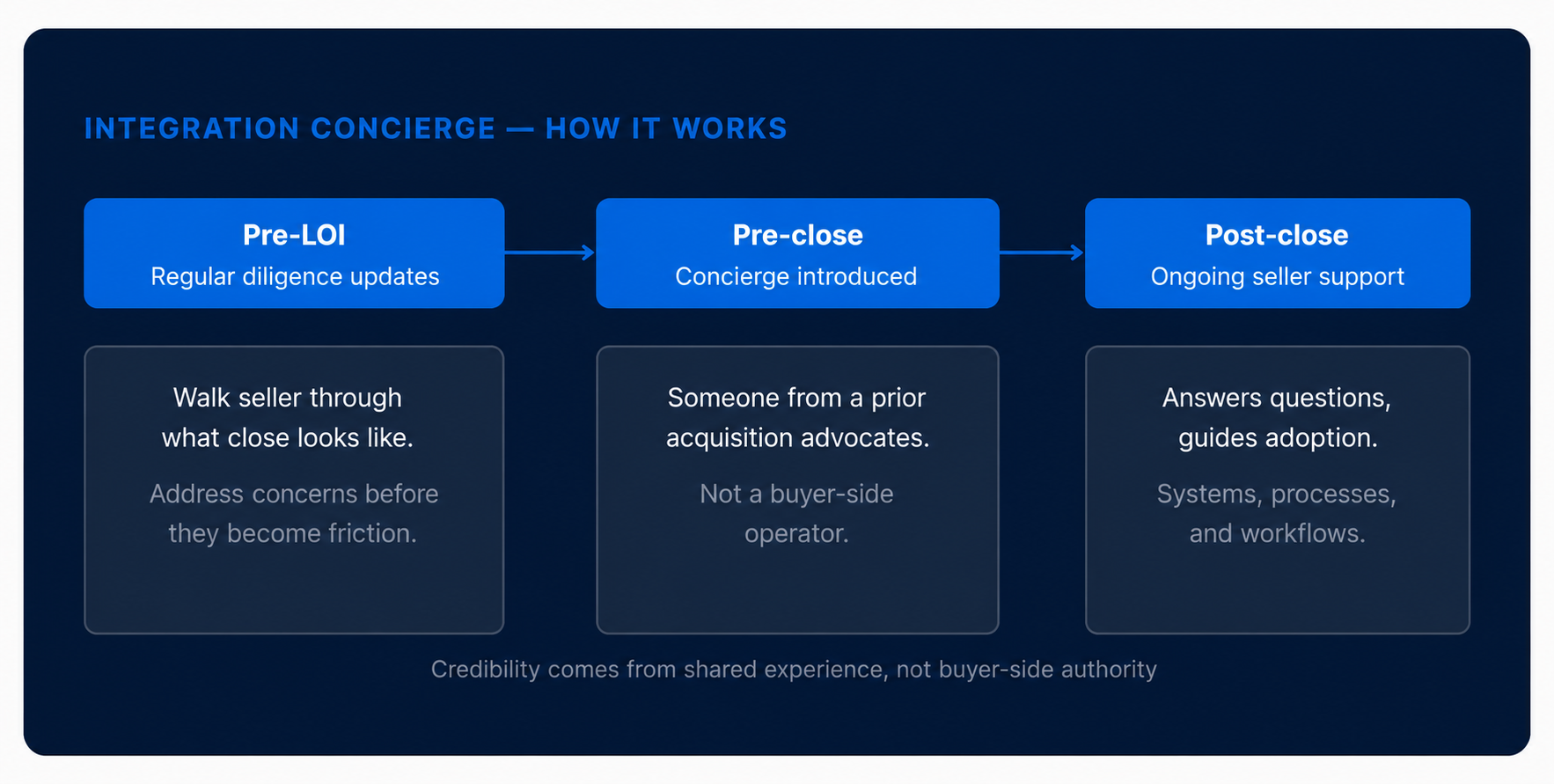
When conducting a Buyer-Led M&A™ transaction, integration education for sellers is important. Addressing their concerns early builds both trust and confidence. This can be done through consistent communication on pre-close activities, regular updates on diligence activities pre-LOI, or walking them through expectations.
One effective approach is to introduce an "integration concierge”---someone from a recent acquisition who can advocate for the seller and guide them through the process. This approach helps smaller firms feel more comfortable with changes, highlights the value the acquisition brings to their business, and builds credibility. By supporting the seller's team and providing clear direction, the concierge creates alignment early on.
Having an experienced partner who has been through an acquisition helps the seller see how they can grow, making them not only receptive but also excited about the change.
#3 Prioritize cultural fit in acquisitions
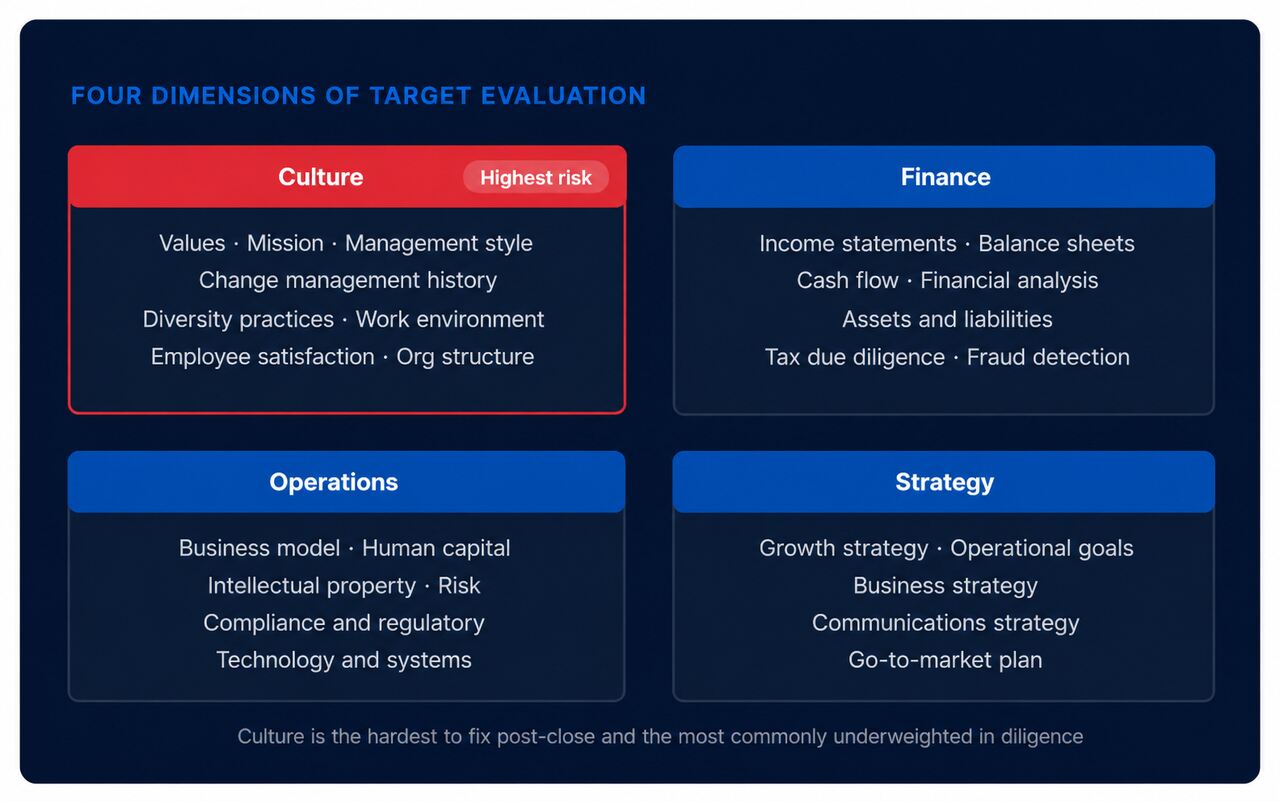
Cultural fit is critical for successful integration. Beyond operational, financial, and strategic metrics, every potential target should be evaluated for cultural alignment. Failing to do so creates challenges that undermine even the strongest deals.
Cultural misalignment can have dire consequences, including increased employee turnover, customer dissatisfaction, and resistance to change. When a newly integrated company fails to adopt the new structure or processes, it can stunt future growth and prevent expected value capture. Addressing cultural fit early helps prevent these pitfalls and ensures long-term success.
Evaluate your potential targets based on four important criteria:
Achieving complete alignment across all areas is a tall order, but cultural misalignment is the greatest threat to successful integration. To address this, conduct thorough diligence focused on culture and establish clear cultural expectations from the outset to guide the integration process.
Conclusion
A successful buyer-led M&A strategy requires thoughtful preparation, especially for concurrent roll-ups. To scale your roll-up strategy, focus on three areas:
- Overcoming internal challenges
- Delivering a strong seller experience
- Prioritizing cultural fit in every acquisition
By addressing these areas, you help lay the foundation for a more efficient deal process. You can invest in your team and your growth strategy by creating repeatable playbooks and, where appropriate, using a unified execution platform.
After each acquisition, evaluate what worked and identify areas for improvement. Remember: These playbooks are designed to be adjusted. Along the way, keep evaluating your team's needs and investing in the right resources. Your commitment to growth will help you manage concurrent buyer-led transactions and, perhaps most importantly, it will ultimately drive long-term success.


