Sonoma Brands Capital is a private equity firm focused on the growth sectors of the consumer economy. We aim to partner with bold, innovative founders on their way to building the world’s next enduring brands across the physical and digital landscape.
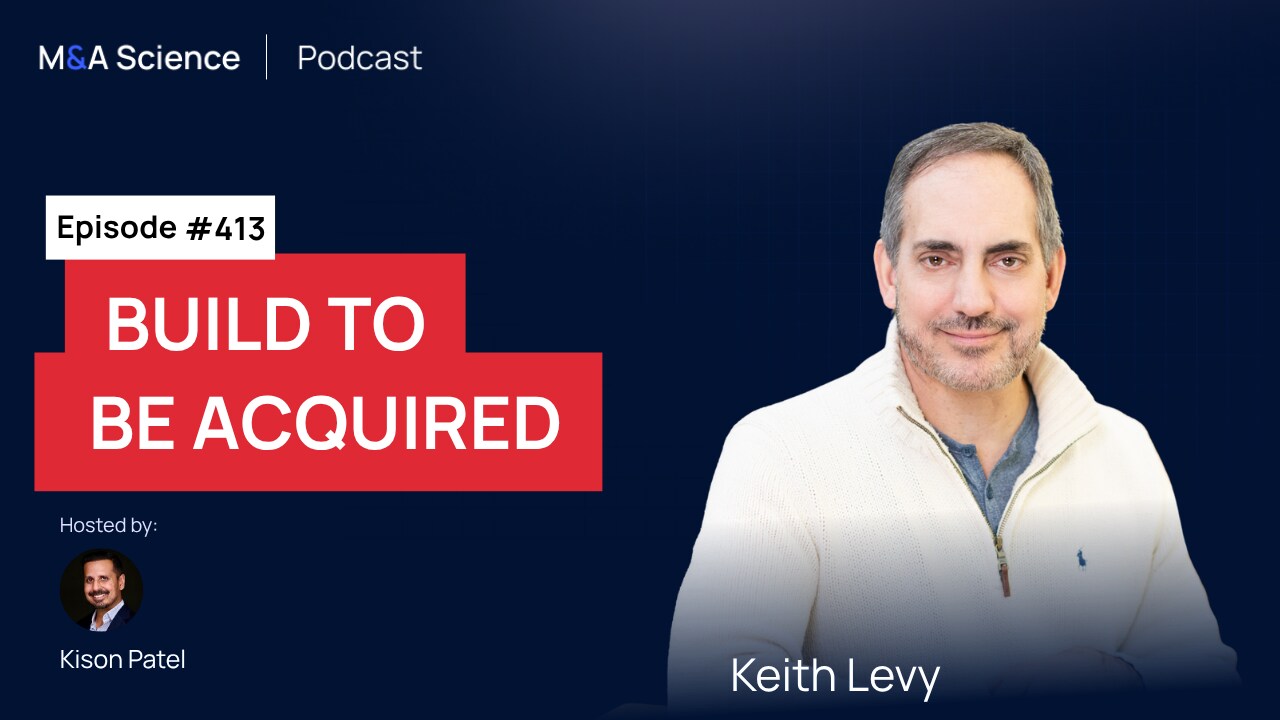
Keith Levy
Keith Levy is a seasoned M&A specialist and Operating Partner at Sonoma Brands. With nearly 35 years in the consumer goods industry, he has held key roles at Gallo, Anheuser-Busch, and Mars Incorporated. Notably, Keith was involved in the $53 billion integration of InBev and Anheuser-Busch. He later led global business development and M&A for Mars Wrigley. At Sonoma Brands, Keith focuses on consumer products, health, and beauty, leveraging his extensive experience to drive growth and integration in these sectors.
Episode Transcript
Operating Partner Day to Day
My life as an operating partner is pretty good compared to the partners who sweat the details. The companies that are doing the best require the least involvement from us. The ones that are struggling, or at an important fork in the road, are the ones that require our time and energy.
Right now, for example, I've spent the last couple of weeks on the phone with different banks, interviewing them on their strategic approach to selling one of our portfolio companies — what valuation they think is realistic, who they know in the industry, what their track record looks like in that particular sector. I can help with that. I'm just one part of a bigger team, but everybody's opinion matters.
If you're smart enough to bring the right people around the table and recognize that not everybody's going to agree, diversity of thought will get you to a better outcome. That's a really good recipe for success.
Knowing When to Lean In
I lean in when I have a strong opinion, a real track record, or direct experience in an area that I think will be genuinely beneficial. When I'm in a zone where I don't know the product, the market, or the specific problem they're dealing with, I shut my mouth. I don't need to be the loudest voice in the room. That doesn't matter to me.
Operating a $700 million business and then advising portfolio companies in the $10 to $50 million range is a real transition. I never thought I was the smartest guy in the room, and that actually works in my favor. You appreciate everybody's approach and experience. If you're the boss, you take all of that in, make the decision, and own it — with a thoughtful approach and a genuine curiosity to learn.
I've had good success in my career, not because I did everything right, but because I appreciated people. I appreciated diversity. I appreciated people who were smarter than me and knew when to listen to them.
At the same time, there were moments where I heard a lot of great advice, weighed it all, and still knew in my gut we needed to go a different direction. I'd tell the team: I appreciate everything you're bringing to me, and I know you're probably more expert than me in this particular discipline, but something tells me we need to go this way — and that's where we're going.
Leadership is about having a vision and bringing people along in a way that makes sense for them. They need to see the destination and want to get there with you. You have to care about them, give them what they need to do their jobs, and help them achieve what they want out of their careers. That's when you've got them.
It takes some seniority to understand that. When you're younger, you want to be the biggest and loudest in the room. Once you realize that real success depends on getting other people to achieve their own level and feel good about it — that's when the magic happens.
Pre-LOI Deal Breakers
Trust and transparency are the biggest ones. If you find that what people are telling you isn't exactly the truth, or that material things are being hidden, that's a serious problem. Data rooms can be messy, and sometimes you're trying to get to the real financials and it's just difficult. When the numbers don't add up and you keep asking the same questions without ever getting a coherent answer, those are red flags.
Consistency of story matters too. If you're talking to the team and the vision, the narrative, the belief in what's possible — none of that is coherent or aligned — it can unravel things quickly. Most of the obvious stuff you can assess by looking at the product, the business, the margin structure, the P&L, the leadership team.
But those intangibles — the ones you might only surface through deeper conversation, or maybe over a couple of bourbons when people get a little more candid — those can be the most material red flags of all.
The right attitude going into diligence is: I really like this business, this brand, these people — but I also need to think hard about every reason we shouldn't do it. You can become very enamored with something very quickly, and you have to be realistic enough to ask whether you're being smart. Are you looking under every rock? Are you thinking about all the things that could go wrong? That shouldn't be your guiding light, but it has to be part of your process. You need to understand where this ball of yarn could unravel.
You need that healthy devil's advocate voice. You don't want dragons at every opportunity breathing fire — that's just toxic. But you do need someone asking: what are we missing? Where's the fly in the ointment we haven't found yet? And by the way, you're never going to have a hundred percent certainty. At some point, with about 80% of the information, you make the leap. You've done it enough, you believe in it, and you go. Some won't work out. That's the game.
The CPG Brand Lifecycle
Consumer packaged goods — you can call it consumer products or consumer goods depending on how you define it. For me, it's most often food, beverage, cosmetics, or nutraceuticals. It's something that comes in a package, that you can go into a retail or online environment and buy and consume. It's not a service. It's a physical product that does something for you — something you eat, drink, or put on your skin. Drinks, snacks, pet food, nutraceuticals, cosmetics, clothing to some extent — the TAM is enormous. It covers a lot of ground.
There are strategic forks in the road at every stage of a business's development. You start with an idea, you get some early notoriety, you hire a team, you figure out how to make the product, you get distribution, people start talking — and then something goes sideways. Maybe a quality problem. Maybe an important person leaves. Maybe you're selling a lot of product but doing it at an enormous expense and need to get leaner. It happens in every portfolio company. Very few just go straight up and to the right without any assistance.
That's where we bring value. We write the check, but it's what sits behind the check that matters. We can help you get into Target or Whole Foods because we know the right people. We know which co-manufacturers to lean into and which ones to stay away from. When you want to go left and we know from direct experience that you need to go right, we'll tell you — and here's why. That's what we do.
Capital Requirements and Deployment
The capital needs vary enormously depending on where the business is. I've sat with a company recently doing $80 million with a husband and wife running pretty much everything — no outside investor. But they've hit an inflection point where, to really get retail penetration, they need a head of sales. That's when it becomes real.
Other businesses need capital to invest in production capacity, whether that's their own or through a co-manufacturer. Or maybe they have a genuine innovation idea — an extension of the current lineup — that requires marketing, R&D, or both.
As a growth capital firm, one of the things we've learned is that you have to reserve capital in your funds for follow-on rounds. In earlier funds, we made the mistake of deploying too heavily into initial investments, and then businesses we truly believed in came back needing another infusion — for people, production, R&D — and we just didn't have it. The next fund wasn't available yet. We've gotten smarter about holding back reserves.
There are two reasons this matters. One is that you don't want to suffer dilution as an investor. The other is that it's hard on the entrepreneur. If you were their biggest believer at Series A and you're not participating in their next raise, that's a black eye. Other investors ask why. It shakes confidence. For both sides, being smart about reserves is critical.
On wasted capital — someone told me early on: only raise the amount of money you truly need, because whatever you raise, you're going to spend. That's not universally true, but enough businesses have made that mistake that it's worth internalizing. Raise what you need, deploy it in very specific and convincing ways, deliver the growth or profitability you said you'd deliver, and your investors will follow you into the next round. It builds confidence in the machine. Come back two years later saying you want to do an acquisition or expand — and if you've executed twice before, there's no reason they shouldn't believe in you this time.
We've had portfolio companies waste significant capital rolling out products that had no real path to profitability. At the end of the day, it's less about the stage and more about the executive management team — how well they execute capital allocation. That's the real variable.
Execution as the Core Problem
Most businesses — early stage or late stage — fail on execution. You can have a great idea, great people, great resources, a brand that genuinely connects with consumers, and still fall apart because you don't do what you said you were going to do. People overcomplicate business. If I tell you I'm going to do something, I'm going to do it. If I commit to a deadline, I'm going to hit it — come hell or high water. Your word is your bond. A business plan is a promise. If I said I'm going to generate 30% growth and create a certain level of EBITDA and I don't deliver that, I've broken my promise to you. Deliver your numbers. That's not complicated.
Positioning a CPG Brand for Exit
For a CPG brand to be positioned for exit, it has to meet a few important criteria. First, do they have a brand that's unique, that's genuinely engaging to consumers, and that stands for something? Second, does the product underneath that brand deliver on a consumer need or want — ideally one that's unmet by other players in the market? Third, does it have a meaningful level of scale?
Scale is somewhat arbitrary, but from my experience in consumer packaged goods, the minimum threshold is probably $50 million in top-line revenue, with EBITDA approaching double digits — or at least high single digits with a credible path to double digits. The bigger you go — $60M, $70M, $100M, $200M — and the closer you get to 20% EBITDA, the more attractive you become and the higher your multiple goes.
We're working to get our companies to a threshold of top-line revenue and profitability that is both repeatable and expandable — to the point where a strategic will come in, or a financial investor like a PE firm, and see genuine blue sky still ahead. From a strategic mindset, that means: where can I take this brand globally? Where can I apply my procurement leverage to improve margins? Where can I use my route-to-market strength to expand physical availability? Where can I create more noise and awareness through marketing? When I look at a brand for exit, it needs to check a lot of those boxes.
Pitching to Strategic Buyers
When I'm positioning a company to a strategic, I'm direct. I've spent 30-plus years inside these large companies, and I know what they do well and what they don't. What they don't do well is incubate brands. They have the best R&D capabilities in the world, but every product that comes out of a big company's R&D lab looks and smells like it came from a big company's R&D lab — and consumers just aren't interested.
So my pitch is candid and brass tacks: this founder has done something you can't do. They've engaged with consumers in a way you can't. They've met a need in the marketplace that you haven't. They're profitable, they're growing, they've got energy around them, and it's exciting. You need that in your portfolio. You haven't been able to build it yourself. That's what you're buying.
The other thing that's critical is getting an audience beyond corporate development. Corp dev looks at it as an equation — IRR, strategic fit on paper. They're smart, disciplined professionals and they do their job well, but they're not the operator sitting there thinking:
I've got a real gap in my business plan, and the only way to fill it is with a product or brand that addresses that need. You need to get to both audiences. Get to the operators who feel the problem. Then get to the corp dev team who will execute the transaction and validate it financially. The best corporate development people already understand this — they actively partner with their business unit leaders from the start.
In terms of proprietary deal sourcing versus running a banker process: operators discover things because they're out in the marketplace and they see something no one else has seen yet. That's a real advantage. But there's also a role for the corp dev pipeline of things coming through bankers. Sometimes the banker brings something that an operator would never have found. And sometimes the operator's enthusiasm needs the adult supervision of a corp dev professional saying, "I know you love this, but here's why it makes no financial sense." Both channels matter.
What Makes the Best Investments Work
I still place a lot of value on the founder. They set the tone, create the vision, build the team, hire the people they need, and make things happen. Beyond that, the ones that have done best found a way to create a story that was somewhat unexpected — whether through brand traction, incredible distribution, top-line revenue delivery, or a margin structure that was genuinely unique relative to other players in the category.
The pattern is pretty consistent: a super strong founder who cracks the nut on something and develops a unique edge that allows them to win. We have constant arguments with founders about direction — that's just business. But when a founder is passionate enough, and has the brute-force strength to push through insurmountable circumstances and bring their team along with them, you can see the value in that person. Conversely, when a founder folds under pressure or gets distracted chasing the next shiny object instead of driving the core business, you see the other side of that coin just as clearly.
Our best exit to date is Touch Land. First female founder in a cosmetic category, with a great product, an incredible margin structure, and a relationship with Sephora — the biggest player in that industry. She made her product physically available at point of purchase. She built a brand that people wanted to lean into, with a charismatic founder-brand fit that made complete sense for that category.
We were in it about two years. The people in the firm who were closest to it were blown away by how little they needed to engage with that team, because everything they were doing was just right on point. Unique product, unique market fit, unique packaging, massive margins, and the right distribution partner. Multiple factors stacking together — that's what built the edge.
Why Deals Fall Apart After Investment
Probably 10% of what we look at gets a check — and when you account for all the earlier stages before it even gets that far, it's well under 1%.
Founders who haven't lived up to what we thought they were — that's one of the biggest problems, and I keep returning to it because it's consistently true. The ones who've done really well have met or exceeded expectations. The ones who haven't were often more distracted than we realized, and less focused on what actually mattered. Sometimes the financial structure was more disconnected from the business reality than we understood going in. And occasionally it's just bad luck — a quality problem, a lost production relationship, a key retailer counting on inventory that couldn't be delivered.
We've also made some assumptions around celebrity founders that didn't hold up. In the 2000s, there was a real moment where a celebrity behind a brand seemed like a genuine advantage — George Clooney with Casamigos, Kobe Bryant with BodyArmor. We saw that formula work and assumed it was repeatable. What we found was that sometimes those celebrities weren't as critical to success as we thought, or weren't as involved as we expected. That was a bad assumption on our part.
We also got caught not reserving enough follow-on capital, which created strain in relationships and constrained businesses that needed more fuel to grow. And we invested in some early-stage companies that weren't profitable and never became profitable. That informed our current philosophy: we invest in businesses with strong recurring revenue, strong growth and profitability, or a very short and credible window to profitability.
Those are all good lessons. Mistakes aren't fatal — most of them. They inform better decisions. That's trite, but almost every prolific business leader will tell you the most valuable lessons came from failures.
The Investment Funnel
We've been at this for about six to seven years now and have looked at hundreds of deals. We have 25 active portfolio companies. Think about how small a percentage that is.
A lot of deal flow comes our way and most of it goes right out the bottom of the funnel. It's not big enough. It's not profitable. We don't believe the product is truly unique. We're not convinced by the founder or the founder-led story. Those are the screening criteria. When something does make it through — when it checks enough of those boxes — we start pursuing it more seriously.
We have junior people in the firm doing a lot of the initial deal flow screening before it comes to the partners. Once it reaches the partners, we get more serious: we dig into the numbers if they'll share them, we visit if warranted, we have meetings in person or on Zoom to get a feel for the people and the business. If we get past that and we're genuinely serious, it goes to the investment committee.
The investment committee is made up of the partners — about six in total. Each partner has different expertise: some with backgrounds in light manufacturing, some in nutraceuticals and cosmetics, some like me focused on consumer packaged goods. Those voices carry more weight depending on what's in front of us. The committee's job is to poke holes in it — what are we not seeing, what are all the reasons we shouldn't do this versus all the reasons we should. If it passes that level of scrutiny and the partners align, we do the deal.
By the time it reaches the investment committee, we're usually going to do it. There's typically someone championing the deal who has already thought through the hard questions. The bigger difference from working inside a large strategic like Mars or Mondelez is speed. Big machines take a long time — there are layers of approvals, multi-stage papers, board sign-offs — and they lose deals because of it. We move fast. That's a real advantage, and we work to protect it.
M&A Software for optimizing the M&A lifecycle- pipeline to diligence to integration
Explore dealroom

Want to wear your M&A expertise?
Check out the M&A Science store.
.avif)