.avif)
Carlos Cesta runs a boutique M&A advisory practice in Europe, focused on small-deal M&A for entrepreneurs in creative tech, MarTech, and experiential marketing. Two-person core team that brings in senior industry experts for diligence and strategy on each deal. Founded in 2024. The model: embed with management teams instead of running traditional auctions. Learn more at Carlos's LinkedIn
Carlos Cesta
Carlos Cesta has 30 years of M&A experience from investment banking to corporate development at Verizon, Dentsu, Presidio, and NP Digital. He ran point on Verizon's media buildout (AOL and Yahoo deals) and has closed 125+ transactions. He specializes in standing up M&A functions from zero, defining programmatic M&A strategies, and structuring deals for long-term value creation. Recently transitioned from buy-side to launch his own advisory practice, partnering with entrepreneurs using a buyer-led mindset.
Episode Transcript
How Experienced Buyers Actually Make M&A Work
Career Background and Entry into M&A
Thank you for having me. You touched on it earlier—I have close to 30 years of M&A experience at this point. I started very early on in investment banking, but most of my career was spent developing inside companies.
One of the most formative experiences was at Verizon. We had a corporate development group, but we also had a corporate venture capital program, and I was very active across both. That combination—venture thinking alongside traditional M&A—shaped how I still think about deals today.
From there, I moved into very acquisitive environments. Dentsu was one of them. Presidio was another. NP Digital as well. Across those roles, I saw M&A from many angles—small teams, large teams, public companies, private companies.
I’ve worked on about 125 deals. I was actually counting the other day because someone asked me for my deal sheet.
At Verizon specifically, when the company was putting together its media strategy, I was very involved as a point person across all the M&A activity. That included the AOL and Yahoo transactions. Those were massive deals, not just financially but operationally. You’re talking about deal teams of 30 people on each side.
What was fascinating about those deals was seeing how strategy cascades—from high-level vision all the way down to execution—and how difficult it is to keep alignment across that many stakeholders.
Moving Across Different M&A Environments
After Verizon, I moved into Dentsu, which was very much a roll-up environment. M&A was embedded in the culture. Then Presidio, which was different. They didn’t really have a corporate development function when I arrived.
That’s actually one of my favorite situations—starting from zero. You have a blank canvas. You get to design how the function will work, how it ties to strategy, how deals are sourced, how integration happens.
At NP Digital, it was again a different flavor. They had programmatic M&A embedded into the culture, but the strategic intent had to be clarified and sharpened.
Across all of these roles, what stayed consistent was the need to anchor M&A to strategy. Without that, deals become opportunistic, reactive, and ultimately value-destructive.
Why Standing Up an M&A Function Is Harder Than People Think
One of the most underestimated parts of building an M&A function is defining the strategy.
People say, “We want to do M&A,” but that’s not a strategy.
The hard part is getting into the details. Making choices. Deciding what you’re going to pursue and what you’re not going to pursue.
Are you buying scale? Are you buying capabilities? Are you buying technology? Are you buying market access?
When you start asking those questions, you often realize senior leaders haven’t really thought through them. They’re operators. They’re heads down running the business. There’s nothing wrong with that. But when you confront them with strategic trade-offs, it’s uncomfortable.
I’ve had situations where leadership says, “We’ll pursue everything. If it’s opportunistic, we’ll look at it.”
That’s where you start burning a lot of energy. Without focus, you’re chasing deals that don’t compound value.
Strategy, in my view, is deciding what you are going to do and what you are explicitly not going to do.
Why “Buy Low, Sell High” Is Not a Strategy
People often say, “We’re going to buy low and sell high.” That’s not a strategy. That’s an outcome.
My goal is always to maximize the probability of success. I want to dial every lever to increase the odds that the deal actually works.
There’s this statistic that gets thrown around—“70% of M&A deals fail.” I really dislike that statement because it’s so generic. There are too many variables underneath it.
What matters is whether you’ve positioned the deal for success. Strategy is the most important lever because when things change—and they always do—you have a framework to adjust.
If you don’t have that, you’re just hoping things work out.
You can buy a business cheaply and still destroy value if you don’t understand how it fits into the bigger picture.
Programmatic M&A and Long-Term Value Creation
I’m a big believer in programmatic M&A.
At NP Digital, for example, I consulted for six months before joining full-time. I wanted to make sure leadership truly wanted to do M&A—and that they wanted to do it programmatically, not opportunistically.
There’s a McKinsey paper on programmatic M&A that I strongly agree with. The idea is that consistent, disciplined acquisitions over time—across economic and technological cycles—create more value than sporadic big bets.
M&A shouldn’t be something you do because the market is hot. It should be something that’s embedded into how you build the business.
Integrating Venture Thinking into M&A Strategy
One of the challenges today is uncertainty—especially with AI disrupting so many industries.
In some cases, it’s not clear whether acquiring a company today makes sense if that capability could be disrupted in 12 or 18 months.
That’s why we increasingly integrate venture-style thinking into M&A strategy.
Sometimes the right move is not a full acquisition but a minority investment. That gives you visibility, intelligence, and optionality.
We work with industry experts to ask: if this were a venture portfolio, where would you invest? That shifts the mindset from “today” to “tomorrow.”
We’re trying to integrate venture investing and M&A into a single continuum rather than treating them as separate silos.
The Deal Lifecycle Is a Spiral, Not a Straight Line
Instead of looking at a deal as a straight line that moves from start to finish, I look at it as a spiral. The reason is that there are certain decisions you will come back to and revisit as you learn more.
Imagine the deal as a spiral with three spokes.
1. Deal Structure
The first spoke is deal structure.
This is where you decide things like: how many times revenue you are willing to pay, and how you are going to pay for it.
One approach is paying all cash upfront because you want to integrate quickly.
Another approach is more protective. Some buyers say they never want to pay everything upfront and prefer to protect themselves with an earn-out or contingent payments.
Whatever your preference, that is the first spoke.
2. Diligence Findings
The second spoke is diligence.
Here, the question is whether you are able to diligence forecasts, liabilities, technical risks, tax exposure—everything that could materially affect the business.
Based on what you find in diligence, you then move to the third spoke.
3. Integration Strategy
The third spoke is integration.
This is not only about back-office functions coming together. It is also about how you go to market as one company and how you maximize go-to-market effectiveness.
When you are doing a limited number of acquisitions, this is more manageable. But as you move into a roll-up, you start running into issues—people stepping on each other, unclear sales lanes, overlapping responsibilities.
That is when integration becomes much more complex.
You think about the three spokes together:
you establish the price, you see what you have in diligence, and then you revisit those decisions.
That is why it is a spiral. You do not move in a straight line.
For example, you may realize you do not trust the forecast, or that it is too optimistic. Instead of buying everything upfront, you decide to change the structure and introduce contingent payments based on performance.
Now your deal structure has changed.
You may then satisfy your diligence concerns, but a new question emerges: What about integration?
You might realize you cannot fully integrate right away because you need to measure the performance you just tied to the deal structure. So you adjust the integration plan—maybe you measure only revenue for a period of time.
This is how it goes. Instead of one direct line to closing, you make several turns along the way.
And if you are doing multiple deals, every deal should be different.
Every deal has different issues, different risks, and different constraints. Treating them all the same is where problems begin.
There’s more. One issue that always comes up is using equity as part of the consideration.
On the surface, it sounds aligned. Everyone says, “We’re all aligned now.” But the problem is that when you give equity as part of the deal, the seller is no longer riding purely on the success of their own business unit. They are riding on the success of the entire company.
That changes incentives.
I can see situations where you look at a target and say, “I don’t fully believe their forecast. It feels too optimistic. I really hope they achieve it, but I’m not completely comfortable.”
In those cases, you want to tie their compensation to their performance, not to the performance of the whole organization.
Reverse Diligence
This is a big one, and it’s actually something my partner is very focused on. He was an entrepreneur and sold his company, so he still thinks like a seller. The question that stays in his mind is: why do these people want to buy me?
Because I spent most of my career on the buy side, I always knew why I was buying a company. He brings a different perspective. He is constantly thinking about what is going through the seller’s head.
That’s why he has always been big on reverse diligence.
Tactically, you want to force those tough conversations between buyer and seller to happen before the deal closes. It’s hard to do that before an LOI, but during diligence it is completely normal.
That’s when you start having real conversations about how teams are going to come together.
In my view, that’s how you evaluate culture. You see how people react to proposed changes. If they push back hard or become defensive, you learn a lot about whether they actually want to be acquired.
That is a very tangible way to assess culture, rather than asking someone to come back with a report about values or team dynamics. Those reports often say things like, “They have a Christmas party.” That doesn’t tell you anything.
What matters is pressure. Putting pressure on the process reveals reality.
If there are changes you expect after the deal, you want to surface them early.
For example, you might say, “We’re going to move you onto our systems.” There is a cost associated with that, and we are going to price it into the deal.
That immediately tests reactions.
You hear things like, “You’re already retrading me.” That reaction tells you a lot about willingness to integrate and alignment with the acquisition.
It’s the same when you say, “Our go-to-market motion is built around Salesforce.” That alone can trigger meaningful conversations about readiness and flexibility.
Org charts are another powerful test.
When you start talking about reporting lines, titles, and structure, you get real reactions. Taking away a C-suite title can be very revealing.
Even something like company cars—which is more common in Europe as part of compensation—can become a flashpoint. These are not small changes. They shape what life will actually look like after the deal.
That’s the point. You want to understand what post-deal reality will feel like.
One of the most important areas to pressure-test is go-to-market alignment.
When you start talking about shared resources and dedicating staff to certain types of clients, you hear real objections. You might hear a target say, “We don’t take deals below a certain contract value.”
At that point, the question becomes: why are you part of this team now?
These conversations surface how revenue will actually flow in the future and how cost structure will need to adapt.
These are impactful changes. Having these tough conversations earlier—rather than after close—is critical.
Early friction is not a problem. It is information.
And that information is what allows you to decide whether a deal should move forward, and if it does, how it should be structured and integrated.
Transparency on Synergy
There’s one point that always comes up in negotiation: revenue synergies and cost synergies. It’s important to break those two apart.
On revenue synergies, we usually develop those together. I obviously have a view of what that number should be.
If the assumptions are aggressive, that’s when earn-outs come into play.
This is where I’ve always been cautious. I’ve had the impression that, across the industry, people are not very transparent early on. If you share your full model too early, sellers can start tweaking it and pushing valuation arguments based on your own assumptions.
Because of that, it’s often better to stay at a higher level initially. You can explain the rule of thumb behind how you arrived at a valuation, but not get into every specific input or line item.
There is a point in the deal where you open the kimono.
That’s when you say, “Here are the clients we’re going to target together. There’s probably a million in revenue opportunity from this client alone.” At that stage, you start sharing much more detail.
But that point comes later in the process. It’s toward the end, not before the LOI.
Before LOI, you’re coming up with a figure. You’re not disclosing the full model. You’re framing the logic without giving away every assumption.
Cost synergies are different, especially in smaller deals.
In large transactions—at Verizon, for example—deals were very much predicated on cost savings. Cost synergies were a major part of the rationale.
But in smaller deals, especially capability-driven acquisitions, cost synergies are usually not the primary driver. It’s not about saying, “We’re going to integrate this function or that function and cut costs.”
Instead, the focus is on building capabilities.
That said, I believe strongly in transparency around cost structure.
I usually go straight to things like CRM costs. I’ll say, “These are your standalone costs. These are your costs under us. This is what we agreed to.”
There is full transparency in that plan—how you’re going to integrate the company, what changes are coming, and where synergies will show up.
That level of clarity is very welcomed by sellers.
Sellers don’t want to be retraded. They don’t want surprises late in the process.
If you show them clearly—not even how it prices into the deal yet, but simply, “Here it is, this is how things will work”—that builds trust.
That transparency changes the tone of the negotiation. It moves the conversation away from fear and defensiveness and toward alignment around how the combined business will actually operate.
Designing Deal Structures to Reduce Risk
Deal structure should respond to risk.
For example, I worked on a deal with heavy client concentration. We knew that going in. Instead of walking away, we structured incentives that rewarded the seller for diversifying revenue post-close.
If they reduced concentration risk in year one or year two, there was additional consideration for them.
That aligned incentives and reduced risk for the buyer while still giving the seller upside.
Earn-Outs
I remember at Verizon, my deal attorney absolutely hated earn-outs. His view was simple: never do them. The problem was that many target companies were paid in stock, and Verizon stock was driven by the performance of the wireless business, not by the performance of one acquisition or one team.
That created a disconnect. The people we acquired could do everything right, and it still wouldn’t show up in the stock.
I then moved to Dentsu, where almost every deal involved earn-outs. That was largely driven by finance. The finance organization had a lot of influence over deal structure.
Later, as I started doing more deals and getting pulled into auctions, I saw a different dynamic. In auctions, buyers are often pushed to put more cash upfront. That changes how you think about structure entirely.
You really have to think through whether an earn-out or stock makes more sense in a given deal.
If the contribution from the target is small relative to the overall company, and the stock price is driven by many other factors, sellers are not going to feel connected to outcomes. They are along for the ride, but they are not really influencing the result.
In those cases, stock can feel more like a partnership. You are saying, we are in this together.
There are definitely contexts where that works. You can tell a seller that this deal gives them upside and alignment, and that is why it is better than another deal that is purely an earn-out.
In that case, you are de-risking them by giving them stock rather than tying everything to performance metrics.
In auctions, your hand is often forced.
You are pushed toward more cash upfront, which means diligence has to be sharper. You have to sharpen the pencils and be very confident in what you are buying, because you are taking on more downside risk immediately.
That leads to the core question: how do you protect yourself from the downside?
The biggest reason to do an earn-out is optimistic projections.
When sellers present aggressive forecasts, the natural response is to say: let’s hold them to it.
But there is an important distinction. Are you doing the earn-out because you expect them to achieve those goals, or are you doing it purely as a risk adjustment?
Earn-outs serve three primary purposes.
First, seller financing.
Second, risk protection for the buyer.
Third, upside for the seller.
Those are the characteristics earn-outs are designed for.
Sometimes you see a company that is strategically important, but the timing is off. The opportunity is real, but current performance doesn’t fully reflect it.
In those cases, instead of saying put your money where your mouth is, you can design the earn-out to be more achievable. You make it easier for the seller to succeed.
That might include helping with cross-selling into your customer base or adjusting how success is measured.
This is where the spiral comes back into play.
You might start with very aggressive targets, then realize that if this asset is strategically important, you should make it easier for them to hit the earn-out. That is another dial you can turn. You can make it harder or easier depending on context.
My starting point is always the seller’s projections. If the forecast shows a hockey stick, then prove it.
Very rarely do I simply adjust the forecast downward. Instead, I structure around it.
As a rule of thumb, I usually think in terms of 70 percent upfront and 30 percent earn-out.
That balance can change, but that is a common starting point.
You can also mix structures. You can include stock and minimize the earn-out. It really depends on the situation.
There is no single right answer.
It depends on the company, the contribution, the market, whether the deal is proprietary or an auction, and whether you are on the buy side or the sell side.
That is why context matters more than rules.
And this is also where sell-side advisory becomes a different conversation altogether.
Sell-Side Advisory and Optimizing for Outcome
Traditional banking models optimize for price and certainty. That works in public-company auctions.
Entrepreneur-led businesses are different. Founders care about legacy, people, and what happens on day one after the deal closes.
Our approach embeds deeply with management. We do our own diligence. We understand strengths and weaknesses. We position the business defensively to protect value.
The goal isn’t just to close a deal. It’s to make sure the deal actually works.
Private Equity vs. Strategic Buyers: How Founders Should Think About the Trade-Offs
When working with entrepreneurs, the decision between selling to private equity or a strategic buyer is deeply personal. There is no universally “right” answer.
Some founders are young, energetic, and want a second bite of the apple. They are comfortable staying in the business, rolling equity, and working with a private equity sponsor to build toward another exit. They understand the risks and are willing to stay in the game for another five or ten years.
Others are closer to retirement or simply ready to step away. In those cases, strategic buyers often make more sense because they can usually pay more upfront. Strategics are buying a capability they need now, and they can realize synergies immediately.
Private equity, on the other hand, optimizes at the portfolio level. At the end of the day, they are asset managers. They allocate capital across a portfolio and constantly rebalance. That means your company is one asset among many.
Entrepreneurs don’t always realize that distinction. They often assume a private equity firm is optimizing specifically for their company, when in reality the unit of optimization is the portfolio.
One thing I emphasize to founders is transparency. They should understand what each buyer type is optimizing for—financially and operationally—after the deal closes. That context matters as much as headline price.
Buyers Chipping Away Value
What I do on the sell side is prepare sellers so they are completely armored.
I do diligence on them first. I look at the numbers and ask why this number is here, what happened, and how it should be explained. The goal is to put everything in the best possible light and, more importantly, to make sure nothing is misunderstood by the buyer in a way that allows them to chip value away later.
Because I’ve spent so much time on the buy side, I know where buyers tend to focus.
Client concentration is a classic example. If I see concentration, the question becomes why that exists and what the plan is for next year. Sellers need to be ready to answer that clearly.
Working capital is another one. Working capital adjustments are something many sellers have never thought about, yet they often become a major lever for buyers late in the process.
The goal is to surface these issues early and structure around them so value isn’t chipped away through misunderstandings or late-stage surprises.
Part of this is understanding how deal structure can quietly remove value.
I’ve been on the buy side enough times to know when certain structures will, in fact, reduce value at close or shortly after. That experience informs how I prepare sellers.
We put forecasts on the table that the business can actually live with from a performance standpoint. On the buy side, people can always turn the dial up later, but starting with something realistic protects credibility.
I’ve seen deals where earn-outs were structured with the assumption that the seller probably would not hit them.
In some cases, the forecasts were so aggressive that the targets were never achievable. When that happens, the question becomes: what are you left with?
If thirty percent of the deal value is tied to an earn-out and the seller gets nothing, that creates a real problem. You’re left with unhappy people inside the business. That is not a great outcome.
I’ve worked with CEOs who understood this very clearly.
When it became obvious—three months before the end of an earn-out period—that the targets were not going to be hit, we started talking about renegotiating early.
Not because we were being generous, but because we liked the people and wanted them to stay. They were smart, capable, and valuable to the business.
Experienced buyers do that. They don’t wait for an earn-out to fail and then deal with the consequences. They address it proactively.
This is one of the biggest differences between experienced and inexperienced deal teams.
Inexperienced teams design structures to win negotiations.
Experienced teams design structures to make the business work after the deal closes.
That difference shows up very clearly once the transaction is no longer theoretical and people have to operate together.
Postmortems for Every Deal
Earlier in my career, integration was treated almost as an afterthought. Deals closed, and then teams figured things out as they went.
That changed significantly after we started doing formal postmortems—not just internally, but with the sellers themselves, six months after close.
Those conversations were eye-opening.
The biggest takeaway was transparency. Sellers consistently said they wanted more involvement in integration planning. They didn’t want surprises. They wanted to understand what was changing and why.
That led to building integration workstreams that ran in parallel with diligence. It also led to more accountability internally. Deal sponsors inside the business were held responsible not just for closing deals, but for outcomes.
Integration practices evolved dramatically over time as a direct result of those postmortems.
AI, Technology, and the Changing M&A Landscape
AI is changing a lot of things, thats why corporate development has a deep connection to strategy. That means always thinking about how the deal fits into execution, not just how it closes. The focus goes beyond signing documents. It is about keeping people engaged and making the business work after the deal.
Most entrepreneurs are understandably heads down. Standing up and growing a business takes everything. Strategy, exit positioning, and long-term integration planning are often secondary. That is fine. This is where experienced advisors step in.
There are models emerging that try to address this gap. One example is fractional M&A professionals. Another is software platforms that try to match companies with advisors or buyers through algorithms.
I explored some of these models myself. I signed up, looked at the platforms, and waited. I was not getting any traction. When I spoke to someone at one of these companies, they explained that the algorithm favors people already active in the system.
That was the moment I stepped away from it. It was just another algorithm to cater to. Instead, I chose to embed directly with clients rather than be matched through software.
There may be a way to market oneself successfully inside those systems, but that was not the path I wanted to take.
I looked closely at many of these products. Unless the work is highly transactional, it is hard to see how they replace real corporate development thinking.
M&A is not just execution. It takes time to define strategy. It takes time to pressure-test assumptions. It takes someone acting as a catalyst inside the business, challenging views, surfacing trade-offs, and aligning decision-makers.
That is not something a marketplace or matching algorithm does well.
Another model gaining traction is do-it-yourself listing platforms. I saw these while working on the buy side.
These platforms typically handle smaller deals—often under $20 million in enterprise value, sometimes up to $30 million. Sellers pay a retainer, not a success fee. The appeal is obvious: no banker fee, maybe $5,000 a month while listed.
I evaluated one of these platforms from the buy side. What I found was concerning.
The information provided was basic. EBITDA adjustments were extensive. Valuations were anchored very high. From a negotiation standpoint, the anchoring made deals difficult to engage with. The numbers were so opaque that it required significant effort just to understand what real EBITDA was.
For a seller doing this for the first time, that is risky. Without guidance, they have little ability to push back, clarify assumptions, or defend value. It becomes a case of “here it is, you are on your own.”
These platforms exist because many sellers are dissatisfied with traditional banker fees. That dissatisfaction is real.
But the unintended consequence is that serious buyers often avoid these platforms because they create more work, not less. The same level of diligence is required, but without clarity or structure.
As a buyer, I stopped engaging with them. It simply was not efficient.
All of this points to one conclusion: the advisory model has to change.
We will likely revisit this conversation in a year and see how much has shifted. It will be interesting to compare notes.
What resonates most is the embedded model—working closely with management, combining M&A thinking with a venture-style continuum. In uncertain, disruptive markets, that flexibility matters.
Programmatic M&A still works. But when disruption is high, sometimes the right move is to wait, observe, invest selectively, or rethink direction altogether.
That long-term perspective—understanding where the industry is heading and how today’s decisions play out tomorrow—is what ultimately informs whether an M&A transaction makes sense at all.
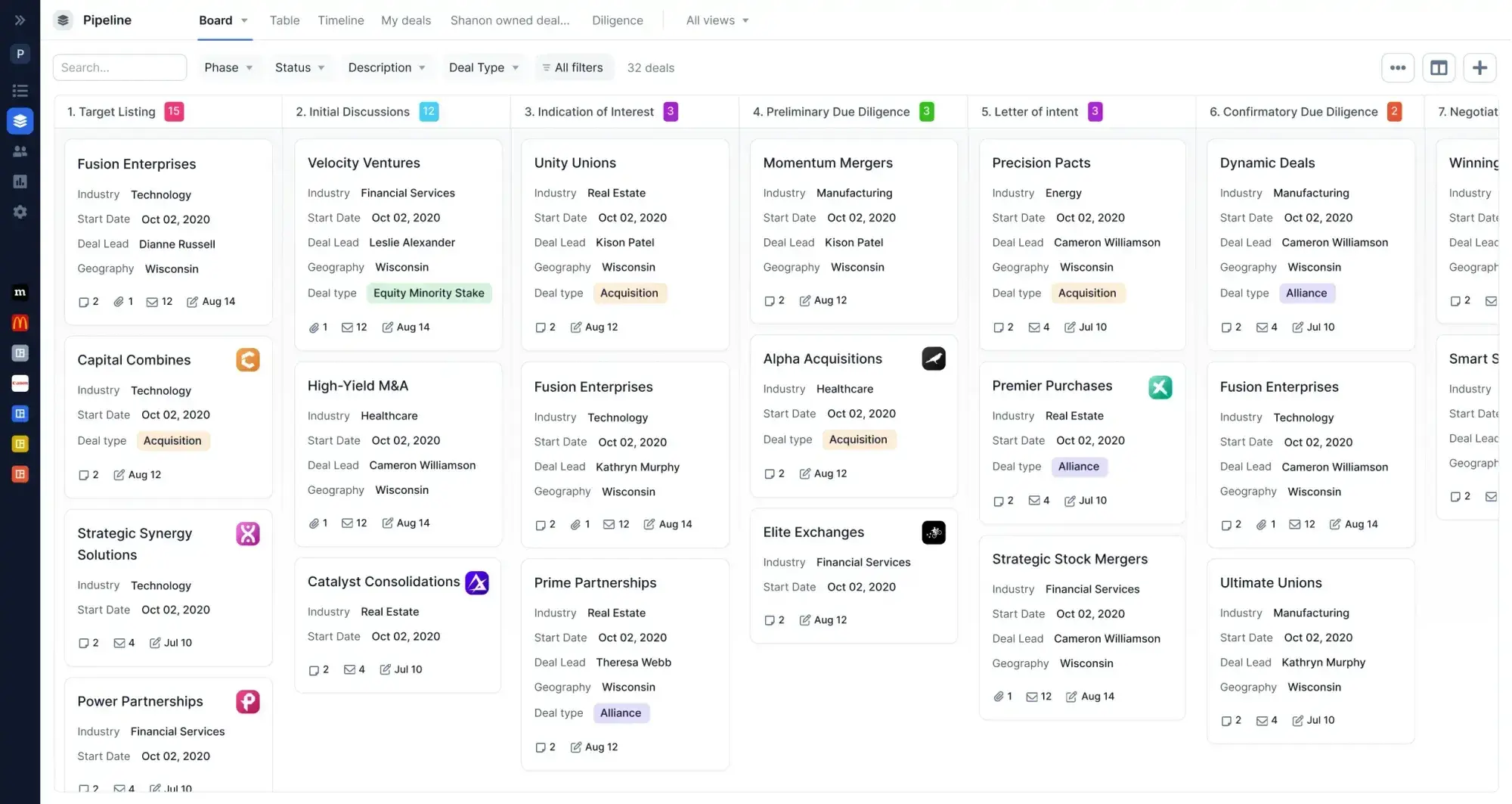
M&A Software for optimizing the M&A lifecycle- pipeline to diligence to integration
Explore dealroom

Want to wear your M&A expertise?
Check out the M&A Science store.