White & Case LLP is a global law firm with offices in more than 40 countries. The firm's Latin America practice advises on complex cross-border transactions, international arbitration, and multi-jurisdictional regulatory matters, with dedicated offices in Mexico City and throughout the region.

Rodrigo Dominguez Sotomayor
Rodrigo Dominguez is a Partner at White & Case LLP specializing in cross-border M&A across Latin America. Based in New York, he has spent over 25 years advising multinationals, PE funds, and family-owned businesses on transactions ranging from multi-billion infrastructure deals to FinTech acquisitions. He has worked across every major jurisdiction in the region, including Mexico, Brazil, Colombia, Peru, Chile, and Argentina.
Episode Transcript
Doing Deals in Latin America
I think the approach depends on whether you’re on the buy side or the sell side.
Let’s assume you’re on the buy side and you want to acquire a company in Colombia, Peru, or Mexico. The first step is understanding the country risk and the political environment.
For example, in our case, we have a very strong international arbitration and disputes practice. When a client calls us about acquiring a company in a jurisdiction where they do not yet have a presence—meaning this is an entry transaction—the first thing they ask us to do is explain the treaty network of that country and what investment protections they would have as a foreign investor.
Many of these countries have treaties in place with other nations. If you are an investor coming from one of those countries, you may be afforded the investment protections contained in that treaty if something goes wrong.
If you are deploying a billion dollars of capital into an infrastructure project in a particular country, you want to ensure you have the necessary protections. If the host government later takes action that is adverse to your business, illegal, or inconsistent with the treaty, you want adequate protection for your investment.
So the first step is evaluating the country from the standpoint of what protections are available. This includes understanding how the rule of law operates, the efficiency and efficacy of the legal system, and developing a detailed understanding of the legal framework before even looking for companies to acquire.
I am speaking mainly about infrastructure transactions. That said, many of our clients today are already familiar with the countries in which they are investing. Twenty-five years ago, it was more common for multinationals to enter a country for the first time. Now, in a more globalized environment, most clients already have some presence. As a result, this type of high-level country analysis is less common than it once was, but it remains important.
If a client is deploying significant capital into a country, they must understand the legal framework and the protections available to them as a foreign investor.
Once that preliminary analysis is complete—typically as part of a pre-investment committee discussion—the M&A process itself runs very similarly to how it does in the United States.
There will be a data room. If it is an auction process, which most transactions now are, the process will be run by bankers through a formal auction. You will receive and review a process letter, sign an NDA, and gain access to the data room. You will submit a non-binding offer. If you are among the highest bidders, you will likely be asked to submit a binding offer along with a markup of the SPA.
If selected, you move into exclusivity and conduct confirmatory diligence, accessing the full set of materials in the data room.
That is the typical process for M&A transactions in Latin America today.
Proprietary Deals in Latin America
We do a lot of bilateral deals where you identify a target, approach that target, and engage in one-on-one negotiations. Those processes still exist, just as they do in the U.S. It is not unusual to be engaged as counsel on a transaction that is negotiated directly between parties, rather than as part of an auction process.
In those cases, most of the businesses in Latin America are privately owned. Unlike in the U.S., where many companies are portfolio businesses owned by private equity funds and secondary transactions happen frequently, in Latin America you still see a large number of privately owned companies. Often, you are negotiating directly with a family.
That may mean dealing with the patriarch who built the business from scratch and has operated it for the last 50 years. The business is like a member of the family. We also see many second- and third-generation businesses where the family may have other core assets they want to focus on and are therefore selling a division or the entire company.
We handle many of those transactions, and they are deals I particularly enjoy. When advising on the sell side, you spend significant time with the owners. You get to know the family and understand their priorities.
In one case, the founder was deeply concerned about his employees and the management team who were not family members. To get the deal done, it was not about increasing the purchase price. Instead, we had to design a creative solution to ensure that the management team would be retained and properly incentivized to remain with the company after the sale.
In these transactions, priorities often extend beyond maximizing price. Families may want to protect their legacy, ensure the company continues to operate in a certain way, and make sure employees and management are taken care of.
Working with private companies in this context requires significant time and careful guidance—much more handholding than when dealing with a private equity fund, whether as the counterparty or as your client.
Managing Relationships in Latin America
You have to read the room. This happens more often with privately owned companies and much less with portfolio companies. When you are dealing with two multinationals or two financial sponsors, the process looks very similar to the U.S. You go straight to the numbers. The discussions are professional, technical, and objective.
But when you represent a family or a family business, it is different. This is their life’s work. If you are representing a family that is selling a business, they have often been working on it for as long as they can remember. It is all they know. If you come in lecturing them or trying to impose your approach, it will not work. You need humility. You must recognize that they have their own way of doing things—and that way has clearly been successful, because they built a business that you now want to acquire.
It requires significant handholding, personal time, and a genuine effort to understand their priorities. You need to understand their objectives and what they want to achieve in the negotiation. You also have to listen carefully and identify the trigger points.
In one situation, I was negotiating a deal where one of the largest private equity funds was acquiring 45% of a company owned by two brothers who had inherited it from their father, who had recently passed away. They were in their mid-forties. The business was valued at over a billion dollars, had no debt, and was highly profitable.
The fund wanted a minority position and was comfortable going up to 49%. The agreed structure was 60% for the two brothers and 40% for the fund. During negotiations, the fund attempted to retrade certain valuation points based on metrics that made sense from their perspective. However, those arguments did not resonate with the brothers, who knew exactly how their business operated.
Even though the transaction would have effectively made the brothers billionaires, the disagreement came down to a small difference—40% versus 42%. Ultimately, the brothers decided to walk away. They recognized that while the capital would have supported growth, the philosophical alignment was not right.
Two years later, they called me again. We sold the company to another fund, with different counsel, that better understood their objectives and approached the transaction in a way that aligned with their priorities.
The negotiations offended them a little, but also, there was a deeper issue. They started to feel, “I don’t want to live with these people if this is how they’re going to be.”
The retrading of the numbers—the decrease in valuation—came about a week before we were supposed to sign. They felt that was disrespectful. We had been negotiating for months, and those issues had never come up.
What likely happened is that the fund became uncomfortable with the valuation. They probably felt at some point that they were paying too much, but they did not raise the concern at the right time or in the right way. So it was the timing, the presentation, and a fundamental disagreement in philosophy.
The fund approached the issue in a highly technical way. The brothers, on the other hand, were the ones running the business. From their perspective, the valuation concern was a non-issue. Despite our efforts, we could not bridge that gap.
Looking back, I believe the fund made a mistake. They should have let the issue go, proceeded under the terms already agreed upon, and closed the deal.
They would have made a lot of money. The business boomed afterward, and it performed extremely well. Walking away over that point ultimately cost them.
This is a good example of how different it is when dealing with a family, private owners, or founders. These are sensitive matters. When you are on the capital side, it is easy to assume that the sellers need the money and will agree simply because a large check is on the table. In most cases, it is not that simple.
Often, it requires listening carefully, understanding the trigger points, and negotiating with those sensitivities in mind. That dynamic is common in Latin America.
Importance of Building Relationships
This is consistent in all of Latin America, and also in the U.S. as well. It is not something unique to Latin America.
Some of the best counterparties I have worked with are lawyers who are patient. The worst are those who want to push the deal through as quickly as possible and have no patience.
M&A negotiations are a dance. You are dancing. Sometimes the music gets faster, and you have to move faster. But it is still a dance. You have to go through the full process, and you need patience.
That is what I tell my associates and my clients: do not get offended. Do not take it personally. The lawyers and the other side are doing their jobs. That is what they are paid to do.
Let’s listen. Let’s evaluate what can be accommodated, what is truly an issue, and what is not. Then focus on the big points and move the deal forward.
That is how I approach transactions. And by the way, it is very similar to how I handle deals in the U.S., where I also do a significant amount of work. At the end of the day, it comes down to patience.
And I have dealt with impatient lawyers, and usually they become more frustrated because they expect you to react.
There was one occasion where I actually did react. We were about to sign documents at 4:00 a.m. We needed to close because the funds had to be wired from Europe, and we were approaching the cutoff time for the transfer. We were eight hours behind, so we had to sign immediately.
At that moment, the other lawyer realized there was a mistake in a paragraph—one he had drafted. He grabbed the documents and ripped them apart. It turned into a tantrum, right before signing.
That was one of those situations where I had to step in and say, “You cannot do that.” There are ground rules. That behavior was not appropriate.
He eventually apologized, reprinted the documents, and we closed the transaction. But it was a reminder that even under pressure, there are professional standards that must be maintained.
Regulatory Controls in Latin America
Yes, it is. Latin America is well known for having relatively low monetary thresholds for pre-concentration filings and antitrust approvals.
In the United States, under the HSR process, you sign, file the notice, and observe a waiting period. If nothing happens during that period, you are free to close the transaction.
In Latin America, the system is different. It is a consent regime. You must file, and you cannot close until you receive approval from the antitrust regulator. That approval can take anywhere from three to nine months.
There is also a growing sense of nationalism across parts of Latin America. Regulators are paying closer attention to foreign investment, antitrust issues, and competition rules. To some extent, this mirrors trends seen in the United States.
In my experience, if you structure the deal appropriately and assess competition risk from the outset—developing a clear understanding of how the transaction will be perceived by regulators—you can get the deal approved. It requires time, analytical rigor, and strategic planning.
This is especially true in infrastructure transactions, where large amounts of capital are being deployed. You must consider social issues, the impact on local communities, and how and when the transaction will be presented to the regulator.
Something that was less critical 10 or 15 years ago—but is now extremely important—is the selection of local counsel. You must conduct diligence not only on their expertise and credentials, but also on their working relationship with regulators. Having the right local firm with strong relationships and credibility can materially affect the approval process.
But there are small deals that can avoid filing. It varies by country.
In Mexico, the analysis focuses on the transaction value and the value of assets or revenues in Mexico of the parties involved. It is a two-step test: you assess the value of the transaction and the combined revenue or asset value in Mexico of the participants. If those thresholds are met or exceeded, you must file for pre-concentration approval.
Peru has a similar framework, though the thresholds are generally lower than in Mexico. Peru also evaluates the competitive effect of the transaction. There are two levels of review: Phase 1, which is faster, and Phase 2, which involves a deeper analysis and takes longer.
Chile has a comparable system. Brazil has its own framework. Each jurisdiction requires a separate assessment.
The process becomes significantly more complex in multi-jurisdictional acquisitions. If you are acquiring a company with operations across several countries, you must perform the threshold analysis in each jurisdiction. Often, you must file in multiple countries and cannot close until all required approvals are obtained.
In some cases, staggered closings are possible—closing in one country after receiving approval there while waiting on approvals elsewhere. However, this makes the SPA or merger agreement considerably more complex, as it must account for multiple closing stages and timing scenarios.
For cross-border, multi-jurisdictional transactions, coordination is critical. For example, if a target has assets in Mexico and Brazil, the Mexico City office would handle the Mexican filing, while local counsel in Brazil would manage the Brazilian process. The overall strategy and coordination must be centrally managed to ensure consistency and efficiency.
These deals are complex, but they are also rewarding. Firms structured to handle cross-border, multi-jurisdictional transactions are built specifically to manage that scale and complexity.
Diligence Process in Latin America
For example, Northern Peru and Texas, one of the main differences is the availability of public records.
In the United States, you typically use a title company to conduct title searches. Lawyers review the title report and only examine the underlying title documents if something raises a concern in the report.
In Latin America, the system works very differently. A notary public is not simply a formality. A notary is a licensed attorney and, in most countries, a practicing lawyer. There is usually a limited number of notaries per population. In a major city, you may have only a handful of notaries who have public faith and attestation authority.
Most real estate transactions must be formalized before a notary. You cannot close a transaction without the notary granting public faith and attestation.
When conducting title diligence, the notary performs the searches in the public registry. You pay fees to the notary, who then provides copies of the deeds of title obtained from the registry. From there, counsel must manually review the entire chain of title—often going back 100 years or more.
Now imagine performing that level of diligence for a pipeline that spans hundreds of miles, where you are acquiring land or securing easements. The process is highly manual and document-intensive. It requires reviewing physical records, old surveys, and historical deeds. Frequently, surveys prepared 20 or 25 years ago do not perfectly align with the deed descriptions. The system is simply not as streamlined as in the United States.
This is one area of diligence that typically requires more time and careful review in Latin America.
Another critical difference relates to labor and employment laws. Across Latin America—from Mexico to Argentina—the legal regime is generally employee-friendly. The U.S. concept of employment at will does not exist in these jurisdictions. Termination generally requires cause, and the principle of job stability is deeply embedded in the legal framework.
As a result, labor and employment diligence is one of the most important aspects of a transaction. You must understand how the labor laws function in each country and ensure full compliance.
If you are contemplating redundancies or a reduction in force after closing, you must model those costs carefully. Because there is no employment at will, terminating employees without cause typically requires paying statutory severance. These severance obligations can be significant.
If, for example, you intend to shut down a facility post-closing or reduce the workforce as part of integration, the statutory severance costs can materially impact the economics of the deal.
I have had situations where a client completed an acquisition without fully understanding these labor implications. When they later consulted us about restructuring, we had to explain that, in jurisdictions like Argentina or Mexico, terminating employees without cause would require paying substantial statutory severance amounts. Those costs can be meaningful and must be factored into the transaction from the outset.
Dealing with Labor Laws
Let me tell you a story of one of my deals. I had to get on a flight and go down to Juárez, a border town in northern Mexico. My client was acquiring an industrial company with two facilities there. Most manufacturing activity for multinationals is concentrated along the U.S.–Mexico border to facilitate trade. Many products cross the border multiple times during the production process before the final product is imported into the U.S. or Mexico. That is how integrated the supply chains are.
In this case, one of the closing conditions required shutting down one of the two facilities. The employees from that facility would be moved to the other site. We had to deliver the company to the buyer with the first facility fully shut down and no contingencies.
Under the collective bargaining agreement, we needed union approval. If we had proceeded without union support, we risked a strike or legal action that could have complicated or delayed the transaction. So we needed their buy-in.
I flew to Juárez and spent six or seven hours meeting with the union leader. The conversation focused on listening—understanding his objectives, the employees’ concerns, and what needed to happen for the union to support the transaction. My client genuinely wanted to treat the employees fairly, in a way that was not detrimental to them but still made economic sense within the overall deal.
We also spent time discussing personal matters—family, children, hobbies. We shared a meal. He introduced me to several employees at the facility. By the end of the day, he was clear about his conditions. He said he would support the deal if we ensured certain protections for the employees.
I took those requirements back to my client. In the end, we paid statutory severance to some employees and structured a fair outcome. The deal closed successfully.
Looking back, I am convinced that without taking the time to engage directly with the union and demonstrate that we cared about the employees, the transaction could have failed.
That experience reinforced an important lesson. M&A transactions are not only about equity holders. There are multiple constituencies involved. Sometimes their interests align; sometimes they do not. But if you are thoughtful and mindful of those stakeholders, you give yourself a significant advantage in getting the deal done.
Representations and Warranties
Reps and warranties make a lot of sense. If you’re in Latin America bidding in an auction process, you can’t show up without it. This is increasingly accepted in Latin America. The market has matured significantly.
You are now seeing high-quality targets coming back to market as part of the natural capital recycling process of private equity funds. Companies that were acquired eight or ten years ago are now being sold as funds look to exit and redeploy capital.
For the same reasons we see in the United States, the practice is trending toward non-recourse M&A transactions. Sellers want a clean exit. They are willing to provide the necessary representations and warranties in the purchase agreement, but they expect the buyer to obtain representations and warranties insurance.
One requirement we often see is that insurers prefer the transaction to be governed by New York law. That has commonly been a condition for issuing coverage. However, the market is evolving. Insurers are increasingly becoming comfortable with local law-governed transactions. We have recently seen Mexican law deals and Brazilian law deals successfully insured, which demonstrates growing confidence in local legal frameworks.
The use of representations and warranties insurance is now widespread. From a sell-side perspective, it makes a significant difference. An offer for the same purchase price that includes insurance—allowing the seller to exit without post-closing indemnity exposure—is typically more attractive than an offer requiring the seller to stand behind the representations, provide indemnities, or accept a holdback.
In that sense, insured structures have become a competitive requirement in many Latin American auction processes.
There are also situations where it makes a great deal of sense.
For example, in a partial acquisition—when you are buying 50% or 60% of a company and the seller will remain as your partner—you do not want to start the relationship by suing your partner for a breach of representations and warranties. Even if you are technically correct, the relationship would likely become so strained that the damage could outweigh the recovery. Litigation against a partner can erode more value than it protects.
Having insurance gives you the ability to recover from the insurer instead of pursuing a claim directly against your partner. That dynamic is particularly useful in minority or majority investments where the seller remains involved in the business.
We also see this frequently on the sell side with family-owned businesses. Families appreciate the concept of no recourse against them. As a result, they will often push for the buyer to obtain transaction insurance. That structure facilitates negotiations. Because there is no recourse against the seller, they feel more comfortable providing the representations and warranties that an investor requires.
It does mean that both sides must commit to a deeper diligence process. Sellers must conduct more robust sell-side diligence, and buyers must invest more in their own diligence because insurers require comprehensive reports before underwriting the risk.
At the end of the day, however, it tends to facilitate more candid discussions. The buyer can clearly state the need for certain representations and full information. The incentive for the seller to be transparent is straightforward: the more complete and accurate the disclosure, the easier it is to obtain insurance and structure the deal as non-recourse.
Of course, insurance does not cover known issues or existing liabilities. But overall, the market is reaching a point where participants increasingly recognize the value of non-recourse transactions, and that recognition is helping to streamline negotiations.
Auction Process in Latin America
Process-wise, it is largely the same. However, the structure and discipline of running formal auction processes is relatively newer for Latin American corporates.
That said, there is growing recognition that auctions maximize value. There is also a clear understanding that running a competitive process significantly expands the universe of potential buyers. When an investment bank manages the process, the target company is presented to a broad range of strategic and financial buyers, far beyond what would be possible in a one-on-one bilateral discussion.
Latin American corporates increasingly appreciate the value of this approach. As a result, auctions are becoming the norm.
In my recent experience, approximately 80% of the transactions I handled were auction processes, and about 20% were bilateral deals.
Those bilateral transactions typically involved parties with a preexisting relationship. The companies already knew each other—perhaps as supplier and customer, distributor and manufacturer, or through other commercial dealings. The transaction naturally evolved from that existing relationship rather than from a formal auction process.
Fintech Deals in Latin America
Latin America is becoming a hotbed for startups.
Think about the demographics. The population in Latin America is one of the youngest on average in the world. While much of the world is aging, Latin America has a median age of around 32 or 33 years old. That means you have a very young population.
At the same time, there is a steady expansion of the middle class. More people are moving into the middle class compared to many other regions. So you have an emerging middle class combined with a young demographic that is eager for faster and better services, more functional infrastructure, and improved access to technology.
This generation grew up using cell phones, tablets, and digital platforms. They are comfortable accessing services through mobile devices. As a result, the adoption of new technologies in Latin America is happening at a very fast pace.
Consider financial services and fintech. A statistic that stood out to me—although I read it a few years ago—is that more than half of daily transactions in Latin America are cash-based. Imagine that.
In the U.S., you can go weeks without visiting an ATM. You pay for everything with your phone or a credit card. In Latin America—at least the last time I checked—more than half of daily transactions were still cash-based.
Imagine what that means for fintech. If you are a founder, the opportunity is significant: a young demographic, a growing middle class, and a large segment of the population that remains underserved from a banking perspective. At the same time, people are comfortable using their phones for transactions.
That combination has fueled the growth of startups and several companies reaching unicorn status. They are raising substantial capital from venture funds. We are involved in many of those transactions—not only on the fundraising side, but also in M&A, market consolidation, and strategic acquisitions.
Companies increasingly recognize that to remain competitive, they must secure access to technology. That is driving a significant amount of transactional activity.
The potential is enormous. These are deals I particularly enjoy because they represent the future.
We are also seeing AI-related transactions. The pace at which AI is evolving—and the scale of its potential—is remarkable, both in Latin America and globally.
You meet these founders, and they are often in their mid-twenties or early thirties—extremely sharp and confident. When you listen to them, it seems as though they have everything figured out. Of course, no one truly does, but being around that level of energy and clarity is impressive.
Part of the role becomes serving as a sounding board. They come in with ideas, plans for expansion, or strategic moves, and you guide them through the legal and structural considerations.
I represent many of these companies at the fundraising stage. Most are not yet pursuing M&A, but almost all of them are thinking long term about an eventual exit—either through M&A or an IPO.
After they raise capital, the relationship continues. In the day-to-day operations of the business, they call with questions and strategic considerations. It provides a unique window into the growth potential and the opportunities emerging across the technology sector in Latin America.
National Venture Capital Association
The National Venture Capital Association forms have brought significant standardization to fundraising documentation. That is helpful, particularly for early-stage companies with limited resources that cannot afford extensive legal customization. Using standardized documents reduces negotiation time and legal costs, especially at the early stages.
From a lawyer’s perspective, the standardization minimizes back-and-forth. When you are on the investor side, the expectation is that those forms will be used. That alone saves time and creates efficiency.
In Latin America, many holding companies are structured in Delaware or the Cayman Islands, often for tax reasons. What we are seeing is that the NVCA forms, originally designed for Delaware corporations, are being adapted for Cayman companies. There are significant similarities between Delaware and Cayman corporate law, which makes that adaptation feasible. It was not necessarily intentional, but those forms have migrated naturally into Latin American transactions through these offshore structures.
Because these documents follow a U.S.-style drafting approach, it is common for U.S. counsel to be involved in these M&A transactions. The structure and style of the documents often lead to transactions being governed by Delaware law. In fact, the vast majority of the deals we now handle are governed by Delaware law.
Historically, in Latin America, you did not often see merger agreements. That was largely because companies did not have highly dispersed cap tables with preferred shareholders, common shareholders, option holders, and multiple investor classes. Most acquisitions were structured as traditional stock purchase agreements involving a limited number of sellers.
However, with technology startups and venture-backed companies—where cap tables are more complex—a merger agreement makes sense. The combination of venture-backed structures and NVCA-style documents makes it natural for these deals to follow a U.S.-style M&A process.
That does not mean M&A becomes fully standardized. The business specifics still require bespoke negotiation. Each transaction must address operational realities, jurisdictional issues, and structural complexities.
But from a corporate law perspective, having standardized venture documentation in place makes the process smoother. You already have established preferred rights, liquidation waterfalls, voting agreements, investor rights agreements, and rights of first refusal structured in familiar ways. That foundation allows lawyers trained in U.S. corporate practice to navigate the transaction more efficiently.
When raising capital, sticking closely to the NVCA forms makes deals faster and cheaper. Investors generally do not want companies reinventing the wheel. And when those companies later become M&A targets, the existing structure simplifies the review process.
So while M&A will always require customization, the early use of standardized venture documents provides structure and efficiency. I am a strong supporter of those forms for that reason.
Making Deals Successful
Post-closing integration is probably one of the toughest parts of any transaction.
You deploy a significant amount of capital, and suddenly you have a new company in your portfolio with 450 employees. Now you have to make it work. If you are a private equity fund, you may have five to seven years to improve that asset and generate a return.
Post-closing integration is an art. You have to understand the culture and follow through on the strategy and objectives that were defined when planning the acquisition. It goes back to patience. Many things can go wrong inside a company, and when you are a thousand miles away from the asset—sitting in the U.S. while the company operates in Chile—it becomes more complicated.
In my experience, the most successful dealmakers focus on planning. They clearly understand their objectives and identify potential nuances and pitfalls before closing. That preparation starts outside the transaction process itself and continues through execution.
You must accept that the integration will not be perfect. There will be unknowns. Latin America has its own complexities and challenges. But strong preparation, a clear strategy, and a deep understanding of both the country and the asset from the outset provide visibility and direction.
As M&A lawyers, our formal role often ends at closing. We do not always see how integration unfolds unless there is a problem. However, when I speak to clients months or years after closing and ask how the transaction performed, the common denominator among successful outcomes is discipline. They adhered to the strategy, executed against their plan, and understood what they were getting into before the deal closed.
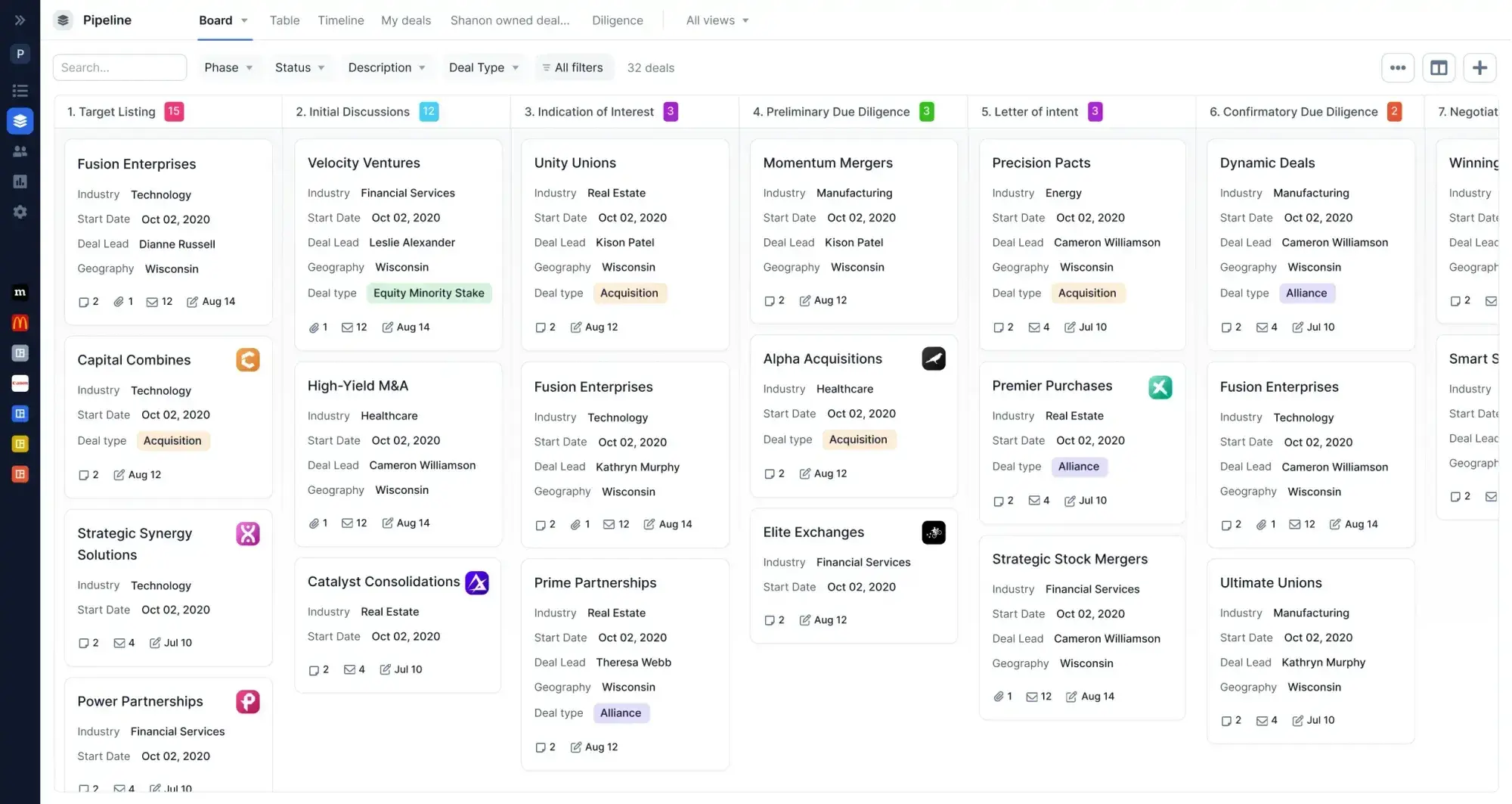
M&A Software for optimizing the M&A lifecycle- pipeline to diligence to integration
Explore dealroom

Want to wear your M&A expertise?
Check out the M&A Science store.