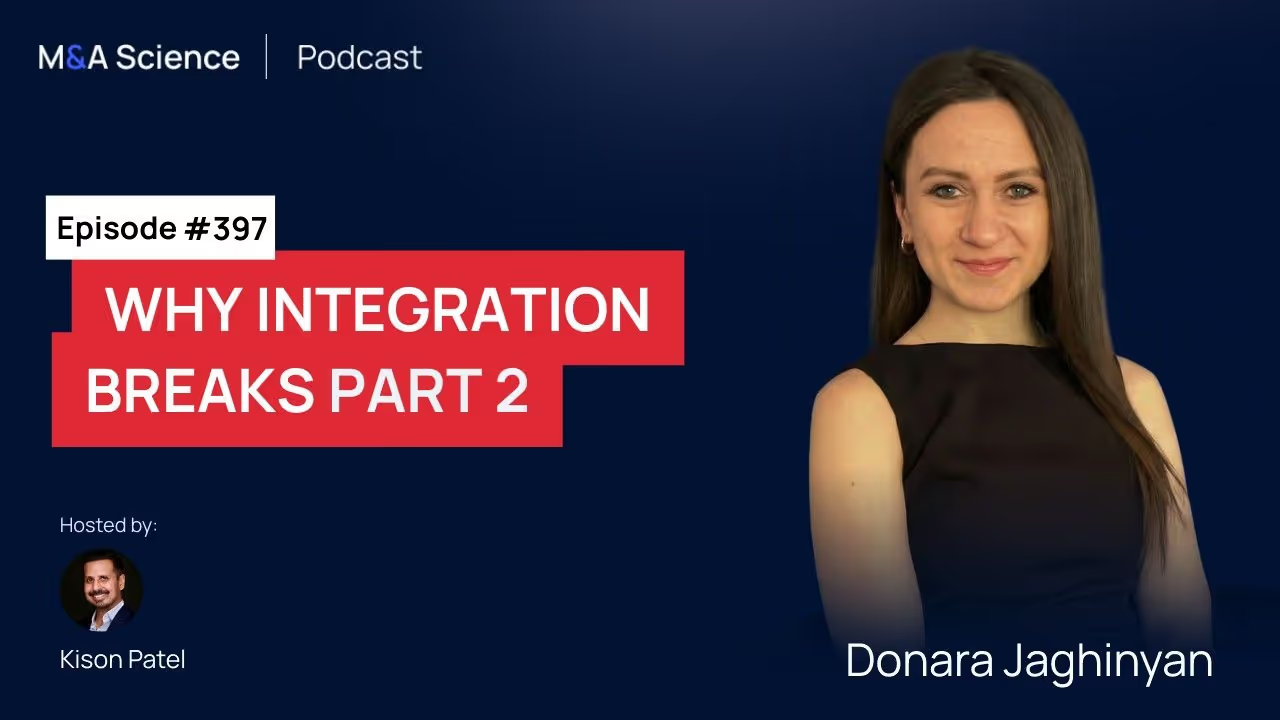
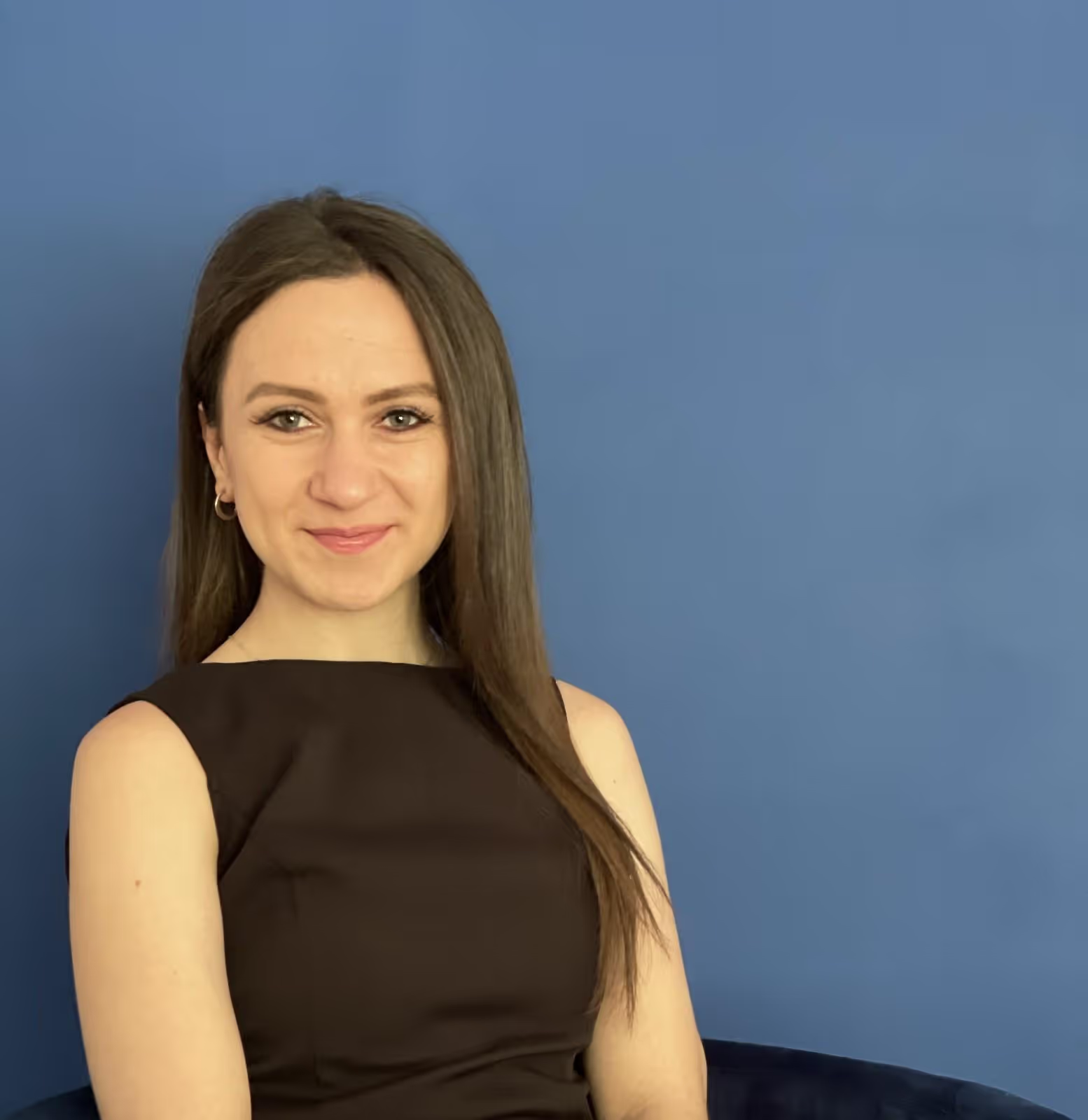
Donara Jaghinyan
Donara Jaghinyan brings a unique background to M&A integration—starting in international relations in Armenia before transitioning to corporate deals and transformations. Since joining her first Integration Management Office in 2021 during the Harvard Pilgrim and Tufts Health Plan merger, she's lived and breathed M&A, leading diligence, post-close integration, and TSA management across multiple industries. Her operational experience on the ground—not just governance from a distance—gives her a rare perspective on what actually breaks during integration and how to fix it before it's too late.
Episode Transcript
PART 2: Why Integrations Breaks
Kison : [00:00:00] I am Kison Patel, and you are listening to M&A Science where we talk with deal professionals and learn valuable lessons from their experience. This podcast focuses on stories, strategies and what actually happened during M&A deals.
Kison : Hello, M&A scientists. Welcome to the M&A Science [00:00:30] podcast. This show is part of our mission to rethink how M&A has done and build the operating standard for buy-side M&A. That old school sell led approach, that era is over. Buyer led M&A is all about strategy, alignment and execution.
Kison : Putting value creation at the center of every deal. Let's be real, not just about closing the deal. It's about making it successful, and we get there by learning directly from the best. If you want to go deeper into the framework, grab my book, bio led M&A if you want the [00:01:00] full system. Frameworks.
Kison : Templates, exclusive content expert q and a sessions, access to me and the AI powered Intelligence hub. Join the M&A science membership@mascience.com. It's the Home of buyer led M&A. While you're there, make sure to sign up for our free newsletter. Leave the deal, own the outcome. Let's jump in. I'm your host, Kison Patel, chief scientist at M&A Science.
Kison : Today I'm joined by Dara Ja Yang of [00:01:30] transformation and integration leader with deep experience in public and PE-backed environments. She's led diligence, post-close integration, TSA, execution and enterprise system implementations across healthcare, SaaS, professional services, and financial services. He's one of the rare operators who's actually done the work.
Kison : Not just governance on a slide, but real integration, real TSAs, and real change management in the trenches. Today we're gonna talk about all things it takes to make a deal truly [00:02:00] successful, from integration planning through execution, TSAs, change management, and more. This episode is part two of our conversation from last episode.
Kison : If you miss part one, I recommend giving that a listen first. Otherwise, let's pick it up right where we left off. When people say integration debt tracker, Uhhuh, what is it and why do they have it?
Donara: Integrations accumulate debt and not everything being integrated within third states. Is this
Kison : like similar [00:02:30] concept as like technical debt?
Donara: Yeah, it can be the same. Sometimes you come up with the interim processes that cannot be fully achieve to the target state without the cross-functional dependencies, the system being set up, employees being hired, so. For the function leads to not come to the program level reporting all the time. If they think they have achieved significant progress.
Donara: It's more business as usual, and there is one or two, uh, long tail [00:03:00] harmonization or integration items still remaining. You give the liberty of, okay, functional integration is complete with the caveat of one or two items. You hop on a call, you document it, and you assign owner. You assign timeline dependencies.
Donara: It's a tool to make sure it is not forgotten. 'cause once you close the integration, or six months after, or a year after, it's not an active topic. It's easy [00:03:30] to get lost.
Kison : So these are the long tail items that, hey, this didn't get done in the 90 days. Yes. Or it's gonna take longer. Mm-hmm. And you're tracking that so somebody else can take ownership of it,
Donara: somebody else, or they still have the ownership assigned.
Donara: But it's a long tail. Sometimes it can be, you have to create a new policy in order to actually integrate this item. So in the big organizations, it's not that they access to draft and get the policies approved. And there's [00:04:00] transformation or enterprise activities need to be happening for the integration to be complete.
Kison : Yeah. Integration debt.
Donara: Yes. Oh, beautiful. Long lists. We tried to keep it short, but.
Kison : We talked about change management before, and you did some stuff around that. You like learned some stuff, implemented some stuff, saw how it worked and didn't work.
Donara: Uh,
Kison : talk to me about it.
Donara: There is organization level and how you implement.
Donara: Right. I did a [00:04:30] leadership certification at Cornell University for like six months. It was very helpful and seeing M&As from both buyer and the seller side. It just truly bridges the gap as an IMO leader to account all the activities that are happening in part of the integration. So integration is the how, is the, what is happening to the employees, but change management is how they experience the integration.
Donara: When you talk about change [00:05:00] management, it can be organization level restructuring, coming up with new policies. But in the integration lenses, it's multiple layers. How do you bring in employees? How do you change behavior before you change the processes? How do you make sure you adopt to their processes?
Donara: Sometimes, how do you make sure that they adopt your processes? There is cultural components to it as well, so it's making sure you [00:05:30] for the how you understand the gaps. To understand what roles or responsibilities are changing. It's a big exercise of not just integrating.
Kison : Yeah, you're gonna have to spend some time to convince me this is a bunch of fluffy crap.
Kison : Now I'll start with the going back to the culture piece. Yes. Because I feel that comes up so much with integration. Mm-hmm. In the beginning it was probably the scapegoat, like integration failed because the cultures didn't align and that we shouldn't have bought this company, blah, blah, scapegoat. And then [00:06:00] I feel like things are evolving.
Kison : Here's this old school. You buy a company and just like they're gonna figure it out and make their own culture or unique, that's old school corp dev guy. And then you have this more progressive approach where we wanna understand their culture so we can tailor our integration based on the uniqueness of each culture.
Kison : Like some departments will integrate fully nicely. Sure. Some maybe not. Like have different operating models and styles and leadership. Maybe we should partially or keep 'em separate. I've seen that and then I've seen some where it's more of culture is [00:06:30] the strategy. We're proactively trying to change our culture and to be fitting of how we operate.
Kison : I wanna start there because I feel like the change management comes up and people have a different view of how that comes in play, but I wanna understand how does that intersect with the perspective and actions you take against the cultural. Part of the organizations, but then maybe you can convince me that change management's the thing and that it actually like facilitates [00:07:00]
Donara: look at change management as a framework.
Donara: It sits on top of the integration, like being agile. It's like how do you operate? It's the how, the experience.
Kison : Okay. I can get with Agile, I think exactly.
Donara: It is the same and I a hundred percent agree. Most of the integrations fail not just because of tools and processes. They fail because of the people.
Donara: But it happens. Most of the cases. You buy a company, and we're gonna make you professional. We're gonna show you how integration is. That company has been operating for a [00:07:30] while with the change management. You understand? What are the key drivers on the seller side, on the company that you acquired? What are the key processes?
Donara: Who are the people who are doing those processes? What are the gaps? Sometimes you take over, but sometimes you bring in as well. Are the people ready to assume it? It's not just the headcount or like the bandwidth. Are they trained? Do they know what they're taking over? So they need to be [00:08:00] informed.
Donara: There's so many layers to it. So you do an assessment. Coming to your point, buyer led M&A right
Kison : buyer led baby
Donara: a hundred percent. As a buyer, you want to make sure that they feel the integrity. They're part of the integration plannings because if you do not get there, buy in, you have to work with them to integrate.
Donara: You have to work with them to give you all the information. You have to work with them too. Draft up materials and [00:08:30] all the documents that you need to import to your systems. So is the experience of how you talk to people, how you do the assessment, their gaps, and then what do they need to be successful?
Kison : Is this a work stream?
Donara: No. Can be depends. Integration,
Kison : I'm failing that answer.
Donara: Legal will love that. It depends but. Usually change management sits in the [00:09:00] HR department, but that's if you are doing organizational change in the M&A context, it's more of a framework that has a function lead on the technology side.
Kison : When there's like a transformation function, is that sort of. AKA change management? No. No. Okay.
Donara: Transformation can look differently. We've seen where we were a SaaS company bring in, uh, professional services. That's where you do transformation of how you recognize revenue. [00:09:30] How do you transform your ERP systems?
Donara: How do you train your new teams? How to do that? It's a
Kison : massive initiatives. A transformation. It's a
Donara: tool. That's the conflict where that, that's
Kison : where you see like how IMO and transformation could intersect. Yes. But sometimes they're overlapping or repurposed, I guess it
Donara: is. That's where sometimes the harmonization exercises happen as well.
Donara: So I've seen, and there's the conflict where you talk, for example, to hr. Is it an enter integration [00:10:00] activity or it's a harmonization exercise business as usual. If you look at it, it's still integration because. You bring in five countries into your tent, and now you have to integrate to one benefits package, right?
Donara: Sometimes you live it as is. Countries can drive some decision making, but the ideal goal is to have. As minimal packages as possible. So yes, employees they want, or after acquisition, they have benefits, but it doesn't mean the [00:10:30] integration is done because you yet have to harmonize your benefit packages in Spain where you have five entities.
Donara: That's where the transformation harmonization and integration bubbles intersect.
Kison : Okay. Let's go back to this change management. Yes. I wanted you to convince me on this. Let's say I'm buying a company first time doing an acquisition, and I'm just like telling you, Hey, my friend told me to talk to you. I'm gonna go do this acquisition.
Kison : Teach me, like, how would you get me to start thinking about change [00:11:00] management? I can probably even say I got a little bit of uncertainty with how this founder is gonna fit into the company. Mm-hmm. And stuff like that. Teach me, how would you get me to implement change management as in the framework?
Donara: There's multiple surveys that you can do at the earlier stages. For example, how formal the communication channels are. What are the dynamics of under and employee based conversations? What are the channels they use? Sometimes like in the technology firms, dev teams, just a slack. Multiple communication [00:11:30] channels, but
Kison : some of mostly like what you do in cultural diligence.
Kison : Of course. Yeah,
Donara: of course. Okay. That's the driver of the change management. You are trying to understand how they operate. Are they truly prone to keeping in systems or even experience of introducing new system and they were okay with? Yes, it's a better process. So you can do surveys, you can capture it from the conversations as well.
Donara: Sometimes it's the micro behaviors that you identify that come [00:12:00] out during the diligence as well.
Kison : Is that the biggest thing I'm trying to address when I think of change management is avoiding points of friction or identifying points of friction.
Donara: Of course, yeah. It's not just completing or integration is done.
Donara: You have to make sure people adopt it.
Kison : The goal of change management is to figure out where there's gonna be friction. Some people are pretty amenable to change, some people are not. And is it, is a goal of framework that you're identifying where there's friction and then being proactive to overcome it?
Kison : Or is it more of like just a end-to-end framework that [00:12:30] we're really pushing a change on? On all front
Donara: combination? It's a change that they are pushing upfront. But how are you gonna change that and trying to. Be proactive, what would be the unknowns? What would be the resentment that you will receive? So, and you start playing.
Donara: So
Kison : essentially you gotta be agile in this framework to Of course. Okay.
Donara: You know what's interesting on the change management is the change agents that I've learned in a hard way. Sometimes you think that, oh, you are ready to [00:13:00] roll out and you do mass announcement, and that's where it happens. But sometimes top down communication is more important where.
Donara: Before mass announcement, you find the manager from one team or like higher up to have enough influence and you try to teach them or just walk them through why we're doing so for example, oh, these are like
Kison : the neighborhood mayors where they,
Donara: of course, but imagine if I'm coming to your team is like, Hey, we are going to change your expense management [00:13:30] system.
Donara: People are used to it. They're using for many years, but it's not just, or you've been doing manually. Let's assume. But if you have as a manager, you can tell your teams, look, instead of three weeks, no, I can approve your expenses within three days. It resonates with the people more. So it's levels up, communications and making sure they're unable sometimes coming back.
Donara: It's not just integration, it's how you enable them to adopt. Whether it's the trainings, it's the [00:14:00] guides, it's the tools that you give along with it, and making sure that that's. Also receiving back the feedback. It's not only change management on the feedback side, but you have to make sure that you hear is two ways communication being convinced yet
Kison : I'm getting there.
Kison : To me it's like being pragmatic about the change. Okay. In an adaptive way, you're accepting change isn't easy and you're actually putting more of a pragmatic effort [00:14:30] to really like have extra assurance that. You are supporting change by learning these variables, figuring out the key change agents and being able to like make that part of your strategy in integration?
Donara: Yeah, usually people don't really resent the change. They resent the uncertainty. So when you go out and you're like, we have to use this process, we have to do this now [00:15:00] without the why, it's really. Or if you don't really communicate for a while, that's where it's part of the change management of what is gonna change.
Donara: And then do layer up of how many communication do I need? Usually you have to communicate up to seven times for the communication too. Ah, reach to the end user. It's the entire framework of being proactive, knowing what's gonna come and building up around it. Whether it's true [00:15:30] materials, it's true meetings.
Donara: Sometimes it's also the manger enablement as well. It's a game change management to make sure you work company A. Now you are under the company B, and there's multiple systems. Do the managers know what are all the systems? And as an IMO, you help the mangers drive the change by saying, yes, this is two systems that we are doing, but the end system is gonna be B because all those questions are gonna come up.
Donara: Again, it's [00:16:00] tying up to the documentation and making sure that teams are unable to receive the change when it happens.
Kison : Are there tools you use to facilitate this? I'm assuming like meetings are part of
Donara: for the change management?
Kison : Yeah,
Donara: there is change, impact assessment, training, needs, templates. There's so many that you can use.
Donara: I love playbooks, I love templates, but it is hard to use one for all. You can get the framework. You have to customize to your needs and you have to know your, it sounds like
Kison : it's a lot of [00:16:30] things that could be big variables that come up that you almost need to address them. Mm-hmm. Specifically if it's the benefit change example, like, Hey, this is actually, we identified this is gonna be a change and it's not gonna be received positively.
Kison : Like we're gonna have to get ahead of that. We have to really. Figure out a plan to communicate it and elaborate the why and get people comfortable with it.
Donara: Yes, usually dad would sit on the functional level, but we would, the question would be the function to ask those [00:17:00] questions. Are people gonna react to it?
Donara: Are you ready to provide materials? Okay. It doesn't have to materials or referential links. Sometimes it's the geographics driving some politics. We'll help, definitely the functions come together by asking the right questions, bringing up the themes and the audiences. There's no standard template or one size fits all.
Kison : Alright, I'm starting to get it. You mentioned that US work standards don't always [00:17:30] translate globally. You learned this firsthand. Can you tell me a little bit about it?
Donara: Yes. With the mindset, having replying emails by end of day or answering. If it's critical on certain after working hours or the US work dynamics versus Europe or Middle East, eastern side of the world where they, yes, work is professional, but taking the lunch break is important.
Donara: Taking the vacation as a vacation is [00:18:00] very important. You learn that while working on the actual projects where. You firsthand expect that it's a US HQ is in us and they have to operate that way, versus it takes layers of approval on their site before they reply back. It takes over the weekend to reply back.
Donara: You just go to adapt to it. Understand that not everyone works as much as it's us working culture is the same [00:18:30] as European or Middle East. You just adapt to it. Establish working relationships.
Kison : Culture gets, can get more challenging on cross-border deals. Have you experienced that?
Donara: Yes. In a hard way.
Donara: Sometimes geographics drive how people operate, how decision making is done. I had an experience in TSA again in Middle East, where we had to transition payroll and benefit [00:19:00] services, uh, for employees and believe it or not. Many months into the TSA. It wasn't just moving forward as an IMO, we were working with HR directly and they were handling the relationship, but at some point it got escalated to that we have no extensions anymore and we have to exit it.
Donara: And that's where I almost stepped in. In some of the countries, there is [00:19:30] hierarchy, there is role-based and sex-based decision making that is being influential. And as a woman going to conversations with a group of men, it was interesting dynamics trying to, yes, try to speak legally or drive conversations per the contract terms.
Donara: You see how yes, contractors, of [00:20:00] course there, but that's not the main decision driver because they have to make sure they talk to one specific person in order to release some people from the payrolls. So it's just interesting situation handling, I would say that. So they won't take
Kison : direction from you 'cause you're a woman.
Donara: That as well. It had to be escalated to my manager and it [00:20:30] was interesting conversations. An email that I would send like multiple times wasn't being replied on, and then whether it's a title conversation, whether it was a woman, but my manager. Emailed. Then within a day it was like, sure, we'll do that.
Kison : Okay. This is pretty extreme of some culture challenges.
Donara: Yeah, it was interesting.
Kison : What about on the other end? Have you had cross forward deals go well?
Donara: Of course. Oh, interesting. [00:21:00] Most of the cases they do. If you build a relationship, you have the respect for sure. That's one of the key aspects that we had as part of the IMO, is making sure you connect with the parties and you connect the functional heads from the founder and the seller side as well.
Donara: But what I would usually do is take a time to learn them. Learn about them. Learn what they do, and learn about their pain points. And that's it. Not just fix it, not just day [00:21:30] one. I'm gonna change this. You just hear it around it. Interesting story that happened was one of the people from the acquired company, they were in Western Europe.
Donara: They saw my last name and they're like, are you from Armenia? And after confirmation they said that they were in Armenia specific year and they went to the university that I was in the same time where I was at school. So it was a nice bonding moment where we started [00:22:00] like engaging around it. Then I started like getting to, like asking where they were after that.
Donara: I felt like the relationship, the working relationship was so smooth. So sometimes it's the human component that comes into the play of it's not just work. Yes, I hear you. And then I need this. I'll get this done for you.
Kison : You're hitting on a good point is around trust. I mean, do you feel you gotta really meet people in person to sort of find those?
Kison : You could do it on a Zoom call, but it's not the same.
Donara: It's [00:22:30] definitely in person is the best. It's no layers. You get the emotions, you get hands-on experience. But we live in digital world. Not all the teams have the opportunity to travel and meet the peers in person. If you can do it in person, that's great.
Kison : Do you have an approach where you're proactively trying to build trust, where you're asking them where they went to school, how many kids you got, and where they grow up?
Donara: It's truly curiosity in me that building relationship is the best thing to get work done, [00:23:00] and I don't do that. With that being in mind, I just genuinely am interested what works for them.
Donara: How did they land on their position? What has been their journey? And it just genuinely comes. They're like, how about you? How did you land in the IMO? You just build the trust by similarities, by pain points and the challenges that you had, and I've seen the relationships come into play where you have to do [00:23:30] things and people have many things on their plate, but they'll tell that.
Donara: I'll get this done because at the same time, it's the trust that they know if they have roadblocks, they have other priorities. As an IMO leader, it's, it's critical. We need to put a pause for a day or two for this team not having the bandwidth they have to do this, but you have the trust, they'll come back to it and within a week it'll be executed.
Donara: It's again, coming to the work [00:24:00] relationships.
Kison : Where do you see like friction actually coming up
Donara: the deal?
Kison : Yeah, it's always good before LOI,
Donara: of course, that's, that's the fun part. A
Kison : lot of fun excitement there. But then
Donara: it depends on how well you communicate. There's unknown unknowns and you don't know until you close the deal.
Donara: But from the leadership side, you want everything to be perfect when you communicate to employees. But from the employee side, like bottoms up, you don't [00:24:30] really care about the end goal. You just want. Worry about the uncertainty where it comes. And yes, you are acquired, yes, you know you're gonna be integrated, but communicate to me, that's where the friction happens.
Donara: Where sometimes leadership pauses. When they think communication, if they don't speak or they don't have right answers, it's better to be silent versus no, it creates just sensor fatigue. So you get a read
Kison : on this pretty early?
Donara: Yes.
Kison : I'm thinking of [00:25:00] a deal where the other executive is such a PIA on doing just initial, like first pass of diligence, like just to get the first pass of diligence.
Kison : It was such hard thing and I could tell we didn't move forward with that deal, but that would've been,
Donara: look, we want the integration to be successful on both like execution side and the leadership side as well. And everyone understands, yes, there is a limitation how much you can expand on the team, but.
Donara: You want to integrate it [00:25:30] and for the leaders, it's the product. Is
Kison : it all communication? If I were to ask you as an operator, yes. What makes deals successful? Post close? Is it all about communication? What else? What would you say? It depends. Bottom line?
Donara: No, no, no. Can be illegal. Depends. It's two sided. So for the leaders quick integration.
Donara: First sold product, that's how you would look at it.
Kison : First sold product like jointly.
Donara: Of course, like integrated product line, already branded one
Kison : actually I [00:26:00] That's sort the right metrics, like first sold product, like is it of course mind company, of course it's the first
Donara: deal. Yeah. Whatever gets the revenue metrics.
Donara: But for the functional side, as the operator, it's a bit different because. You see, not all the companies have the manpower of bringing just M&A people to do just the deal. Usually it's the people who do their daily jobs on top. You bring in an M&A and you see the bandwidth. You see the struggle.
Donara: For [00:26:30] me, it's successful when we advise both sides, yes, this is important. What's the earliest we can do, but also what's the healthiest way that we can do so the burnout doesn't happen. Attrition doesn't happen. You wanna maintain the knowledge, you wanna maintain the people, but in the right way. That's tying back to the K one controls.
Donara: Not everyone like, like things happen that people leave uncertainty. So many things, and you wanna make sure you have the right controls before [00:27:00] friction happens.
Kison : What are the biggest things that go wrong in integration?
Donara: All the beautiful plans that you lay out for 30 days, 90 days, they shift,
Kison : get delayed.
Donara: They do, they delayed. But sometimes the actual integration strategy happens as well with the leadership changes. So if you have a deal sponsor or you have person A controlling the p and l and then it changes and the new leader comes leader in leadership, they wanna, of course, they wanna adopt to their process.[00:27:30]
Donara: Sometimes they introduce complete. Shift, which drives, how do you do integration on the front office on your contracts and go to market can change as well.
Kison : Right. So delay plan, leadership changes.
Donara: Mm-hmm.
Kison : What could you do to overcome that? What's the best way to do fast integration?
Donara: Fast integration. Give me all the teams.
Donara: I'll do within 30 days. Just like a right head count will do that, but sometimes that doesn't really help because [00:28:00] you sometimes have to. To integrate. Sometimes you bring in process or tools that as a buyer you are not there yet, so you might have to implement a new system in order to complete full ERP integration.
Donara: So just trust an IMO when they give timelines or when they push back. I think that's really important because we sit in between, we hear. [00:28:30] What the leadership goal is, the why and what, but we also hear the how, so just being in between and like listening when it needs to take six months because it needs to take six months.
Donara: Hmm.
Kison : Tracking the balance, they're not just artificially making,
Donara: of course,
Kison : timelines that are achievable.
Donara: Diligence and synergies are a really good thing, but you're gonna try to integrate in the right way and do no harm and make sure that. [00:29:00] Doesn't break. That's what you wanna do.
Kison : If I hired you as a my IMO lead on this deal, I'm eventually gonna do, eventually people on this podcast will be the first know, what is the first thing you're gonna do?
Donara: Oh, my mentor. And say, I just got hired. No, I think Kevin, the right team is very important. It doesn't have to be big or so. I'm only
Kison : giving you, I'm not just
Donara: me. Oh my. Okay. You gotta work with
Kison : the functional leads, but,
Donara: okay. [00:29:30] Diligence, just hands on. Learning what your integration strategy search is. Very important.
Donara: Jump in
Kison : diligence, right? Of course,
Donara: yeah. On top of diligence is the parallel how and where you are marching, so the questions are in the right way as well ask, just merging into two and stand up a new business.
Kison : What's the craziest thing you've seen in MA?
Donara: Oh, in my experience. One TSA where [00:30:00] I wasn't getting any traction on my emails and it took, um, just my manager shoot in one email and TSA was resolved within a day.
Donara: Some founders just stepping out from their equity deals. They're like, we just did the transaction. We don't wanna stay another two or three years.
Kison : That's actually really interesting because I, I know some people actually recently that had a big exit. I already know they're probably on a two, three year earn out, [00:30:30] and you hear about that.
Kison : I think in one where it was a huge earn out and they walked away because they got pissed off at the integration process. Does that ever happen?
Donara: Sometimes it's the pissed off. Sometimes there is a clear intention when people make. Founders come up with their business, it's like, I wanna sell it to company X and I'm done.
Donara: But some founders, it's like they leave and breathe with it. So it's their culture, it's their [00:31:00] baby. So even after the acquisition, they wanna sell. They, they are usually transitioned to be head of like r and d or like a strategic advisor. So that's the difference, how much their relationship with the products and that part is what
Kison : sours
Donara: Yes.
Kison : Things for them. Yes.
Donara: Coming back to probably the founders in the integration plans, it's important to get their buy-in so they [00:31:30] feel that they're integrated into the planning.
Kison : This has been a great conversation.
Donara: Thank you, kiss. I appreciate taking
Kison : time from doing deals to help me become better. MA scientists.
Donara: Thank you, Kione. Thank you for having me.
Kison : If you've gotten this far on this podcast, my fellow M&A science brothers and sisters out there, I love to hear from you. Gimme feedback. What you think on this? I'm trying to get more, I. Technical in these podcasts, so we're diversifying getting people in different roles like ra, who's very hands-on doing these M&A deals and sees it, the weeds of it, what [00:32:00] really goes wrong and well, I'm always open to ideas of topics or other roles that I haven't interviewed on.
Kison : Connect me on LinkedIn until next time. Here's to the deal.
Kison : Thank you for taking the time to explore the world of M&A with our podcast. We love hearing feedback. Tag us on a LinkedIn [00:32:30] post, add a review on Apple Podcast. We'd love to hear from you. If you need help standing up an M&A function or optimizing one that you already have. We're here to help, and if we can't help you, we probably know someone that can.
Kison : You can reach out to me by email Kison, K-I-S-O-N, at ma science.com, or you can text me directly at 3 1 2 8 5 7 3 7 1 1. If you just want to keep learning at your own pace, visit ma [00:33:00] science.com for a lot more content and resources. That's where you can also subscribe to our newsletter. Again, that's ma science.com.
Kison : Here's to the deal.
Kison : Views and opinions expressed on M&A science reflect only those individuals and do not reflect the views of any company or entity [00:33:30] mentioned or affiliated with any individual. This podcast is purely educational and is not intended to serve as a basis for any investment or financial decisions.
M&A Software for optimizing the M&A lifecycle- pipeline to diligence to integration
Explore dealroom

Want to wear your M&A expertise?
Check out the M&A Science store.