M&A Science Podcast
 / 
Listen Now:

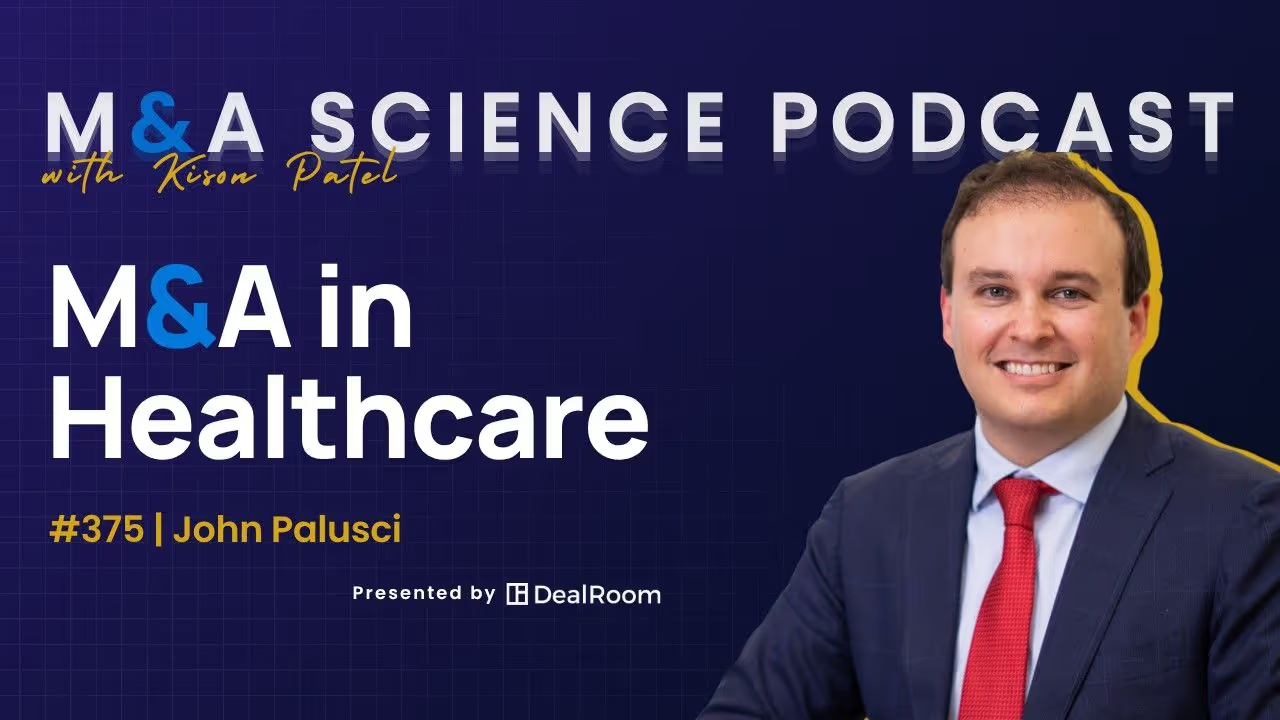
M&A in Healthcare

John Palusci, Former Vice President of Transformation and Strategic Finance, BAYADA

In this episode of M&A Science, John Palusci, former Vice President of Transformation and Strategic Finance at BAYADA, joins Kison Patel to discuss how to build a repeatable, Buyer-Led M&A™ engine within a nonprofit structure. John walks through his journey from IT to finance to corporate development, detailing how he helped scale BAYADA’s deal strategy with a focus on long-term value, integration-led diligence, and mission alignment. He shares real lessons from joint ventures, cashless acquisitions, and how to avoid surprises in highly regulated industries like healthcare.

Things you will learn:

  • How to structure healthcare M&A for long-term mission alignment
  • What a “conceptual pro forma” is and why it accelerates early deal screening
  • How to manage integration risk in people-first, regulation-heavy industries
No items found.

John Palusci

John Palusci is the Strategic Finance and M&A Leader at BAYADA Home Health Care. With extensive experience in mergers and acquisitions, he excels in executing strategic deals and driving growth. His expertise includes financial control, investment appraisal, and leveraging technology to optimize M&A processes. John is adept at providing complex financial insights to executive teams and boards, ensuring informed decision-making. His leadership fosters high performance and strategic alignment, making him a key figure in managing and executing successful M&A initiatives.

Episode Transcript

M&A in Healthcare

Kison: [00:00:00] I am Kison Patel, and you are listening to M&A Science where we talk with deal professionals and learn valuable lessons from their experience. This podcast focuses on stories, strategies and what actually happened during M&A deals.

Kison: Hello and welcome to the M&A Science podcast. [00:00:30] This podcast is part of a mission to rethink how M&A is done. The old school seller led approach, it's dead buyer led M&A, is all about strategy, alignment, and efficiency. Putting value creation at the center of every deal. And let's be real. It's not just about closing the deal, it's about making it successful.

Kison: We uncover what truly works in M&A by learning directly from the best. I'm your host, Kison Patel, CEO, and founder [00:01:00] at Deal Room and Chief Sciences here at M&A Science. I'm joined by John Pelusi, recent strategic finance and M&A leader at Bayada Home Healthcare, a nonprofit organization delivering home health, hospice, and personal care services across the us and.

Kison: John played a central role in scaling ADA's acquisition strategy, building a repeatable M&A engine, tailored to the complexities of a highly regulated people first healthcare [00:01:30] environment. He's worked across the full deal lifecycle from sourcing and diligence to integration, the sharp focus on long-term value creation and mission alignment.

Kison: Today we're digging into how he helped shape a buyer led M&A model inside a nonprofit structure. How to evaluate deals as a permanent owner and what makes or breaks a healthcare acquisition. John, how you doing? Great. Good to be here. Thanks for coming to our deal Room office in Boston. Boston. In Boston.

Kison: Congrats. Yeah. [00:02:00] Can we kick things off a little bit about your background?

John Palusci: Recent leader at Bayata, focusing on M&A? Probably a non-traditional, non-linear M&A background ton of people who start in M&A, but I definitely didn't went to school for chemistry of all things, and by the end of that, had a real high tolerance for pain for the details and really complex things and wanted to do anything but chemistry by the end.

John Palusci: And then from there, found bayata really in a IT implementation gig. It was their first attempt to get off of a very old [00:02:30] legacy, somewhat paper-based system into the early electronic medical health records stuff. I got to learn that business soup to nuts really quickly. 'cause you were replacing every process with a new system was getting into like the whole data, things moving around between systems, how it all came together and through the integration work through that.

John Palusci: That's why I actually learned accounting is from an IT perspective, which I don't know if I recommend for a lot of people. I went from there to getting into analytics and data [00:03:00] warehousing and trying to connect data to financial results. And that's where, for my relationship with the CFO at the time, 'cause I was the one pulling reports for him for quarterly management meetings and earnings reports, and got to sit next to him during big deals and see how it actually came into play.

John Palusci: And that was like my first exposure into M&A. I was working with him for a while focusing on just running the business, and then he and the founder said, Hey, you should probably learn finance how it really works. And they supported me going to Wharton. I did Wharton on the weekends, [00:03:30] their executive MBA program.

John Palusci: And that's where I got to really learn the real high finance and fell into taking a corporate valuation course. And that's where I loved like the work, like how it actually works, the discounted cash flows, the comps, building the detailed models. And wanted to take that back to Bay to actually implement those frameworks, which are textbook like textbook frameworks into how deals get done.

John Palusci: But then when I went back after the NBAI chartered the FP and a Team [00:04:00] Bay was maybe billion dollars at the time, and I was the traditional grumpy finance leader always saying no to the deal team. This is too expensive. Do you understand what would need to be true to justify this? They called me Dr. No, and then after a few years, we did the deals anyway, but after few years of doing that, the CFO said, Hey, would you like to be on the other side of this and be on the deal team, find deals that you'd say yes to?

John Palusci: That's when I really started being on the front end working [00:04:30] with the corp dev leader to source and find the deals. A lot of it was inbound, but to really frame up. Deals from that standpoint.

Kison: Hey, so you're like really like organically home brewed? Very much so, yeah. Product for the M&A team, what did the actual like deal, journey look like?

Kison: How many deals have you worked on and what types of deals? Yeah,

John Palusci: no, I like sat alongside like a few deals very early on, like pre MBA, but when I really got into M&A was when Beata was on its joint venture with health [00:05:00] systems journey that was partnering with health systems to either. Chaotic contribute operations to form a new venture.

John Palusci: The hospital contributes theirs. Maybe both are contributing or you're starting from scratch to to build something new. When those transactions, and I did six of them during my time there, you are doing three or four deals in one. You're valuing yours, you're valuing theirs. You're valuing what it looks like when you put it together.

John Palusci: You're arguing over value. But then the end of it, you're not walking away. You're [00:05:30] married and you're working together to make sure that the sum is greater than the parts. Most of my chops were cut on those joint venture transactions that again, I was involved in bringing them to life, but then I was also the CFO over the portfolio after the fact.

John Palusci: I actually had to live with the performance I had underwritten, which really tailors how I think about deals. It's not just about getting the deal done and chucking it over the wall, it's about living with what you buy and the value you said you were gonna [00:06:00] create. Got to live through that for about five years in the joint venture world.

John Palusci: And after that, after the GV engine slowed down, it was returning back to traditional tuck-in acquisitions, market entry, typical things where you do part ways at the end of it. Over the course of the career, it was maybe 10 to 15 transactions that we ended up closing, but looked at a ton along the way. It only ended up closing

Kison: 15 or so from up until now.

Kison: Up until now. Yeah. Wow. That's still a good run. I, uh, I'm curious, [00:06:30] you cover the whole life cycle. What's your favorite part? The deal?

John Palusci: I'm an academic at heart, the valuation process. I grew up in like the discounted cash flows, school evaluation, like yes, there's comps and what other people pay, but ultimately it's what the seller would be doing with it.

John Palusci: If not for a transaction, it's what you'll be doing it after you buy it. In healthcare, especially a not-for-profit, you have to typically get a third party appraiser to come in and do a fair market valuation. [00:07:00] Sometimes you've settled on a purchase price and you're just testing whether you fall within a third party's opinion.

John Palusci: Sometimes you'll say, we'll, let the third party determine the purchase price. And so interesting, you've got this other often jointly engaged, but an objective stakeholder like determining your purchase price. And both sides are part of the conversation and influencing the deal, which is mostly just kind of cash flows.

John Palusci: You get to see both sides, sophistications assumptions. You're ultimately arguing [00:07:30] over what a generic third party would come in if they bought this thing and how they would run it, and that determines the value. It's all very hypothetical and academic.

Kison: That's what I was curious about from what I've learned, the valuation's based on the perception of value from the buyer.

John Palusci: Exactly. It's very much buyer led and it's fun and interesting. And then. Oftentimes the appraiser is calling the baby ugly, which is a tough position to be in. But if you structure the conversation right, you've got a really good partner in the appraiser who's done a lot of these, [00:08:00] knows what good looks like, they can smooth it over, but at the heart of it, you're really agreeing on where the value's coming from.

John Palusci: It's not just throwing numbers out and agreeing to one and then debating it later. It's all has to ultimately be grounded in reality. Practicality, which is really fun and you get to work with really smart people on both sides. You build it together, it can get stressful 'cause you probably come to ultimate disagreements on things, but it's all out there and there's really nothing to hide [00:08:30] behind.

Kison: That's always the challenge and I'm personally exposed to it now on what I'm working on, but just the bit as spread.

Yeah,

Kison: it's always a gap there. Have you learned anything to bridge it and make it that part easier? Get the third party to,

John Palusci: yeah. No, I

Kison: mean, I feel like that would be worse. They fight more.

John Palusci: It's making sure that there's good alignment on the partner for sure. And sometimes to help smooth things over, like they have their appraiser, you work with them, or you may have your own or [00:09:00] you both. So happen to like the same one. So make trust in the appraiser. And then ultimately the appraiser may come back with a result that the seller just or the buyer doesn't wanna buy into.

John Palusci: And that could just end the deal right there. There's some gross misalignment of what either side thought the value was and that could end the deal.

Kison: I never thought about using a third party. That's an interesting idea. Yeah.

John Palusci: It makes the equivalent having your bankers go at it with their models, but their, the alignment of bankers is maybe different than the buyer and seller, and they have to be wary of that.

Kison: Most processes I'm working [00:09:30] on. I don't want them to be competitive, so I'd try to keep the bankers out of it.

John Palusci: Exactly. So yeah, so having a neutral, arbiter's not the right word, but someone who's jointly engaged, representing both sides, just trying to get a good academic answer.

Kison: You guys do that pretty often.

Kison: Use a third party to,

John Palusci: yeah. I mean, and for not-for-profit,

Kison: almost

John Palusci: have to. You have to, and you can either do that third party is always the best and most defendable. Other times, if it's a small enough deal, it may not be worth the price. So you can attest and have good backup that like you're paying fair market [00:10:00] value.

John Palusci: But yeah, the bigger the deal, the more likelihood you're gonna want a third party to at least check your math.

Kison: What's your sourcing engine look like? Because you mentioned you look at a bunch of deals, but you end up doing a handful of 'em. Yeah, I mean, it's

John Palusci: mostly inbound. You build relationships with, I mean, in the home health space, there's only a few brokers.

John Palusci: There's a few big ones and then it's highly local. Bay is a big place, and they show up on the Google search for the presence. A lot of it's inbound. Maybe we'll do a little bit of looking if we know exactly what we want. It could be the list that you get from the brokers, Hey, here's what we have for sale, [00:10:30] versus a very directed like connection.

John Palusci: The CEO and CFO have got their own connections. People reach out to them directly for ideas, and then probably like less than 10%, like there's a bank involved investment bank or something. That brings it to us. But those are mostly in the minority.

Kison: So not a lot of investment banks. But there are like brokers basically.

Kison: There are brokers, yeah. And then most your deals comes from the brokers, very few buy-side brokers. It's all like

John Palusci: sell side.

Kison: I've noticed that in highly fragmented sectors. Oh, that they Oh sure, yeah. End up with a lot of [00:11:00] brokers that just make a great career. There's just,

John Palusci: we've run into one or two. We're like, it's a guy.

John Palusci: He just makes his like little connection. He doesn't do much and he gets a piece of it and he just rinses and, and you know, it's a good gig if you can. You've carved it out.

Kison: Yeah. You go deep in that niche and again, fragmented. And you got very active buyers like you out there. And you know, in terms of building your funnel, the stage gates, what does that look like for your organization?

John Palusci: It all starts with a really clear and stable strategy where MA [00:11:30] referenced explicitly. Trouble initially was when there was not clear criteria from the top that you needed M&A or that it was important or where you were gonna choose to play. Making sure that it's very explicit so that you've always something to refer back to, whether it fits in as unclear, but strategy is usually pretty

Kison: clear criteria.

Kison: That's a big thing. That's definitely a fire lead. That's

John Palusci: absolutely. And then it's for the people who are actually. Helping with the buy decision, or in bad case, like the operators who are gonna be accountable for the [00:12:00] results. It's what markets, what size? Is it a long tenured business? Is it just the opportunity to enter a market?

John Palusci: Sometimes it's just like buying something really small so you can land and expand versus buying presents. It's getting really clear on that because as I mentioned, like our funnel is really wide and gets really narrow because so many things. A few years ago, we were really seriously evaluating almost everything that came in.

John Palusci: It was a lot of time for everyone. For us, the operator teams [00:12:30] like, look at everything you were basically saying, what do you think about this? What do you think about that? Most operators like growth. They're like, yeah, sure. I'm interested and they spend a lot of time and then something comes outta the woodwork and you throw it away.

John Palusci: It trying to get to know as quickly as possible on everything that comes in, whether it's the quick reply from in. No. After a few hours of work to no, after maybe a week or two of work, having very good criteria filters just makes everyone's life easier.

Kison: Yeah. Get to go. No, go decision faster. Yeah.

John Palusci: Or [00:13:00] Gates, right?

John Palusci: It's like, Hey, we're gonna go from just two people knowing about this deal, to five people knowing about working on this to 10 people working our way through versus like, go.

John Palusci: Being thoughtful and stage full about it.

Kison: Where's your big drop off? Like where, what are the big reasons why you would pull a deal out of the pipe? Yeah, and

John Palusci: healthcare highly regulated and the regulations are often state specific. Unless you're already in the state and know how [00:13:30] things work, you may not be super smart on it.

John Palusci: A lot of the times the states or even the federal government gets in the way. And a deal like physically cannot happen in Medicare agencies. For example, the actual license to Bill Medicare can't change hands more frequently than every three years. If it comes outta the woodwork that, oh, you actually bought this provider number two years ago, you can't do the deal.

John Palusci: Wow, there's nothing to buy. Or the state isn't friendly to outside. Participants coming in and setting up shop, you're looking for those [00:14:00] regulatory hurdles that will stop you from doing a deal. Other red flags are definitely in healthcare, definitely in home healthcare. It's a very person public community interest industry.

John Palusci: The sellers are usually the founder. They wanna make sure that their people are taken care of, their clients are taken care of, and maybe even the way of doing business remains the same, even if that's kind of what got 'em into their situation. Sometimes they wanna put like requirements, you're gonna keep this person, or you're gonna not care about the payer [00:14:30] mix, which can make or break a deal.

John Palusci: They put requirements on you after the deal. That just don't make sense for the buyer. Again, in some deals you part ways, but sometimes you're buying something from a company, you're just buying a part of a company and they're remaining behind and can actually influence how successful you are. Post close you wanna be on good terms, but if they're gonna.

John Palusci: Require you to not run the business the way you wanna run it. That's a reason to

Kison: kill the deal. The state regulations, the founders got some, yeah. Interesting [00:15:00] requirements. Toyota is a non-for-profit. And what's fascinating, we've talked about this in previous interviews, that Toyota was a for-profit.

Kison: Mm-hmm. Converted to nonprofit, which I thought was like a pretty, this is a multi-billion dollar company. Oh

John Palusci: yeah, it was. Tell can you tell us

Kison: like a little bit of that story just for reference?

John Palusci: It's incredible. Everyone should google it. So the founder, mark Beata started the company 50 years ago and kept it privately held through two thousands, early 2010s, and.

John Palusci: He wanted to make sure [00:15:30] that the mission and values like continued into perpetuity. The true founder wanted like the lasting legacy to be left behind after his time. Lots of research into how this has worked in the past. Other founder led transitions and he ultimately landed on. Transitioning to a not-for-profit is the ultimate way to cement in how Bayata was operating, because that's part of being not-for-profit is you set your mission and your vision and all those kinds of things and they really can't change and you can't go against it or else you lose your [00:16:00] tax exempt status.

John Palusci: In 2019, it was the official conversion to not-for-profit. I was doing fp and A at the time and I helped them with that. It was giving up a multi-billion dollar equity event, maybe first family in the future. To truly double down on the mission and values, which were always there. Nothing changed in the operations as a result of that.

John Palusci: If anything, it only validated what he was doing and really actually installed a lot more discipline in how decisions were made. Now that you had like an independent board, for example, that was something we didn't have before. [00:16:30] You didn't necessarily have the founder behind you to make up for your mistakes.

John Palusci: Financially, it was all about being independent and doing the right thing.

Kison: How does being a nonprofit, and that's like really epic by the way, like it's just, oh,

John Palusci: I think the last time a transition like that occurred was like the Mayo Clinic in 1912. That big give up in conversion. Yeah, it was a

Kison: big deal. A lot of value to give up, but for the greater cause.

Kison: As a nonprofit, how does that change the way you do M&A?

John Palusci: It's fascinating. It forces you to do M&A [00:17:00] the way you're supposed to. When you're a not for-profit, you have a singular mission and vision, and if you acquire something that deviates really far outside of that, outside of your core competency, like it puts you at risk, it kind of narrows your scope of focus a little bit.

John Palusci: Of course you can acquire things that totally do what you do, but when you get into adjacencies, oh, we're gonna look at tech platforms that support home care, or we're gonna look at a particular provider network that is about increasing quality in the community. You have to watch those [00:17:30] guardrails. It keeps you from becoming like that corporate conglomerate that's just about optimizing returns and improving your cost of capital.

John Palusci: It has to remain focused, and we all know people get into trouble when they've got outside their core focus, so it forces you to stay in that. The other piece that is, that it gives you is since you can't really be buying things for the sole nature of selling them in five years, financial sponsors the way they're looking to sell, or they're looking for the next big recap or the infusion of capital, you are buying something to own it [00:18:00] forever and run it forever and not necessarily turn it around and sell it.

John Palusci: You can have more patience with the deal. You're not necessarily looking to grow it like crazy for five years, so you can sell it. You can wait a little bit. 5, 6, 7, 8 years maybe longer bad. I had a hundred year vision a deal. Hopefully doesn't take a hundred years, but that means you can pay more. It doesn't, and that's where it can get tough because your time horizon may be longer, but your time value of money comes into play.

John Palusci: Someone pricing for. An [00:18:30] event in five years is looking at what they can sell it for, ebitda, multiples, expansion, all that kind of stuff. There's a short term like cash infusion that ultimately comes outta that and not-for-profit, like that's not necessarily there. Or may take a really long time and at some point your discount rate overtakes that your ultimate purchase price, which in my world is reflecting your discounted cash flows, time, value, money, all that kind of stuff.

John Palusci: It probably pushes your purchase price down. As a result, it can be seen as not as competitive, but it's because [00:19:00] someone who's selling to a not-for-profit is if it's the right partner, not just doing it for the big payout. It's all the other reasons of joining a mission oriented organization.

Kison: They're not gonna pay premium.

Kison: What about risk tolerance? I know you gotta stay true to the mission, but does it give you leeway to. Bets

John Palusci: It does because you can be more patient. I'd say like our risk tolerance is, it's interesting, we've probably gotten less tolerant for [00:19:30] liabilities and things that come out of the woodwork in healthcare and liabilities can pop up seven years later.

John Palusci: That had nothing to do with you. Something that the acquired company did. Maybe they didn't even know about, but it still follows you. Even if in an asset transaction it can follow you. Being really thoughtful about how you structure indemnifications escrows and successful liability, is that seller gonna be around in some capacity in five years to maybe make good on fixing that liability.[00:20:00]

John Palusci: That's focused on a ton. It probably lended us more towards focusing on less like the Big Bang acquisitions and more like the, Hey, we're gonna buy into a market and then expand on our own time and get more of the cash on cash returns from like the organic growth after the fact, less sell, the just buying revenue kind of thing.

John Palusci: I don't know if it was necessarily like the not-for-profit stuff or just me coming in as a leader for how we looked at deals, but it definitely changed some of the tone and tenor. For really only executing on Sure things

Kison: and [00:20:30] what do you measure on financially? Because if, for example, private equities, bottom line is IR what's your, no, I

John Palusci: mean we're looking at the same thing.

Kison: You're okay. Yeah. Yeah.

John Palusci: It's irr, n pv, that kind of stuff. As we're looking at things like, it's always grounded in the what needs to be true to at least hit the hurdle rate. It's not necessarily your downside case, but it's your conservative base case, so let's at least be able to meet your cost of capital.

John Palusci: That which maybe is a little bit risk adjusted.[00:21:00]

John Palusci: To some sense, you would think it would be a allow you to pay a little more 'cause you're trying to optimize the denominator in a way. It's still the textbook fundamentals of corporate finance. Granted, plus, if you're for bad, it's like you're serving more people, you're employing more people, you're creating greater access.

John Palusci: There's all those non-financial things that you're hitting as well that don't overtake the financial fundamentals but are part of the story.

Kison: Fire led MA is all about putting strategy and post close value at the center of the deal. [00:21:30] How do you screen early stage deals through that lens to get to it, know quickly when it's not aligned.

John Palusci: We covered it mostly, but it's really good filter gating criteria. Knowing what you want out of it is big, and that all comes from the strategy and not like asking your leadership to recreate the wheel on every deal, like you should have a very structured way for how you present opportunities. You're always asking and answering the same questions.

John Palusci: Deal so that they're not reorient because they've [00:22:00] got jobs. Making it as easy to say yes, as easy to say no as possible is just better for everyone. Consistency, structure. Repeatability versus rebuilding the wheel each time. Even if you're only ultimately closing a few deals a year. It builds credibility to have a repeatable process and not have it be something new every time.

John Palusci: What do you do to

Kison: get that standardization?

John Palusci: It's as simple as having your standard investment deck that you put together, the conceptual perform, which we'll [00:22:30] talk about standard format of answering key questions on what need to be true for. Volumes, labor top and bottom line. Those things you work really close with your operators on what they care about in a deal.

John Palusci: You're always asking those questions and making sure that they get those answers, as well as having a good sense of, with your diligence team, integration team of what they need to know to determine the complexity of a deal. We have a three scale of how complex they are and what are the [00:23:00] criteria for end.

John Palusci: Bringing too many high complex deal to the team, at some point you're gonna run that capacity and can't get 'em all done, or can't get 'em all done. Well. You have to be aware of the pipeline, the portfolio at all times to make sure you're cognizant of what else is going on. And sometimes we've had great deals before us, but just, Hey, we've got some other bigger stuff that was really complex and is.

Kison: So that's like a lot of templating, the process basically. Yeah, for sure. Yeah, it's, yeah. [00:23:30] You

John Palusci: mentioned

Kison: the conceptual performa. Can you talk me through what a conceptual performer is? Yeah. And

John Palusci: I don't know if it's a term I came up with and maybe you I can trademark. It came outta, you heard it here

Kison: first?

Kison: Yeah.

John Palusci: It came out of. Frankly, me being a little frustrated when I would put up something that was labeled proforma and then five years down the line, it would get brought up usually after D one staff to see the proforma said this, and it's me saying, this was really early days with no information. This was really like the very first step to not even to say go, but to learn more.[00:24:00]

John Palusci: I called the conceptual proforma so that it looked different so that it was not like the underwriting proforma, the closing proforma. The output was really basic, like top middle, bottom line, purchase price, diligence, costs, I-R-R-N-P-V, payback time, all that stuff. A very basic, consistent format that was informed with a very basic one page set of preliminary diligence questions that we ask everyone that if you're doing it well, if you have [00:24:30] all the data, it should take a really good analyst, like no more than a day to sort through the data.

John Palusci: Put together the rough valuation estimation, like the guidance of what the seller's expecting, and then what would need to be true post close to meet your hurdle rate. Very quick, low effort. You may reach out to the marketing team to figure out like, Hey, if we need this to grow 10 x in 10 years or five years, like.

John Palusci: What kind of market share does that equate to? And then the marketing team says, oh, you'll need to have 75% of the market [00:25:00] for this to be true. You say, oh, that's probably not gonna happen. Or it's working with the recruiting team to say, Hey, like we're gonna need to triple the workforce in three years.

John Palusci: What's the recruiting environment like? And they say, oh, there's plenty of people available, or one I looked at, it's like, you're gonna have to hire the entire nursing workforce of the state of Indiana for this to work, to pressure tests, all of those things. Again, it's about getting quickly to a no or determine if there's a, there there under very conservative, post-close assumptions, [00:25:30] and that's part of that sort of initial package that makes its way to the executive team.

John Palusci: Really the corp dev team, the analyst, me work with the operator who's excited about the deal and it's the operator presenting it to the exec team with the support of Corp dev me on all the reasons I wanna do it, but then supported with some real finance along the way.

Kison: So this conceptual performance is almost like you're like, what if scenario?

John Palusci: Yeah. And I'm sure everyone does their napkin [00:26:00] math, but it's structured, it's standard. Folks know what to expect. It's easy to sensitize for your what if scenarios. And you can put all, you can even Monte Carlo Carlo it if you want, which breaks people's brains, but you can get a sense of it. It's a very easy format to work with that people get, but then has beneath key assumptions overhead.

John Palusci: That kind of stuff. It means you need to really know the model, the business model. Like it's harder to apply that to a brand new business that you're not in, than one you're just [00:26:30] adding onto. You need really good analysts who partner with the operators and can speak their language on what needs to go right, what can't go wrong, that

Kison: deal to work.

Kison: Okay, but that's in like your industry is like super people oriented industry. How do you manage that transition to make sure you don't get a bunch of That's

John Palusci: like what it's all about quitting on you. Yeah, right. Home healthcare is the asset, is the assembled workforce, is what they call it. It's the people who are taking care of people, and they have the relationships with the [00:27:00] clients, with the other employees, with the referral sources that are sending business in.

John Palusci: If they all leave before the deal. I don't know what you bought. It's all about the people, and we've learned that the hard way. We haven't perfected it, but I think we've gotten a lot better. It's not gonna sound like rocket science, but it's about winning hearts and minds of the people who are transitioning, communicating at just the right time, which sometimes the states or localities will require you to notify things, people in certain timeframes, and you have to live within that world, but you wanna tell people [00:27:30] at the right time to inform them of the change.

John Palusci: But not so far in advance that it doesn't mean anything to them telling 'em a year in advance of a deal happening, it either just spooks them or doesn't really tell them anything. So telling 'em at the right time, maybe it's 90 days beforehand, that's not just the communication. It is like that's the start of this warm hug of the acquiring organization of this is why this is a net positive for you.

John Palusci: You're joining a big family access to resources you've never had before. [00:28:00] In Bayata, it's a very stable, known name that's gonna be around for a hundred years, a permanent capital base, steady, stable leadership. It's selling to them why it's good for them. And then you know, it works for some and, and hopefully most What's interesting and what we found is things that are coming to market is usually something going on business may be in decline.

John Palusci: Unhappy and are already thinking about leaving and they hear about a deal and that's like the last straw for them and they're gonna leave anyway. [00:28:30] You're looking for the people who are pretty loyal to the organization and who are loyal to their patients, their clients loyal to their colleagues, and you wanna tell that story of how this is just better for them.

John Palusci: It's sure compensation's part of it and there's ways to manage that, but it's about painting that vision of how this is better for them than otherwise.

Kison: So really timing things right, to let them know and emphasize the benefits. You ever had a deal blow up in your face? Be honest with me. Yeah,

John Palusci: no, I mean, stuff comes outta [00:29:00] the woodwork.

Kison: Tell me, tell me about some deals that blow up your face. Story time here,

John Palusci: I dunno if it was a blow up, but it was like a big, like I knew it. I told just so in post-acute healthcare and maybe hospitals, but definitely like in home health, hospice, skilled nursing facilities, a lot of states have this concept called a certificate of need.

John Palusci: Which is like your right to operate healthcare in a certain geography. Think of it as like your liquor license in Philadelphia or your taxi medallion in New York. A limited thing that lets you operate [00:29:30] and states will allow you to apply for one, and it's a public process. You kind of have to prove to them that another one needs to be issued.

John Palusci: But there are some states where they've said, Hey, there's enough providers in the market and they're restricted. We're not gonna issue anymore. The only way you can get one is to buy one. It's like Mo on. And when they do transact, it's usually privately, so there's no public data about it. And so the only sort of way you know what they're worth is maybe what you paid for the last one.

John Palusci: Wow. But it's all really in the eye of the beholder. [00:30:00] You're buying a right to operate, which for one operator may be worth millions and another one may be worth tens of millions. Like it's all in the eye of the beholder. Anyway, what was crazy about this deal, one came up and it was for someone doing, uh, skilled nursing services.

John Palusci: Which is not A-C-O-N-A service usually, but they said they had a CON that was grandfathered it in the seventies. That's like when the concept came about, and they were actually pricing the, there was a broker, a local broker who said they'd done these before. [00:30:30] We're pricing it based on, Hey, this is a rare opportunity for A CON in this date.

John Palusci: These never come up for market and we're gonna price it at some number. That was part of our strategy.

John Palusci: Ourselves we're like, I think you're underpricing the CON, but great. It's worth more to us than maybe you think it's worth to a typical buyer. But as we did our very early diligence, like we got the regulatory folks involved, they were saying, I can't find record of this company having this CON, which is normal, by the way.

John Palusci: Like when folks were grandfathered in [00:31:00] the state told people, Hey, you're good. But there was no piece of paper. Like some states have registries on these things. That were on paper extra credit, if they put them on the web, even more extra credit if they keep them up to date. The only way that new people have this ability to operate is if they were operating and no one had shut them down yet is like a faith-based thing.

John Palusci: Anyway, so we couldn't find a new record of it and we sort of asked the broker like, Hey, can you prove to us that you have this certificate of need? And they said, no, it's not a piece of paper. We're grandfathered in. We've got local council who [00:31:30] guarantee that we are grandfathered in and whoever buys this will be.

John Palusci: Grandfathered into operating, they'll be good. And we said, great. This is a very rare opportunity to get something for a good price. But along the way we're like, like, okay, like did they really know what they have? And I'm doing side pricing of the business, what they have, and the CON I'm ready for it to price differently.

John Palusci: And I. Two months of this go by of back and forth in research. And then the broker goes silent, you know, for like two weeks.

Kison: Uh,

John Palusci: and then they come back and they said, [00:32:00] turns out we were wrong. We don't have a CON. We need to reevaluate valuation expectations, and we're so sorry. Thanks for talking with us.

John Palusci: We'll reconnect in a month or two, but so it was like this big aha. We knew what we were talking about. I told you so, but it ended up meaning a deal couldn't happen and there was nothing really to buy. So you didn't buy, it didn't, there was nothing to buy. Yeah. Yeah. We didn't close on it or even pursue anything with it.

John Palusci: It wasn't a blow up per se. But you ever had

Kison: a deal blow up post close, like it didn't go well? Yeah.

John Palusci: Yeah. And this is where it gets into like, do you choose to [00:32:30] integrate quickly or. Sometimes you're buying something where it's like, all right, they've got what they need to keep operating. There's no rush to integrate them or onboard them onto your platforms.

John Palusci: You sort of hope they keep going on smoothly and then you can pace integration out in a nice way. And we did one where just the business was already in decline. It just kept on declining. You're trying to catch that falling knife and to stop it from falling, which is tough. And it was just one of those things where it just never recovered.

John Palusci: Maybe it's turning around now, but it was, [00:33:00] as things were falling, you realized you had to integrate to help slow things down. At least fix like the bones of it, but kind of the damage had been done every deal. Some of them have their thorns. That was one of the thorns. It wasn't a big blow up. It was just one of those where it's like we got more eyes wide open on businesses and decline and how you price them and how you set expectations with your own leadership.

John Palusci: Post close. Because even if you price it incorrectly to buy something and then still see a decline hurts, even if

Kison: it's like fully expected. What's the philosophy now? Go integrate as fast as you can. [00:33:30] Or,

John Palusci: we like integrating quickly. Yeah. 'cause you're, you're balancing like how much change is too much change if you don't integrate quickly.

John Palusci: The people on the receiving end of it. There's the shock from change of ownership, which in a very people-centric thing, there's always a shock if you integrate later. Then there, there's this other shock, which like you hope that you're building up trust and credibility in the in between. And that they're willing to like sit with you through it and that they'll come out.

John Palusci: Okay. On the other side, we found that it's just better to rip the bandaid off and just go through it [00:34:00] quickly. Get that extra year of turning things around.

Kison: Yeah, don't make it more painful as it needs to be. Rip bandaid off. Can we talk about deal structure? Sure. You've done some cashless deals. Oh yeah.

Kison: Teach me. Teach me how to do some cashless deals. Hey everybody. Listen to this. You got a company to sell? I'm, I got a cashless offer for you. I, yeah, I,

John Palusci: and this may be unique to nonprofit, maybe unique to home healthcare, but it's probably one of the most beautiful things I've seen as an M&A person. I dream about this all time, John, sitting in non for Yeah, I know.

John Palusci: I'm

Kison: a for-profit. I know.

John Palusci: [00:34:30] That'd be ideal. And so, I mean, this goes to the heart of like why people do start these businesses. It's a community benefit. They're helping their peers and their community. They're hiring people and then employing them. We've maybe done three of these in the past few years. It's not often, but it's possible.

John Palusci: The founders, maybe they're financially secure, but their business is going downhill and maybe it started to lose money where their options are close up shop and just send everyone to the wind, sell it to someone who is something this.[00:35:00]

John Palusci: You're finding a great landing place for your, the employees and the clients after the fact. You don't really sign anything. It's an agreement that like we're gonna be here to, to catch your employees. When you announce this, you do all the work for integration, and you spin up your onboarding teams and your client transition teams, and you're there at the announcement of, Hey, we're here to.

John Palusci: Connect you to jobs. We're here to transition you onto the services. But no money is exchanging [00:35:30] hands. So you don't have a hurdle rate. You're trying to meet, you're just trying to do what's right by everyone. The operators are engaged. 'cause the cost of acquiring a employer, a client is less than when you're buying it.

John Palusci: So they're engaged to do it. Right. But it really depends on, yeah, like the seller and kind of where they're at. Are they about evaluation or are they about continuity in their community? And so that's

Kison: what I'm interested is a scenario where it's like, ah, there's not that much goodwill here. Like it's probably not gonna get much value anyways, so let's just,

John Palusci: yeah.

John Palusci: Or it's like, it's gonna be so complicated, or the deal costs are gonna [00:36:00] outweigh any value. I mean, some of these are, they're usually pretty small deals, like they probably would've transacted for under a million.

Kison: It's a smaller deal. The main driver is more about a smoother continuity and just giving a greater good, Hey, the mission's aligned.

John Palusci: Yeah,

Kison: we want a good transition for the people. Alright. Yeah. I

John Palusci: don't know if you can do it, but it's, I anybody has some

Kison: ideas for me, let

John Palusci: me know. It's funny, like it's always, especially when you're working with a founder, like well actually ask early as a joke. Or ingest about, you [00:36:30] consider doing this or nothing.

John Palusci: Mm-hmm. And then sometimes they bite, sometimes they laugh. This is, you put the little

Kison: bang bait there. Yeah. A little. See, see if it works. Because, because

John Palusci: like going through diligence, going through, you know, negotiations, like it can be taxing on an organization. It's a lot easier

Kison: then if you Yeah. Have a cashless deal.

Kison: What are other levers that you have? So pull on because I, you're not rolling over equity. Yeah. You got owner financing, you got earnouts. What are levers that you're using? I

John Palusci: haven't done a ton of earnouts medic, especially with Medicare and Medicaid. There's [00:37:00] regulatory guardrails. You have to watch out for that, make that tough.

John Palusci: Usually it becomes into like continuity of employment. Ideally, if you've got a leader who's there, like it's, Hey, you can come be a great leader and do even greater things with Beata. And you can focus less on payroll and like the not so fun stuff of running a business and focus on growth or focusing on helping your community.

John Palusci: It's about removing distraction. If you're able to bring those people over to the [00:37:30] organization, it's just, it's letting them flourish post deal. But if it's someone who's looking to retire after the fact, maybe it's a good handoff to one of their relatives to come join the organization. Well, you're not

Kison: trying to retain that leadership for another three years or so.

John Palusci: I mean, if it's someone who's looking to retire, like they stay, wanna stay max six months,

Kison: a lot of them are retire. Purpose. Yeah. Well,

John Palusci: if they're earlier in their career, it's, and if it's a big enough business that can support the cost of them being a leader, it's come be a leader of a division.

Kison: Then it's more of a retention versus, yeah.

Kison: Trying [00:38:00] to, because you're not on equity. Most of your deals are cash deals, then

John Palusci: Yeah, it's, yeah, it's almost all cash. Yeah. Okay. Fair enough. It's

Kison: one other, go cash. All cash or cashless. That's right. Yeah. One, spin the wheel We'll figure out why we're gonna structure this. Yeah. The execution part, this is the thing I've noticed.

Kison: You gotta find the right deal, aligns with their strategy that's given, but the execution, aligning your diligence and integration planning together. Can you talk me through that in terms of how you line that and how that [00:38:30] sort of optimizes the successful integration? Yeah.

John Palusci: At Bayata, the diligence integration team are the same team.

John Palusci: There was, Ooh,

Kison: you guys heard that?

John Palusci: Same people

Kison: right there. That solves a hundred paper cut problems

John Palusci: through all of this. Like there's none of, they'll throw the grenade over the wall to the next team to deal with, whether it's corp dev to diligence integration, s there's. Handoff, like everyone was organically amorphously involved at just the right time, and it's the same team.

John Palusci: They know what they're looking for. For Bayata, it [00:39:00] was really structuring early diligence on if there weren't any gating items to get through. And like pre LOI stage, it was like, all right, what are your first really big questions that you wanna invest time and maybe external help into solving, get past those stage gates.

John Palusci: But then it goes into integration planning, which again, in in healthcare services.

John Palusci: Job title mapping, finding a place for everyone, planning plans for people who aren't gonna make it, and making sure that communication [00:39:30] strategy is solid happening, well received, so that it's just, it's a smooth landing for everyone. And yeah, having continuity in the people involved. It's the same people from the sort of that core diligence team, but then it's also Lisa.

John Palusci: All the functional leaders, like across all shared services, like it's the same people who are involved in deals. They know what they're gonna get outta the diligence team and the integration team, versus, again, if we only close one or two deals a year [00:40:00] and you're not doing it all the time, making sure that people don't forget how things get done.

John Palusci: It's being consistent.

Kison: I see my marketing team slip. The question in this outline, that's what it says. It says You're an early adopter of a buyer control process. Yeah. And use deal room to manage diligence. What impact did that have on speed, transparency, and seller experience? We

John Palusci: were early

Kison: days in that

John Palusci: journey and before that we were like every other one of your.

John Palusci: Pre customers, you know, spreadsheet madness tracking, here's the current status of [00:40:30] questions. Here's what has received and hasn't trying to reconcile those things. Sometimes it's even the lawyers tracking them. If they're billing you for, for managing your mess. We love just the idea of. A very easy interface.

John Palusci: The concept of linking your questions to your data room and your actual data room files was big. I think it helped organize the sellers who were responding, so they're not just like seeing a list in the spreadsheet. They see a nice, slick tool that's secure. They can [00:41:00] grant access to the right people.

John Palusci: They can hold themselves accountable to what's outstanding, what's been reviewed, what hasn't been, and so forth. Makes it very easy for them to keep track of what's going on. Where it really helped Bayata was in the speed of review, flagging risks, issues, follow ups. It went from a weekly meeting, diligence meeting of, so what do people think?

John Palusci: Anyone seeing anything that they don't like to Very discreet. On this document, I don't like this and or I know we asked for this and they said they, they provided it, but it's not what we [00:41:30] need. And it's very transparent. You can stack it, rank it. It also gets built trust in the organization, on the deal team that you're running a very tight process, that you're not making it up every time.

John Palusci: It's repeatable, it's standard. You're often asking the same questions. And we can all hold each other accountable till either we're behind on a seller providing data, we're behind on reviewing things, we're behind on acknowledging that there's no risks. It just puts it all out there. There's nothing to hide behind.[00:42:00]

John Palusci: And especially when when you're in early stages of a deal and an LOI, you're talking about how long diligence is gonna take in your posturing about how quickly it can go and those kinds of things. It really puts it out there when things are taking longer, why it's taking longer, and you're not arguing about it.

John Palusci: The buyer and seller looking at the same dashboard on deal room about what's outstanding and what's not, and you can say, this is why we're stuck. It could be on our side. Could be you if you've got in the middle. Keeping information. It's just nobody trust.

Kison: That's awesome, man. I can't even make [00:42:30] up that stuff.

Kison: Like, Hey, I was just thinking, you're right. You were one of our first major healthcare companies.

John Palusci: That was

Kison: like seven years ago. Had to be

John Palusci: a, I think when I joined like the joint venture, it had to be 2019 ish.

Kison: Yeah, so good. Six years ago. I remember it because I learned so much about healthcare compliance.

Kison: Oh, yeah.

John Palusci: Oh, all that. Stuff. Yeah. I mean very heavy security requirements and that kind of thank you for suffering through that with us. We had

Kison: a level of, I just wanna say, and even the team involved, we were really thankful that you guys were so nice to work with because we were, back [00:43:00] then, we were what, maybe 15, 20 people?

Kison: Mm-hmm. So you guys were really like patient with us and we were scrambling and doing the best we could and we made it happen. So, no, it was, that's really cool. And just to hear it from your view. So you got the system. You create a lot of the workflows and hold some accountability prioritization. I guess I'm kind of curious what, from the seller point of view, because I feel like early on you gotta build trust and that's part of the alignment.

Kison: It's probably getting the deal structure and then now you're getting this execution where you're actually using [00:43:30] your approach and and model. How does that part like impact the seller as you get through? Because I feel like that's when it gets tough. I've been on the other side of teals, I remember there's one where I caught myself blown up.

Kison: I tried to be a nice, calm person and people that know me know that there was like one of those deals where it's like the. Third time, or maybe even fourth time of asking for the same document.

Mm-hmm.

Kison: And I lost it. I lost it. How does that come in play as you execute through the deal? Like the process that you described?

Kison: Is it creating more friction? Is there ways that you're building trust? What are you doing [00:44:00] to No, it,

John Palusci: it's part of the why the seller has chosen you. Hopefully not solely based on valuation, but it's based on you're gonna do right by them, maybe financially. Ideally in the process that, that you're not gonna blow this thing up 'cause maybe you'll, the deal will blow up and you'll part ways, but then the seller's left with something broken.

John Palusci: Nobody wants to deal to blow up at the last hour, right? That's the worst. Nobody wins. Coming in with a very structured process that you've done before, especially for bad, when you're in the small middle [00:44:30] market, like the sellers, they haven't done a lot of deals, like maybe the founders, this is a second gig and they've done the deal before, but they don't do this every day.

John Palusci: It can be intimidating. In early days, you'd send over the diligence spreadsheet with a thousand things on it. It's, this is our diligence list and eyes wide open and maybe, I dunno if that killed deal, but it probably didn't feel good to be a seller, to see that in front of you. Because a lot of those things are rote and aren't even meant to answer specific questions.

John Palusci: They're just check the box. And when you're framing it with the seller, it's, you chose us for a reason. [00:45:00] We have a process that works. It's very logical, it's very transparent, and it's ultimately, if this thing goes through, like it's the buyer taking on the risk, we want to make sure that this goes as smoothly as possible.

John Palusci: And that can only go well if we're in seat any other way. Maybe if we got the sense of a seller not wanting to go that way, we probably wouldn't wanna work with them.

Kison: Given the heads up, you're gonna dry the process. Do you warn them, Hey, this is gonna be painful?

John Palusci: We probably don't say painful, but it's

Kison: excruciating.

Kison: [00:45:30] It's, it's

John Palusci: it's work. Yeah. It's sometimes it's asking questions that you wish you didn't have to answer. Having the same team work with them the whole way through is helpful. You build a good, stable partnership for us. Corp dev is definitely very heavy on the front end, but then we have them, you know, along the way in lesser capacity.

Kison: The sort of modern thinking about M&A. There's the concept of integration led diligence. Yeah. Would you consider what you're describing? Oh

John Palusci: yeah. We're, everything is about answering the questions you need to answer to [00:46:00] integrate well.

Kison: So it's integration led diligence. Yeah.

John Palusci: Yeah. But that's because I think the nature of bayata, it's like you're buying to run it for forever.

John Palusci: It's not a purely like how much money is this thing make and how much can we sell it for good or bad.

Kison: I wanted to pick your brain on one of the things you mentioned about like the buying the declining business, and you kinda mentioned that as an example. What'd you learn from that? Because I'm looking at some deals right now where they're declining businesses.

Kison: How do you get the sense of a true turnaround potential [00:46:30] versus your own deal fever, hype thing going on? Yeah, I know that's what's, do you say yes to it? When do you walk away? Or

John Palusci: you can't assume that if you've got something that's growing over time or declining over time, you have to be ready for it to decline faster.

John Palusci: Interesting. That gets into like your conceptual proforma, and for some of these it's like how bad could this go? Over what time period are you willing to wait for it to recover, which we bad, it can be a while. We looked at some where it's, Hey, let's assume we're gonna lose 30% top line and [00:47:00] take five years to recover it and we'll manage margin along the way.

John Palusci: Does that still work? 'cause it's the deal we still want to do for all the other software reasons. Again, like your downside scenario, which maybe your super conservative base case assumes that, and we. If it's a declining business, it's, we have a few points on the line to understand attrition rates and those kinds of things.

John Palusci: To have some informed first year and then how long it takes to turn things around, what the work actually is to turn things around. [00:47:30] But that's the benefit of the nonprofit is like you, you can wait and you can take time, but it has to make sense. You try to price it in. And that's like where again, having a third party appraiser come in is an interesting wrinkle into it because every arm's length buyer says they're gonna turn something around.

John Palusci: And then you're arguing about some hypothetical buyer and what they would hypothetically do to turn things around and whether it's practical, whether it's what you would do, whether it's what the seller would do, and you're arguing about. A ghost essentially. Even if you can get a, if you can get it priced right, that's [00:48:00] incorporated into the price or it ends up being a steal, it still hurts to have a business show up on your books that's declining.

John Palusci: That's why that conceptual and like that real underwriting performer like you have to constantly track against. Yep. We knew we were gonna be the slow six months in. Yep. We knew it was gonna take this long for this to break even 10 months in. It's on track. Even if it's like not doing well. You kind of just have to ground people to the commitments they made and just.

John Palusci: Make sure you've got a really tight lock on what people signed up for at the get [00:48:30] go.

Kison: Catching the falling knife. I like your point. Don't get optimistic that the, the client's gonna stop that even plan. Worst case, that could actually accelerate. So anybody listening, especially if I'm looking at your business, I'm gonna turn that valuation down a turn because there is.

Kison: There's one I'm looking at where it's declining revenue.

John Palusci: It may just be that the industry, it's really hard to turn that ship because it's not just the business itself, it's everything around it and maybe pushing it to decline and it's not just something that you can fix really quickly.

Kison: [00:49:00] Yeah. Have you seen the rule of thumb of how much you would?

Kison: It's just we're a different industry, so software, it's so different, but, and when I look at declining software, I look at that as a. It's really big issue, but yeah, I don't,

John Palusci: no rules of thumb. We have a few.

Kison: I'm going back to the cashless transaction on those deals.

John Palusci: That's sometimes the pitch. You're losing money on this.

John Palusci: You may probably need to throw more cash into it. Wouldn't you rather just cut bait and have a great experience for your staff?

Kison: I'm putting you on my deal team, man. You're gonna come. We'll go. Go work on some things together. [00:49:30] I like that approach. Advice, lessons learned for MA leaders listening. Trying to build a buyer led engine, especially if they're in a highly regulated,

John Palusci: yeah,

Kison: people driven industry like yours.

Kison: But what have you learned?

John Palusci: Doing the right thing? It always pays off. Everyone sort of knows if you're trying to pull one under or trade on asymmetric information or anything like that, it builds trust, credibility, it makes the deal go smoother. [00:50:00] It's just always worked out. It's when deals where someone was hiding something on.

John Palusci: Something comes outta the woodwork or someone had different intentions or was trying to do something the wrong way where the deal blows up or it's not good after the fact. And it can be really tough conversations and I know definitely, again, it's people centric doing right by the people who are involved in the deal is what matters.

John Palusci: I can't understate that. Probably learned it some of the hard way, but. And maybe it's not available to everyone [00:50:30] who are doing deals. I definitely found it to work out that way.

Kison: Do the right thing. It's easy. Some people, I can see there are people out there that maybe not. There are people out there that can't just for some reason, struggle.

Kison: I don't know. How do you explain that? Maybe you got access to some healthcare research of just, some people are just wired to do their Yeah, maybe

John Palusci: it's about wiring. Yeah.

Kison: Yeah. That sucks too, when you gotta work on deals with folks that really

John Palusci: don't, that don't align. Yeah. I mean, that can kill it. They're just

Kison: not capable of doing the right thing.

Kison: That's a [00:51:00] whole other discussion. If anybody's listening to this and wants to talk about that, of doing deals with somebody that's incapable of doing the right thing, you know what I'm talking about? People that catch 'em in their fibs and things like that and they blow all trust and credibility, but you still wanna buy that asset.

Kison: You still wanna

John Palusci: buy it. Yeah. You still, it can be tough and I'm,

Kison: I'm, trust me, I got one. I'm just. Hitting my head on the wall. It's 'cause I don't want it coming from my background. They've done the advisory side. I don't wanna do the deal. But then there's a strong business case and you're like,

John Palusci: yep,

Kison: I know that your team wants to do it.

Kison: Yep. Yeah. Anyways, anybody wants to [00:51:30] come reach out to me, I gotta ask you. Well, that's the craziest thing you've seen in M&A.

John Palusci: It has to do with people who didn't wanna do the right thing. I remember we were looking at one. And it was in a market we're already in very long tenured. Pillar of the community was looking for that successor, but wanted monetary associated with it.

John Palusci: It was declining business. We were trying to price stuff in. They wanted so many post deal hooks on how you were gonna, [00:52:00] what kind of quality requirements you're gonna get to in healthcare. You get publicly rated by Medicare, you have to hit certain quality marks. All these things that like. Ultimately are good, but it's like that's for me, the buyer to deal with so many requirements.

John Palusci: And even with that, we still wanted to do the deal way too late in diligence. And we found out they had taken a big loan from COVID, from the government that hadn't paid it back. And it was one of those, one of those loans you have to pay back. We found it and we said, our like this stays with you. You've got a foundation.

John Palusci: Like they're like, [00:52:30] Nope, you gotta take that loan and you gotta pay it back. The loan payback was like three x the valuation that they wanted, so they basically wanted us to take on this crazy liability. I. Instant, net negative, net present value. And this came up post LOI. Yeah, it was post LOI. Yeah. It was like we were like really far down the line, so it

Kison: blew up the deal.

John Palusci: Oh.

Kison: We're like, no thanks. Oh yeah. Just blew it up

John Palusci: right then. And theres, and you also got a sense of like the kind of folks they were,

Kison: there was no, they didn't tell you any of this. They were, it didn't show up on any of the, the balance [00:53:00] sheet. Well,

John Palusci: we learn. No, no. Ooh. And then now we know to ask skeletons.

John Palusci: Yeah, give us all your federal relief, loan history and all that kind of stuff. You learn from that. And yeah, that was just, you know, us learning, right? Especially in that time we were all learning about that. It's to that kind of stuff. It was all those things added up with them. It's oof like, wow, I don't wanna be a partner with you if a, you're gonna try to saddle me with this last minute.

John Palusci: And then you also wanted all these post close hooks. We're still gonna be in the community together. We, [00:53:30] we said, nope, we're done. Sorry.

Kison: Wow. That's wild. That's crazy. John, this has been a great conversation. This is

John Palusci: a hoot.

Kison: So thanks. Thanks for having me. Yeah. Thanks for coming down and sharing the experience.

Kison: Shouldn't have more. I spent all these years we worked together and, uh, finally got you here. I

John Palusci: needed some time to build some good stories, so it was a good to wait.

Kison: I know you're always busy. I really appreciate you taking the time, helping me become a better MA scientist. If you've listened this far, congratulations.

Kison: You are an M&A scientist. I'd love [00:54:00] to hear from you. Reach out to me. You're more than welcome and invited to reach out to me on LinkedIn. Love to connect with you. I'm a little weary if you ask me for a bunch of big favors because I get way too many, but, uh, I do love the feedback. I'll take the criticism too.

Kison: I try to get better at this. Any topic ideas are always helpful. With that, till next time, here's to the deal. Here's to the deal.[00:54:30]

Kison: Thank you for taking the time to explore the world of M&A with our podcast. We love hearing feedback. Tag us on a LinkedIn post, add a review on Apple Podcast. We'd love to hear from you. If you need help standing up in M&A function or optimizing one that you already have. We're here to help, and if we can't help you, we probably know someone that can.

Kison: You can reach out to me by email Kison, K-I-S-O-N, at ma science.com, [00:55:00] or you can text me directly at 3 1 2 8 5 7 3 7 1 1. If you just want to keep learning at your own pace, visit ma science.com for a lot more content and resources. That's where you can also subscribe to our newsletter. Again, that's ma science.com.

Kison: Here's to the deal.[00:55:30]

Kison: Views and opinions expressed on M&A science reflect only those individuals and do not reflect the views of any company or entity mentioned or affiliated with any individual. This podcast is purely educational and is not intended to serve as a basis for any investment or financial decisions.

Show Full Transcript
Collapse Transcript

Recent M&A Science Podcast Episodes

The Next Chapter After 400 Episodes
Integration Focused M&A: Why Execution Should Inform Strategy Before You Sign Part 2
Integration Focused M&A: Why Execution Should Inform Strategy Before You Sign
M&A SCIENCE IS SPONSORED BY

M&A Software for optimizing the M&A lifecycle- pipeline to diligence to integration

Explore dealroom

Want to wear your M&A expertise?

Check out the M&A Science store.