Ciprian Stan leads M&A Integration at SALESIANER Gruppe, an Austrian market leader in textile services across Europe. Spanning tech, banking, and real estate, he specializes in guiding mid-market deals through cultural and operational alignment. His approach: a buyer-led framework designed to protect value long after the deal closes. Connect with Ciprian on LinkedIn.

Ciprian Stan
Ciprian Stan is an M&A Integration Manager at SALESIANER Gruppe, overseeing operational alignment for the 100-year-old Austrian market leader across Europe. With a career spanning tech, banking, and facilities management, he specializes in bridging the gap between deal closure and long-term value retention. He focuses on "cultural fitness" and buyer-led frameworks to navigate the complexities of both corporate and mid-market integrations. Currently, he is a leading practitioner on the intersection of freelance M&A and institutional dealmaking.
Episode Transcript
Integration Focused M&A: Why Execution Should Inform Strategy Before You Sign
First Exposure to M&A
The first time I was exposed to M&A was not intentional. I was not interviewed for it. CBRE acquired FM (Facilities Management), an arm of Johnson Controls, in 2015. I was the wrong person at the right place and time. I did not have the formal qualifications, but I was told i looked like the right person to do it.
I ended up managing the integration of the facilities management business in Romania. I was later given the interim director role for that unit for a couple of years. That became a significant addition to my day job. You are already busy, and suddenly you are pulled into a project where you do not need extra responsibilities, but you end up learning a tremendous amount.
That experience came with a lot of guidance from senior leaders, mentors, and coaches in management. I was responsible for executing the M&A integration portion, and it was something I genuinely enjoyed.
The work covered the entire integration program. It was mostly process-driven, not heavily focused on technology. The technology was already standardized across both companies.
The main focus was on processes and what the facilities management industry calls CMMS, or Computerized Maintenance Management Systems. These platforms cover everything from adjusting air conditioning settings, requesting furniture changes, all the way to managing large-scale projects.
Early Technology Exposure
My first exposure to technology started very early. The first platform I worked with was MS-DOS. I remember reading an MS-DOS book as a teenager, which was unusual even at the time.
I learned how to change the command prompt, modifying the cursor and settings just to confuse other students in the computer lab. That was my first real hands-on experience.
Later, I had friends who were also interested in computers. We worked with Spectrum systems at the time, which still feels strange to call computers today. We experimented with different setups, explored Linux, and learned basic computing concepts.
BASIC was the programming language we used back then. It was a language, not a paradigm. I also remember reading Hobbit magazine, which often included code and technical guidance.
The first computer I owned was a Romanian-built HC 85.
My background in computer science has played a significant role in how I approach integration work today. Engineers tend to think in systems, dependencies, and structure, which can be powerful in M&A. At the same time, that mindset can be dangerous if it is applied without sufficient attention to people, context, and change management.
That balance between structure and adaptability has shaped how I approach integrations throughout my career.
The biggest danger is still believing you have the same skill set you had before. I often tell IT teams not to trust me to patch systems, change wires, or reconfigure infrastructure. I should not be doing that. What I can do is understand what they are talking about, and that is the real benefit of my background.
I know many senior leaders who believe they can still open a black screen, pull up a server prompt, and configure something themselves. That often ends with the network being brought down. That is not the role anymore.
The value is being able to speak a common language. Technology is the bloodstream of the operation. It needs to be set up properly and to standard.
The first thing I recommend after an acquisition is securing the perimeter, using a defense mindset. The priority is ensuring there is no data loss, no loss of uptime, and full control over data—both existing and incoming. There must be a clear program to manage, integrate, and roll out systems properly.
Integration mindset
There are some controversial things that can be said about integration from a business perspective, and they can be said elegantly. An analogy from the legal field helps illustrate this. A close colleague moved from a legal role into executive management. She later said that she finally understood what people used to say to her directly—comments she strongly disagreed with at the time—about legal being a necessary evil.
That perspective can apply to almost any function. Once someone moves out of a specific field and into a role that oversees or governs that field, the view changes. In my case, coming from computer science, there is an element of necessity attached to IT that many people treat as the single most important factor.
That view is flawed. No single function involved in integration is the most important one. All functions must work together as a whole. If one is disregarded, something will be dropped.
Given my background, I stay very close to the integration process from the earliest stages. I want to understand the incoming company’s IT landscape early on—what systems are live, where data is stored, and how well it is secured. The focus is on identifying any risks the incoming company might introduce to the group’s data and ensuring those risks are addressed early.
Ultimately, the business as a whole must be protected, integrated, and improved as a result of the transaction. For that reason, no single workstream can sit alone at the top of the integration hierarchy.
What It Means to Be a Proactive Buyer
Being a proactive buyer starts with understanding buying itself. The first question is simple: why is there interest in that specific target?
There are many impulse acquisitions where organizations decide to buy simply because the market is buying. The thinking is that the market is moving, competitors are active, and therefore participation is necessary. There is some truth to that. It is important to operate in the same space as competitors. However, buying for that reason alone is not a sound strategy.
A proactive buyer understands what need or gap the acquisition is meant to address. That gap can be geographic expansion, services that cannot yet be delivered, access to new clients, people, technology, or intellectual property. All of these are valid reasons to pursue M&A. The key is clarity. Payment should only come after that rationale is fully understood.
Equally important is being clear about the purpose of the acquisition to the target company. The target must understand why the buyer is doing the deal. Many transactions go off track because this alignment is missing. Misalignment often surfaces halfway through integration or after closing, which is the worst possible time for surprises.
If surprises are going to happen, they should happen during due diligence, not during integration.
How to Filter Deals
Organizations that acquire infrequently, those that do one deal every two or three years, tend to have this much more clearly defined. They know which part of the business needs improvement and what type of target they are looking for. The target may not even exist yet, but the criteria are clear. They can afford to wait. Three years later, they may find the right company.
This approach works particularly well in industries that are not highly volatile, where there is no pressure to buy immediately within a specific quarter or year.
In contrast, a very different pattern appears when the driver is short-term performance. The logic becomes: revenue needs to increase, it is already Q2, numbers will not be met, so something needs to be bought quickly before year-end. That approach most often leads to poor outcomes.
Many acquisitions are reactive. A competitor opens a site in a region where there is weak representation, and the response is to react quickly. In most cases, this reaction ties back to something already listed on the business risk register. When reacting, the strategy becomes about finding an alternative move that compensates for the competitor’s action.
If there is no predefined response strategy, the organization is forced into a rushed decision.
The healthiest trigger for an M&A strategy is when long-term plans are already clear. There is a roadmap: growth this year in one area, next year in another, and so on. Based on that roadmap, the M&A strategy is mapped. At that point, it becomes very clear what type of target is needed and where to look.
A concrete example comes from geographic expansion. There was a clear need to build presence in the south of a country where the population and economic activity were concentrated. That need became the trigger. The search focused on that region, extensive research was conducted, and the right target was identified.
The result was a successful acquisition because the work was done properly. The right people, the right capabilities, and the right financials were identified. That deal created a strong and lasting footprint in the country. This is the operating model seen repeatedly among successful M&A practitioners.
At the same time, there is a practical reality inside organizations. There is often internal competition for capital. Multiple initiatives compete for approval, all drawing from the same investment pool.
A strong idea alone is not enough. Without proper research, the story will not hold. Decision-makers will ask detailed questions: performance over the last five years, future prospects, leadership stability, client concentration, recent losses, and upcoming contract renewals. All of this must be addressed in the business case.
Another project, presented by a peer, may be competing for the same funding and may be better prepared. In that scenario, their initiative will move forward instead.
This is the reality in any organization that is a serial acquirer. The responsibility is to research the opportunity thoroughly, build a solid business case, and present it clearly. Only then does the acquisition have a real chance of success.
The most successful companies are the ones that can afford this kind of thinking. When looking at organizations like Cisco, HP, Microsoft, or Google, there are not many of them at that scale. That is precisely why they are large. They can afford to operate with this level of strategic intent.
This is how they address competition. They either neutralize it, acquire it, or move faster by bringing a better product to market before competitors have a chance to respond.
Validating Strategy Before the Deal Is Set
Strategy teams often say they speak to customers, identify unmet needs, and use that insight to shape strategy. That then informs which companies to acquire, whether to bring in new capabilities or expand distribution. The question is what truly validates that thinking once it reaches execution.
The real interest is in understanding what lessons from the back end of deals can be brought forward into the front end of the deal process, especially to ensure the right deal is being done. Too often, urgency breaks that connection. Strategy starts to dictate rather than explain. After internal debate, a direction is set, and execution follows with little room left for constructive questioning.
The way to compensate for this is early involvement of the integration team. If an integration is expected, there must be clarity on why the company is being acquired. That “why” matters because it directly shapes how the deal should be handled.
If the reason is to mothball the business, it belongs on a different priority list. If the reason is to react to competition, market changes, or a client requirement, that shifts everything. For example, if a major client is opening a site in a new region and expects service coverage, acquiring a company in that region becomes a top priority. That clarity changes how urgently and how carefully integration needs to be executed.
In corporate environments, everything is urgent. But there is a difference between urgent and truly urgent integration.
People need to understand why the company is being acquired early, and they need to be involved in what can be called the “red team.” That means actively asking questions, challenging assumptions, and poking holes in the business case.
Without this, there is a risk of building plans inside an echo chamber. A strategy might look perfect on paper, but when it reaches the integration team, execution realities emerge. Timelines may be unrealistic. Assumptions may not hold.
Integration teams work with practical constraints. They understand what can and cannot be executed within a given timeframe. They know when resources are unavailable, when locations cannot be secured, or when external events make plans unworkable. These realities shape execution and should inform the deal much earlier.
Integration teams bring ground-level insight that can materially improve deal design. Even if they are not the final decision-makers, their questions surface risks and constraints that strategy teams may not see.
That is why involving the integration lead early in a deal is critical. Their perspective helps validate assumptions, stress-test timelines, and shape a more executable transaction. This early involvement significantly increases the likelihood that the deal can be integrated successfully.
Post LOI Negotiations
The LOI is the moment when real discovery begins. That is when information about the company starts to surface, and it is why there must be openness to adjusting the price.
The LOI should clearly state that the offer is subject to certain conditions being met and certain risks not materializing. At that point, there is a willingness to pay around a specific number. Then the hood gets lifted, and issues start to appear. You might find something as basic as a data server sitting in a kitchen, along with a range of risks identified through audits and due diligence. Those findings tend to cascade quickly once diligence begins.
This is also the phase where the target begins to share information more seriously, because there is now a credible proposition on the table. At the same time, there is concern on the target’s side. If the deal does not go through, the buyer may walk away with sensitive knowledge about the business. In many cases, both parties operate in the same space, which means they could become competitors.
Because of that risk, targets tend to be very guarded. Information is often shared only through third parties who are expected to represent both sides fairly. That dynamic shapes how much visibility the buyer gets and when.
Once an LOI is issued, there is a level of commitment, and it becomes very difficult to change the valuation by orders of magnitude. Still, flexibility is required for the right reasons. Value may need to move up or down based on what is uncovered during diligence.
The key question is how to manage the period before and immediately after the LOI without overcommitting or undercommitting. The answer lies in scenario planning. Buyers should have multiple scenarios in mind and discuss them openly with the target. These scenarios define how the deal could move in different directions depending on what is discovered.
There can be more than one or two scenarios, but there must be allowance for different speeds, milestones, and outcomes. These depend on how quickly both buyer and seller can move and what risks emerge along the way.
Throughout the diligence phase, intentions must be very clear. At the same time, there are limits to what should be disclosed by either side. Certain information should only be shared once ownership is confirmed.
Balancing transparency, flexibility, and protection of sensitive information is critical during the LOI and diligence phase. Getting that balance right significantly reduces the risk of misalignment later in the integration process.
Diligence Before LOI
There are two clear schools of thought around pricing and diligence. One approach is to front-load diligence as much as possible and reach a high level of confidence in the price early on. Under this view, the price is expected to hold unless material risks are discovered.
The other approach is more transactional. An attractive offer is made quickly, with relatively light diligence. The goal is to get the LOI signed. Full diligence happens afterward, and the price is adjusted based on what is uncovered. There is a saying investors use to describe this approach, and the idea behind it is simple: the adjustment happens once, and then the deal moves forward to close.
That approach can create frustration on the sell side, but it is treated as a one-time reset rather than repeated renegotiation.
Public companies sit in a different category. Most relevant information is already available, so buyers typically know a great deal before making an offer or issuing an LOI.
The situation is very different when dealing with small, privately owned businesses. Many deals in Europe fall into this category—small, often family-owned or brick-and-mortar businesses with single-digit or low double-digit revenue. These companies do not publish detailed financials. Year-end numbers are not available online, and visibility is extremely limited.
In those cases, sellers are cautious not to overpromise before diligence begins, and buyers simply cannot know the full picture until the books are opened.
In practice, there is not always a choice between these two schools of thought. Deal context often forces one approach or the other. The complexity is understood, even if it is not always directly managed.
One consistent principle is the importance of building flexibility into the valuation model. The deal model should explicitly account for the possibility that value may move up or down. Scenario planning is essential, including scenarios where the right decision is not to proceed with the deal at all.
One of the biggest risks is psychological. Once a buyer commits mentally to a deal and starts imagining how it will fulfill the business case, it becomes very difficult to walk away. Even when walking away is the mature and correct decision, there is a strong tendency to patch the business case to make the deal still appear viable.
This is human nature. People try to make things work rather than admit that the original assumption was wrong.
For smaller private companies, this dynamic is even more pronounced. Very little information is available upfront, and meaningful insight only comes during due diligence. Until then, there is no reliable way to fully validate assumptions.
That reality reinforces the need for disciplined scenario planning, pricing flexibility, and the willingness to say no when the facts do not support the deal.
Must-Haves before LOI
One of the most important is having an integration thesis. There needs to be at least a clear view of how the company will be integrated and which risks are already visible. If there are known risks that could materially affect integration, those should be surfaced and at least partially addressed before the LOI is signed.
Another critical element is go-to-market. There should be an initial view or outline of what the go-to-market strategy will look like as part of the integration thesis. It does not need to be fully built, but there must be direction.
Before the LOI, transaction work is often kept confidential, sometimes even internally. Code names are used, often based on something arbitrary like a mountain or a local reference. As a result, there is usually very limited communication between transaction teams and integration teams at this stage.
The way to compensate for this is to stay close to the ground. Keeping visibility into the pipeline is essential. When a pipeline is reviewed regularly—every few weeks or monthly—and each target is discussed in terms of likelihood and readiness, it creates a healthy dynamic between transaction and integration teams.
Repeated discussions about the same target surface risks and patterns over time. Those conversations allow both sides to jointly think through how to approach potential issues before they become real problems.
If there were a mandatory pre-LOI checklist, the first question would be timing. How quickly can the deal realistically be closed? If there is no credible path to closing within the next six to twelve months, it may not make sense to engage at all.
Another factor is awareness and readiness on the target’s side. If the target has never heard of the buyer, the outreach may come as a surprise. In some cases, there is alignment, and the target may already be considering a sale. When that happens, it creates a strong starting point for the relationship.
These decisions are closely tied to broader business considerations: product strategy, market positioning, and financial structure. Key questions include how much revenue the acquisition can realistically generate in the next year, how much capital can be deployed, and how the price will be structured.
Deal mechanics shape integration outcomes. Decisions around cash versus equity, earnouts, and whether an earnout structure is even desirable will dramatically influence how the deal plays out. These choices affect incentives, timelines, and post-close behavior.
Because of that, flexibility during the LOI phase is critical. There needs to be openness around how deal terms will be executed and how they will ultimately affect integration.
Clarity on timelines is equally important. Understanding when milestones can realistically be achieved allows assumptions to be validated early. That clarity creates a stronger foundation for how the business will be integrated and significantly reduces downstream surprises.
Importance of Culture
There are a lot of thoughts when it comes to culture, and all of them are valid depending on the type of deal. Certain approaches are more appropriate in specific situations.
One traditional approach relies on cultural surveys. Surveys can provide useful insight and work well for certain company models. However, they are ineffective in other contexts. For example, in an engineering business where the founder arrives in overalls with a hammer, writes out work orders, jumps into a van, and goes out into the field, a survey will not produce meaningful results. It may even create discomfort too early in the process.
Culture assessment also depends heavily on why the company is being acquired. In some cases, the acquisition is driven by equipment, intellectual property, or geographic presence rather than cultural alignment.
A close colleague with deep M&A experience often asks a simple question: What is the secret sauce? What makes the company tick?
That secret sauce must be identified and protected early, during transaction negotiations and especially during integration. Once that is understood, it becomes clearer whether and how cultural alignment is possible.
Direct, face-to-face interaction is critical. Time must be spent with the people in the business to understand who they are and how they operate. It is particularly important to understand the founder’s motivations.
Some founders sell because they want to retire and step away from the business. Others sell because they want the support of a larger organization to achieve bigger ambitions. These two types of founders lead to very different outcomes.
If the founder sells and leaves, the acquiring company will need to manage the culture independently. If the founder sells and stays, that individual can become the strongest ambassador and sponsor of the integration.
There are differing views on whether founders should be retained and for how long. Some are kept through earnouts; others are not. Outcomes vary widely.
There are examples where founders received the majority of their earnout—perhaps 50 to 75 percent—and then never returned to work after the second day. For them, that payout was sufficient. They were done, whether due to burnout, stress, or personal reasons. The remaining earnout was irrelevant.
Had those intentions been discussed openly earlier, the outcome could have been better for both sides. Even a direct statement—“I want this price and then I am out”—would have allowed the acquiring company to plan differently and potentially invest the remaining value into strengthening missing capabilities.
Understanding the seller’s intentions early is critical. Founders typically build companies in their own image. If they hold strong values and those values align with the buyer’s, it is likely the organization reflects that in its processes, resilience, and team behavior.
At the same time, red flags must be taken seriously. There is a saying from a divorce lawyer that applies well to M&A: when wearing rose-colored glasses, all red flags just look like flags. The warning is against becoming so focused on closing the deal that risks are ignored.
To counter this bias, there must be someone in the room who is not emotionally invested in closing the deal. A red team is essential to challenge assumptions, test the business case, and walk through the risk list with a clear head.
Cultural fitness is best assessed through exposure. Observe people doing their work. Bring members of the target company into the buyer’s environment and show them how things operate. Ask them directly where they see gaps or differences that need to be addressed.
The goal is to find a shared platform and a common ambition for success.
One of the strongest lessons is not to mislead the seller or founder during the transaction. Any misrepresentation will surface later. Like exaggerations on a résumé, it will be discovered quickly, and the cost will be borne by everyone involved.
When both sides are open and honest—within the limits of confidentiality—and genuinely seek to understand each other’s motivations, the chances of success increase significantly. When integration is done properly, the outcome can be more than additive. One plus one can equal three.
Focus on People
One critical element to remain mindful of is people. They are the real power of the business—the wind beneath its wings. People must be properly represented during integration.
For strategic reasons, employees often cannot be exposed to a deal before signing and closing, which is usually unavoidable. Even so, the moment they are informed will be a shock. Even if they are told, “You are the first to hear about this,” the reaction is often disbelief. This is a business they may have been building since their teenage years.
There is a fundamental difference between entering a company through an interview process and entering through an acquisition.
When someone applies for a job, the process is forward-looking. They go through interviews, assessments, and conversations. There is closure. They prove themselves, negotiate terms, sign, and move forward. It is a choice and a progression.
An acquisition is different. When a company is bought, employees can feel like they have been sold. That perception creates risk, and that risk can severely damage integration if it is not addressed.
That risk cannot be allowed to grow. People need to hear about the transaction early enough and in a reasonable way, ideally from someone they trust. They need to understand the business rationale and why the company is making this move.
When communication is handled properly, employees are less likely to feel betrayed. Instead, they feel welcomed by the acquirer. They feel included and respected. They begin to see themselves as part of the integration rather than as something being absorbed or discarded.
When people are brought along in this way, they are more likely to stand behind the business plan and the business case. They engage with the integration rather than resist it.
That is a core success mechanism for integration.
Communicating the Deal
When the deal is announced, it needs to be clear that this is not a reactive or impulsive move. People need to understand that this has been carefully thought through with future partners over time, and that employees have been part of that thinking as well.
There needs to be clarity around what has been planned for them and how they will be involved in the integration. Every deal is different. While there may be a framework, it always needs to be customized. No two transactions are the same.
Most deals in the pipeline never happen. Because of that, it is not feasible or healthy to communicate every potential LOI or transaction to the organization. Doing so would create constant anxiety and a state of perpetual alertness, which is not sustainable for any organization.
That said, critical people do need to be informed. Ideally, involvement should go beyond just the seller, the owner, and the CFO. While that small group is often considered the safest place to hold the information, it is not sufficient.
Operational leadership needs to be represented. Production, field leadership, or those closest to the work must have a voice in the conversation. In some cases, the founder will also be part of that group, depending on the size and structure of the business.
The key is timing. Information must be shared along a timeline that allows people to mentally process what is happening. Without that space, the announcement becomes a shock.
Managing that transition thoughtfully reduces resistance, builds trust, and creates the conditions for a more successful integration.
To avoid shock, I am a strong advocate of leaving space between signing and closing. It is very difficult to convince people to do this, but ideally there should be at least a month between signing and closing, unless regulatory approvals force a different timeline.
A full month would be ideal. That is the period when questions can be asked freely without resistance. Many integration leaders share a similar view. It may not always be a full month, but at least a few weeks make a meaningful difference.
Often, integration teams are brought in because the timeline was forced, perhaps due to regulatory reasons. Then everything becomes compressed. The pressure is to lock down the plan, socialize it with the target team, and resolve all the issues that need to be addressed. Once closing happens, everything accelerates immediately.
For the people involved—especially those whose support is critical to the integration—there is a significant difference in how this is communicated.
There is a big difference between saying, “It is done. We have signed and closed. There is nothing you can do about it. Deal with it,” versus saying, “We have achieved the first major milestone, which is signing. The next important milestone is closing. Between now and then, we are going to work intensively to set this up properly so that you land as smoothly as possible in the future organization.”
That framing matters. It gives people time to process, adjust, and prepare.
The period between signing and closing creates a legitimate window to ask detailed questions. At this point, those questions are no longer constrained by the same confidentiality concerns, because the deal is going to happen, subject only to regulatory or competition approvals.
This is when detailed financial questions can be asked, along with questions about benefits, operations, and day-to-day realities. The seller can share information with confidence, knowing it will not be misused, because there is no longer uncertainty about whether the transaction will proceed.
That window is invaluable. It builds trust, reduces surprises, and materially improves the chances of a successful integration.
Integration stories
There are both good and not-so-good integration stories. One of the best experiences for me was when CBRE acquired the facilities management part of Johnson Controls. I was on the receiving end of that transition, moving from one organization to another.
They introduced a program called the Buddy System. I received an email from someone on the acquiring side, introducing himself as my buddy. The idea was simple. We scheduled a short call where I explained how the world looked from my side, and he explained how it looked from his. He offered practical help—how to submit expenses, where to find forms, who to contact for specific topics, even simple things like where the printer was.
If he did not have the answer, he knew who did. That made a significant difference. I felt personally welcomed into the new organization, almost like having a concierge. Someone treated the transition as a one-to-one experience.
What stood out was that I was not a critical figure in the deal. I was simply one of many employees being transferred. There were far more senior leaders and executives involved. Yet the organization invested time and effort to welcome people at every level.
That approach stayed with me. I did not even think of it as an M&A or integration practice at the time. It simply felt like the right thing to do. Since then, I have tried to replicate it wherever possible. When people join an organization through an acquisition, they should feel expected, not dropped into a foreign environment.
That sense of being expected made my transition much easier. It reinforced the value of pairing people with peers during integration, sometimes referred to as a “two-in-a-box” approach. It is a simple practice, but a very effective one.
When Integration Goes Wrong
Not all stories end well. I have seen cases where an acquisition resulted in a full write-off two years after closing. The entire investment was written off.
Looking back, there were red flags. Hindsight is always clearer, but there were questions that should have been asked and answered earlier. Instead, those questions were deferred. People who are focused on closing a deal often say, “We will deal with this later,” which often means there is no clear plan to deal with it at all.
In that case, the priority became securing the deal without scaring the target. I have even seen internal messages saying not to involve integration teams early because they might disrupt the deal. The reasoning is that integration people are seen as risk-focused and likely to raise uncomfortable questions.
That approach is dangerous. Avoiding integration input often means sugarcoating reality and presenting an overly optimistic picture to the seller. That may help close the deal, but it significantly increases the risk of failure afterward.
In that situation, there was a long risk list. Risks were assessed using standard probability and impact matrices. Each risk was given a likelihood score and an estimated impact on the business. On paper, the deal appeared acceptable.
The problem was that those risks were misjudged. When probability or impact is underestimated, the outcome can be severe. Mispricing risk almost guarantees a bad result.
There is also a strong behavioral component. People tend to keep investing more resources into a deal to protect their initial decision, even when evidence shows the decision was wrong. This leads to throwing good money after bad rather than acknowledging the mistake early.
That experience led to the introduction of a formal go / no-go checklist. Before proceeding, there needed to be answers to fundamental questions.
Is there a preliminary integration plan? Do we know what we are going to do with the business in three, six, twelve, and twenty-four months? How much additional investment are we planning to make? What are the key risks, and can we realistically manage them?
In one case, a major risk was client concentration. There was a concern that a key client might disengage if the acquisition created a perceived monopoly. That risk could not be identified through spreadsheets alone.
Engaging Clients and Suppliers Early
The only way to uncover that risk was through direct conversations with major clients. When those discussions finally happened, the feedback was immediate. Some clients made it clear they would not continue working with the business if it became too dominant in that space.
That information came as a surprise, but it should not have. It became clear that these conversations should have happened much earlier.
This led to a standard question in due diligence: have we spoken to our largest clients and suppliers? Are there conflicts of interest if we expand further in this region or product line?
Some clients and suppliers have internal rules that are not publicly visible. They may not work with suppliers beyond a certain size because it creates dependency risk. They may not want a single point of failure in their supply chain or revenue base.
These constraints are rarely documented, but they often surface quickly in open conversations. A client may say they cannot put it in writing, but they will clearly explain their limits.
These are not easy topics to formalize, but they are critical to understand. Ignoring them leads to unpleasant surprises after closing.
All of these lessons were learned the hard way. They reinforced the importance of early integration thinking, honest risk assessment, disciplined decision-making, and direct conversations with the people who ultimately determine whether the deal will succeed.
Confirmatory Diligence Adjustments
Some founders are very eager to sell. They will be wining and dining, and they will make it feel like the interaction is more than expected. Then you visit the site, or you get into the details of the business, and you look around and think: for the value of one of these meals, the roof could have been fixed. The roof does not look safe to walk on or even stand under in the warehouse.
I mentioned earlier the example of a server in the kitchen. There are plenty of servers in kitchens.
You see servers next to the microwave and the water boiler. In my mind, that is a risk.
If someone has a server in the kitchen and they bring you over, they clearly do not think it is a major red flag. The challenge is how to raise it without making the situation awkward. I have tried to use humor to bring it up, something like: so anyone can just plug into this and pull information straight off your server if they need it.
That is when people start wondering whether it is still a joke or whether the conversation has shifted into due diligence mode.
There will be surprises in the early stages, and that is when surprises should happen—during due diligence.
The moment surprises are delayed and show up after signing and closing, that is the worst time for them. Any surprise that shows up later is bad. There are no “good surprises” later, at least not in the way people think.
There can be situations that feel positive, like finding a supplier agreement that has not been renegotiated for three years. In one case, the market price for a commodity had dropped by 50%, and the cost was cut dramatically right away. That looks like a win.
But even that kind of surprise is not ideal. It disrupts the plan. It also raises questions. Some companies will say: if extra value is being created, then the homework was not done properly. That should have been in the business case. That should have been a synergy. Why was it missed?
One thing is certain: surprises will happen. The objective is to reduce them as much as possible and reduce their impact. The fewer surprises there are, and the less material they are, the better the outcome will be.
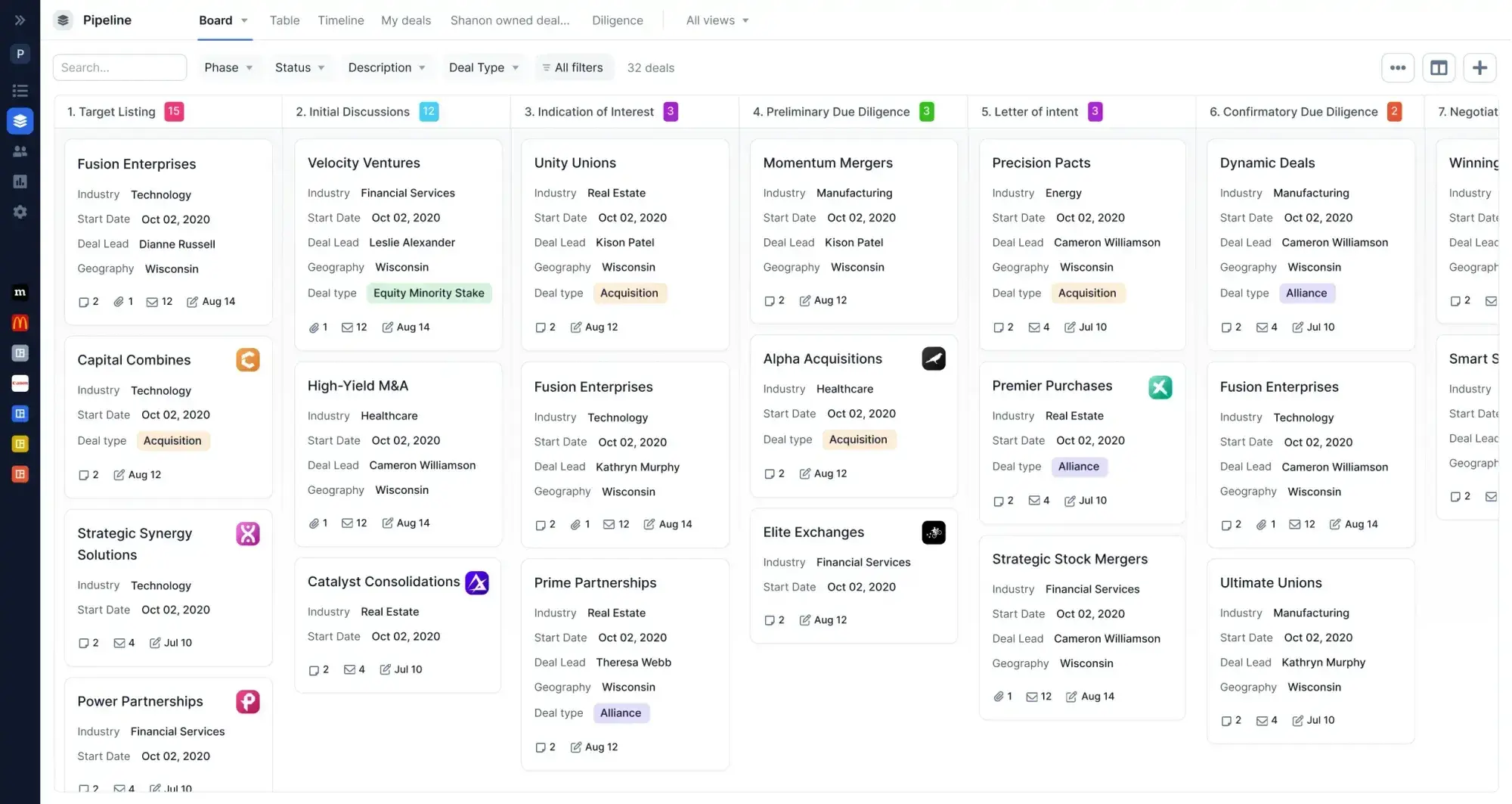
M&A Software for optimizing the M&A lifecycle- pipeline to diligence to integration
Explore dealroom

Want to wear your M&A expertise?
Check out the M&A Science store.
.avif)