Booz Allen Hamilton (NYSE: BAH) is a technology and consulting firm with nearly $12B in annual revenue and more than 33,000 employees. Originally founded as a management consulting firm 112 years ago, the company has transformed into an advanced technology leader serving government and commercial clients across AI, cyber, quantum computing, and unmanned systems.

Chrissy Cox
Chrissy Cox is VP and Head of Corporate Development at Booz Allen Hamilton, where she leads M&A strategy for one of the federal technology sector's most active acquirers. She built Booz Allen's corporate development function from the ground up, returned after gaining M&A experience externally, and her team was named Deal Team of the Year by the Association for Corporate Growth (National Capital region). Her background spans aerospace, defense, government services, and commercial cyber.
Episode Transcript
Building the M&A Muscle
I think M&A was a new muscle for us. As you look across the entire lifecycle, we had to build capabilities at every stage. One of the first priorities was standing up a proper diligence function with our functional teams and deciding how we approach diligence.
When I first came in, much of our diligence was being done through trackers. The mindset was that we could simply exchange documents, mark up files, and move the process forward. But real diligence does not happen that way. You have to get on calls with the other side. You have to engage directly with each of the functional teams and have real conversations to dig in and truly understand the business.
You cannot do M&A through trackers or through redline turns alone.
Another challenge was building the right pipeline. The goal is to focus on actionable targets that expand the strategy going forward. At the same time, it is critical to cultivate relationships with those companies early so that you become the preferred buyer.
If those relationships are built correctly, you either have a stronger position to win in an auction process or the opportunity to pursue the deal on a proprietary basis.
Getting People Onboard
It starts with leadership. M&A has to be a priority from the top. When leadership makes it clear that inorganic growth matters, it creates focus and attention across the organization.
At the same time, M&A is a long game. If you are not cultivating relationships and actively thinking about your pipeline and targets, you will always be reacting instead of leading.
Quite frankly, if a banker calls with an opportunity and the company is not something we have heard of before, or it is not part of our inorganic strategy, it is probably too late.
Because of that, we look at hundreds of companies every year. We know what our priority targets are, and we think carefully about how to cultivate relationships with those companies. We also look for “like” companies that could become actionable targets over time.
Over time, this has become part of the regular cadence of our market leaders. That shift in mindset has been a big part of building the M&A muscle inside the organization.
Building the Right Team
We approached this from both the corporate side and within the corporate development team itself.
On the corporate development team, we hired talent from the outside to bring different perspectives into the organization. That included people with backgrounds in investment banking and consulting who had already been through multiple deal processes. Our legal team that supports M&A also brings extensive experience from outside the company.
So we brought in outside experts who already understood how deals work.
Then, working with the market leaders internally, the focus became building experience through repetition. It starts with cultivating relationships and helping teams understand what the M&A playbook looks like. Some of this simply takes reps. The first time someone goes through a diligence process, everything is new. But by the second time, the process becomes more familiar. Teams begin to anticipate what will be needed next, whether that is information required for diligence, building the business case, or thinking through the integration strategy and plan.
We are also very intentional about where we focus our time. Not every part of our strategy requires inorganic investment. Certain areas are priorities for M&A, and those are the market leaders we work with on a weekly basis.
Through those ongoing interactions, we continue cultivating relationships, building experience, and strengthening the M&A muscle across the organization.
Deal Sourcing
It varies. I would say it is roughly 50–50 between auctions and proprietary, but there is an important nuance. Many times, when a banker runs a process and invites us into an auction, we already know the company. We have already started cultivating relationships with them, so we are not entering the process blind.
That is really where we spend most of our time.
If we receive a blind banker outreach for a company we have never heard of, we rarely spend time on those opportunities. I would say less than 20% of the opportunities we evaluate are companies we have never heard of before and are meeting for the first time.
That goes back to building the pipeline. We work closely with our market leaders to understand their strategy and identify capability gaps. From there, we focus on where the firm should buy, build, or partner.
Out of that process, we identify hundreds of potential targets across the firm. The goal is to be thoughtful about which companies could help leapfrog us in key technology areas where we currently have gaps and capabilities that we need to bring in-house.
From there, we start building a pipeline around those companies. It cannot be a one-inch-deep pipeline. We need many potential targets moving through the funnel.
That is why we work closely with our business leaders to cultivate relationships, understand cultural fit, and determine whether the capability will truly help advance the strategy.
A lot of our pipeline comes directly from our business leaders. They are close to the market, so they often identify companies that could be strong strategic fits.
At the same time, we are also in regular conversations with bankers to understand what opportunities may be coming to market and what they believe could be actionable.
Private equity firms are also natural sellers, so we pay attention to what is inside their portfolios and which companies might align with our capabilities.
All of those inputs come together to form a single pipeline that we manage across the organization.
We do leverage AI. In the markets we operate in, there is a significant amount of federal procurement data available that shows which companies are participating in the federal marketplace. That data becomes an important source for identifying potential targets.
In areas like commercial cyber, we also spend time attending conferences and engaging with the broader ecosystem to understand how the landscape is evolving and which companies are emerging as leaders.
That said, a large portion of our pipeline still comes directly from our business teams. They know who they partner with in the market. They understand which companies are gaining traction and which ones are starting to shape the industry.
They bring those insights directly to us, and we evaluate those opportunities as part of our broader pipeline.
Networking with PE Firms
We spend a lot of time engaging with private equity firms that invest in our space. The goal is to understand their portfolios and also share with them where we are focused and what we are trying to build strategically.
It becomes a very open, two-way dialogue. Sometimes we are partnering with their portfolio companies. Other times we are speaking directly with the private equity firms to better understand the assets they own and where those companies might fit within our strategy.
At the same time, we share our priorities so they understand what capabilities we are interested in building.
Private equity firms are important partners for us. We have acquired companies from financial sponsors, and we have also sold companies to financial sponsors when we have divested businesses.
Partner First Approach
Our health market leader at the time, who now runs our civil business, had been talking about Liberty IT for years. He had seen them in the market working with the Veterans Administration and was impressed with what they were doing around digital transformation, particularly in low-code and no-code solutions supporting the veteran mission.
At the time, Liberty was a company we admired in the market, but years before the acquisition they likely did not meet some of our thresholds in terms of scale and focus. Over time, however, they grew into the right scale and built the right technology capabilities.
This is why I often think of M&A as a long game. Liberty had been on our watch list for many years.
When we eventually moved forward with the acquisition on a proprietary basis, the strategic focus was clear. We needed to fill a low-code, no-code digital transformation gap in our software development capabilities. There were probably five to ten companies we were evaluating in that space, and Liberty was our number one target.
The relationship we had built over time played a major role. Our teams knew each other well in the market. We had seen each other at conferences, collaborated occasionally, and developed mutual respect. That familiarity and trust built over the years created the foundation for the transaction.
By the time the opportunity became actionable, Liberty was also at a point in their journey where they were thinking about their next step.
The conversation focused on what they could achieve as part of Booz Allen. Joining the firm would give them access to broader channels, greater scale, and the ability to accelerate the adoption of their technology.
One of the moments that really stood out was during the integration kickoff. We placed Liberty’s core values next to Booz Allen’s core values. While the wording was different, the themes were almost identical. For example, one of our core values is passionate service, and Liberty had a similar value with a different name but the same meaning.
That alignment made it clear that the cultural fit was strong. The mission orientation of both organizations was deeply aligned with the work being done on the ground.
I would not say it was easy to convince them that Booz Allen was the right home—these decisions are never easy. But I do think they saw that we were a strong cultural and strategic fit for the future of the business.
In the case of Liberty, and in many founder-led deals, value obviously matters. But when founders are involved, the decision is often about more than just price.
A founder’s company is their baby. They want to know it is going to a good home, that it fits into the buyer’s strategy, and that the future of the business aligns with the vision they had for it.
In this case, our market leaders had a very clear vision for how Liberty would fit into our broader health strategy and our low-code, no-code digital transformation strategy. That vision was compelling for the Liberty founders and their leadership team.
They could see where the business could go as part of Booz Allen and how we could scale the technology together. In many ways, it created an opportunity that likely would not have been possible for either of us independently.
I am not sure they would have been able to achieve that level of scale on their own. And I am also not sure we would have been able to build that capability internally without the acquisition.
One of the unique challenges in that transaction was the timing. It happened during COVID, which meant it was the first deal I executed entirely remotely.
Everything—from management meetings to diligence discussions—was conducted virtually. We were not able to meet in person, which made the process very different from a traditional deal environment.
That said, the process ultimately went smoothly considering the circumstances. But it was definitely a unique experience, and hopefully a once-in-a-lifetime situation in terms of how the deal had to be executed.
Knowing When to Exit
I think founders need to have a clear understanding of their long-term vision. What is the five-year or ten-year vision for the business, and where do they ultimately want to take it?
At the same time, they need to ask whether they can achieve that vision alone or whether the business could scale faster with the right partner.
For us, that is often where founder-led acquisitions become the right fit. It tends to be the moment when founders recognize that partnering with Booz Allen can provide a platform to scale their business and expand the reach of their capabilities and talent.
One of the advantages a larger organization can offer is broader opportunities for talent across the business.
With Liberty, for example, their talent is now working across the Booz Allen organization, not just within the Veterans Administration work they were originally focused on. It has been great to see that capability and talent expand across the firm and really come to fruition.
From a buyer’s perspective, one of the key things we look for is a clear trajectory. We want to see that the business has demonstrated momentum and that its growth story is supported by real performance.
Many times, companies present projections that show a hockey-stick growth curve and claim they are about to hit a major inflection point. But from a buyer’s perspective, it is often better to wait until some of that inflection has actually materialized.
Once a company has demonstrated that growth in practice, it can significantly improve both valuation and strategic interest from potential buyers.
For many of the companies we evaluate, they eventually reach a threshold of scale where getting to the next level requires additional investment. At that point, they often need stronger infrastructure, more business development capacity, and broader operational support.
This is where a strategic partner can make sense.
The company may already have strong momentum with its clients and a compelling capability in the market, but it may lack the channels needed to expand that capability at scale.
Partnering with a larger organization can provide those additional channels to market and the infrastructure needed to accelerate growth.
Assessing Cultural Fit
Cultural fit starts from the very beginning, even during the early stages of relationship building. Every interaction we have with a company is an opportunity to test whether there is real cultural alignment.
We ask questions like: Are they motivated by mission the way we are? Do they have a clear set of core values? And do those values align with ours?
Most of the time, we already have a working relationship with these companies before we ever enter a formal M&A process. That allows us to observe their culture over time and evaluate whether it truly fits with our organization.
I remember one deal from nearly a decade ago that really stood out. It was a very interesting company with strong capabilities that aligned well with our strategy. During a management meeting, toward the end of the conversation, we asked about their core values and culture.
The CEO responded with something like, “Oh, our core values? We have them somewhere on a wall in the cafeteria.”
For us, that was a red flag. Our values are something we live every day. They are not just words written on a wall.
We walked out of that meeting and ended the process right there. What the CEO may have intended as a joke made it clear that there was not a cultural fit, and that was enough for us to decide not to move forward.
Site visits are extremely important in the M&A process. Getting in a room with the other side allows you to better understand the team and how the organization really operates.
We spend time together outside of formal meetings as well. Dinners and informal conversations create opportunities to get to know the leadership team more personally. Those interactions help us assess whether the management team is the right cultural fit for our organization.
At the same time, it also gives them the opportunity to understand who we are and what our culture looks like. We receive many questions from target companies about that as well.
Ultimately, every interaction with the other side is part of evaluating culture. Cultures will always have differences, but the key question is whether those differences can be managed effectively through change management to support a successful integration and drive value.
Spending time with the leadership team is always worthwhile. Having dinners and informal conversations with management provides a much better opportunity to understand who they are and what truly motivates them.
Culture is driven from the top. If the leadership team demonstrates a clear commitment to mission, values, and culture, that usually reflects how the rest of the organization operates.
Our belief is that when those principles are strong at the leadership level, they tend to carry through the entire company.
There are definitely nuances when it comes to culture and what ultimately fits or does not fit.
For us, it comes back to a few fundamental questions: Do we share the same core values? Do we share the same passion for the mission?
Organizations will naturally have cultural differences. Even within a single company, different geographies or business units often develop their own subcultures.
Because of that, the goal is not to find an organization with an identical culture. Instead, the focus is on whether there is alignment around the core values and the passion for the mission.
When those foundations are shared, different subcultures can still work together effectively and become a strong cultural fit.
Cultural Alignment
When we think about integration planning and change management, one of the things we focus on is identifying what we call the “secret sauce” of the company.
Part of that often includes elements of culture that truly drive the value of the organization. During integration planning, we spend time identifying the aspects of the business that we want to preserve and continue learning from.
Even as a large organization, we want to make sure we are bringing the best parts of the acquired company into the broader firm. There is always something to learn from the companies we acquire, and we want to ensure those strengths are not lost in the integration process.
At the same time, we are transparent about the fact that not everything can remain the same when a company integrates into Booz Allen. Integration inevitably brings change.
What matters is being transparent about that process and being thoughtful about protecting the elements that make the company’s culture unique and that drive its value.
Lessons Learned from PAR Government Deal
Par Government had been on our watch list for some time, but at the time it was a subsidiary of a publicly traded company, Par Technology. We were interested in the business, but it only became actionable when the parent company decided to run a process.
We worked with the sell-side banker, Baird, on the transaction. We were interested in most of the perimeter of the business, but there was a portion that did not align with our strategy.
We communicated that clearly. We had worked with Baird for years—they had been the sell-side advisor on several of our previous deals—so there was already a strong working relationship. That made it easier to have a constructive conversation about how to structure the transaction so we could acquire the portion of Par Government that we were most interested in.
What made the situation unique was that both the banker and the seller were willing to have that conversation. In the end, the structure actually helped maximize value for the seller.
Another factor that helped was the operating structure of the business itself. The portion we did not acquire was already operating somewhat separately from the rest of the business. There was very little overlap between the two units, which made it much easier to carve out the portion of the business we wanted to acquire.
Challenges of Doing a Carve Out
In carve-out transactions, a significant amount of time is spent getting comfortable with the quality of earnings and ensuring that everyone agrees on the adjustments.
It is also critical to truly understand the cost structure of the business being acquired. That includes confirming that the financials accurately reflect the standalone economics of the business.
Another key focus is making sure you are receiving all of the assets required to operate the business independently after the transaction closes.
Those areas—quality of earnings, cost structure, and ensuring the necessary assets are included—are where we tend to spend the most time and energy during a carve-out process.
Transition Service Agreements
As part of the transaction, we negotiated transition services agreements. In fact, there were multiple transition services agreements involved.
That is very common in carve-out transactions. One of the most complicated parts of a carve-out is making sure you fully understand which assets are coming with the business and confirming that you have everything required to operate the business once the deal closes.
A lot of effort goes into getting clarity around those assets and ensuring the business can continue to run smoothly after separation.
Overall, the deal has been a great outcome for our defense technology business.
The technology that Par Government brings to the mission has been extremely valuable. In fact, we ended up achieving more synergies than we originally anticipated going into the transaction.
The cultural fit has also been very strong. From an integration standpoint, we tucked the business into our defense technology group, where it has become a core part of our technology stack.
Looking back, the complexity of the carve-out was absolutely worth the effort.
Importance of Bankers for Sellers
We live and breathe M&A every day. We speak the language of deals, understand the process, and are comfortable navigating each stage of a transaction.
But for many founders and business operators, this might be the only deal they ever do. It is an entirely new process for them. At the same time, they still have to run the business and continue growing it for the deal to succeed.
That is why we rely heavily on advisors. When a banker is brought in on the other side, the process tends to run much more smoothly. Bankers understand the playbook. They can guide founders through diligence, help organize the data room, advise on market standards, and support negotiations.
As deals progress, emotions can become a factor—especially when the company is the founder’s life’s work. Advisors can help manage those emotions and guide the process toward a signed agreement.
There is always a concern that bringing in a banker could turn the process into a competitive auction. In our experience, that has not typically happened.
In many cases, by the time we are negotiating a letter of intent, we are already working within an exclusivity framework. Often, we recommend founders bring in a banker earlier in the process to help them navigate the transaction effectively.
If the relationship with the founders has been built properly and there is alignment on vision and value, we have found that proprietary deals can still be successful even with advisors involved.
Why Partnerships Often Lead to Acquisitions
I would say that about 80% of our deals involve companies we have already had some form of relationship or partnership with in the past.
In the aerospace, defense, and government services markets, partnering is a core part of how business gets done. Because of that, we end up working with many different companies across the industry, which naturally helps build our pipeline.
That familiarity makes a big difference. When you already know a company—when you have seen their capabilities in action and understand the value they bring—it is much easier to assess how they fill strategic gaps.
We have certainly completed deals where we only got to know the company during the diligence process. But in general, we tend to get much more excited about companies we have already worked with and observed on the ground.
Many of our opportunities originate with our market leaders. In many cases, they are already partnering with a company and working closely with them in the market.
Over time, those leaders come to us and say, “This is a strong partner for us, and we believe they could also be a great acquisition candidate.”
Because they have direct experience working with the company, they can clearly articulate why the partnership works, what capabilities the company brings, and how it fills strategic gaps.
That insight becomes very valuable as we evaluate the opportunity within our buy, build, or partner framework. In some cases, the partnership itself demonstrates that the capability is strategically important enough that it ultimately makes sense to acquire the company.
From a business case perspective, the focus is on identifying the capability gaps that a company can fill.
Often, we already see those capabilities in action when the company is operating as a partner in the market. We understand where they are adding value and how their capabilities complement our own.
The question then becomes whether bringing that capability in-house would create greater strategic value.
By acquiring the company, we gain ownership of the technology and the underlying intellectual property. That allows us to build on top of it with our own IP and integrate it more deeply into our offerings.
Bringing that capability in-house can ultimately enable the business to scale in a much more meaningful way.
SnapAttack Spinout
SnapAttack was a very interesting opportunity. It had a strong team, promising technology, and significant potential.
At the time we spun it out, the technology was still relatively nascent. The decision was somewhat opportunistic. We believed the business would benefit from venture backing so it could scale and grow faster than we would have been able to support internally.
By spinning the company out, it was able to pursue venture investment and accelerate its development in ways that would have been difficult inside a large organization.
Even after the spin-out, we maintained a strong partnership. We continued to work with SnapAttack in the market and remained a customer of the platform. That allowed us to stay connected to the business while it pursued its own growth path.
Ultimately, the spin-out enabled the company to scale much more rapidly through venture funding than it likely would have been able to achieve within Booz Allen.
In this case, the decision was really about the technology and how best to scale it. SnapAttack was built as a crowdsourced platform, and because it was a software-driven model, it required a different type of investment profile to reach its full potential.
While Booz Allen does have software businesses and products, this particular platform needed a structure that could support faster scaling and a different type of growth trajectory.
Through the spin-out, we were able to bring in the right venture partner. That partner helped vet and build the leadership team alongside the founders and the core group that transitioned with the business.
What made this situation unique was that SnapAttack started as a startup within a 30,000-person company. The team behind it was incredibly passionate about the technology and the opportunity they were building.
The venture partner ultimately helped guide the company in a way that allowed it to scale effectively, which eventually led to a successful outcome when the company was acquired by Cisco Systems.
Venture Investments as Technology Partners
We view our venture investments as operating at a different stage of the lifecycle. The focus is on how we can partner with these companies to help scale their technology and bring it to the mission and the warfighter.
Some venture investments could eventually become M&A targets, but that would be the exception rather than the rule.
Most of the companies we invest in are at the seed to Series B stage. At that point, the goal is not necessarily to acquire them. Instead, the focus is on partnering with them to help scale cutting-edge technology and apply it to real mission needs.
In that sense, the priority is gaining access to the technology rather than securing an option to buy the company later.
Our focus is on working with founders, integrating their technology where it makes sense, building on top of it with our own intellectual property, and delivering solutions that support the mission and the warfighter.
It is different when you have a seat at the table and are a true believer and investor in the technology.
We have had a long relationship with Andreessen Horowitz, and it has been a strong partnership over time. We have worked with many of their portfolio companies, including co-investing in certain opportunities.
Our goal was to deepen that relationship.
Our venture fund typically focuses on seed to Series B companies. However, as we think about scaling technology and delivering it to the warfighter faster, we also recognized the need to engage with companies that are further along in their growth lifecycle.
Partnering with a world-class venture capital firm like Andreessen Horowitz created an opportunity to access those companies and collaborate more closely with their portfolio.
In many cases, we were already working with several of their portfolio companies. This partnership simply strengthens that relationship and creates greater access to innovative technologies that can support mission needs.
Integration
Ultimately, the business team needs to own the successful integration of a deal, just as they need to own the business case behind it.
Every company develops its own integration lessons over time, and every deal brings new ones. But for us, one of the most important drivers of value creation during integration is culture and change management.
A big part of that is identifying what we call the “secret sauce” of the company. We want to make sure we are protecting the elements that make the business successful while also integrating and scaling those strengths across our organization.
We also view integration as a two-way process. It is not just about bringing the acquired company into Booz Allen. It is also about learning from the company we are acquiring and adopting some of their best practices.
When a company has something that makes it special, we want to make sure that capability or approach can be carried across the broader organization.
Early on, as we thought about driving synergies from acquisitions, the responsibility was somewhat fragmented across different parts of the business.
Over time, we realized that this approach created challenges, particularly given the size of the organization. When multiple market leaders were involved in driving outcomes from a single acquisition, accountability became less clear.
What we have evolved toward is assigning a single market leader who is fully accountable for the success of the acquisition and the realization of synergies.
That leader is responsible for driving the integration and ensuring the business case is delivered. Of course, collaboration still happens across the broader organization to unlock synergies, but having one accountable leader has made the process much more effective.
Transition to Tech Deals
There has been a significant shift in how we approach technology. For more than two decades, we have been delivering technology solutions to our clients, but historically much of that work focused on consulting around technology.
Over time, we have transitioned toward building technology for our clients.
From an M&A perspective, that shift has influenced how we think about acquisitions. The focus now is on identifying and filling capability gaps, particularly in areas such as defense technology and cybersecurity, which are major priorities for us.
When we evaluate companies, we also pay close attention to their go-to-market approach. In our industry, technology is rarely delivered as software alone. Most of the time, software and services are delivered together.
That combination is necessary because the technology often needs to be implemented and integrated within a broader ecosystem. The goal is to ensure that the technology reaches the operational edge and supports mission outcomes for the warfighter.
Because of that, the companies we evaluate often have go-to-market models that are quite similar to our own.
Biggest mistake when building Corp Dev function
There has been a significant shift in how we approach technology. For more than two decades, we have been delivering technology solutions to our clients. Historically, much of that work involved consulting around technology.
Over time, we have transitioned toward building technology for our clients.
From an M&A perspective, that shift has influenced how we evaluate acquisitions. The focus is on identifying and filling capability gaps, particularly in areas such as defense technology and cybersecurity, which are major priorities for us.
When we assess companies, we also look closely at their go-to-market approach. In our industry, technology is rarely delivered as software alone. Most of the time, software and services are delivered together.
That combination is important because the technology must be implemented and integrated into a broader ecosystem. The objective is to ensure the technology reaches the operational edge and supports mission outcomes for the warfighter.
Because of this, the companies we evaluate often have go-to-market models that are very similar to our own.
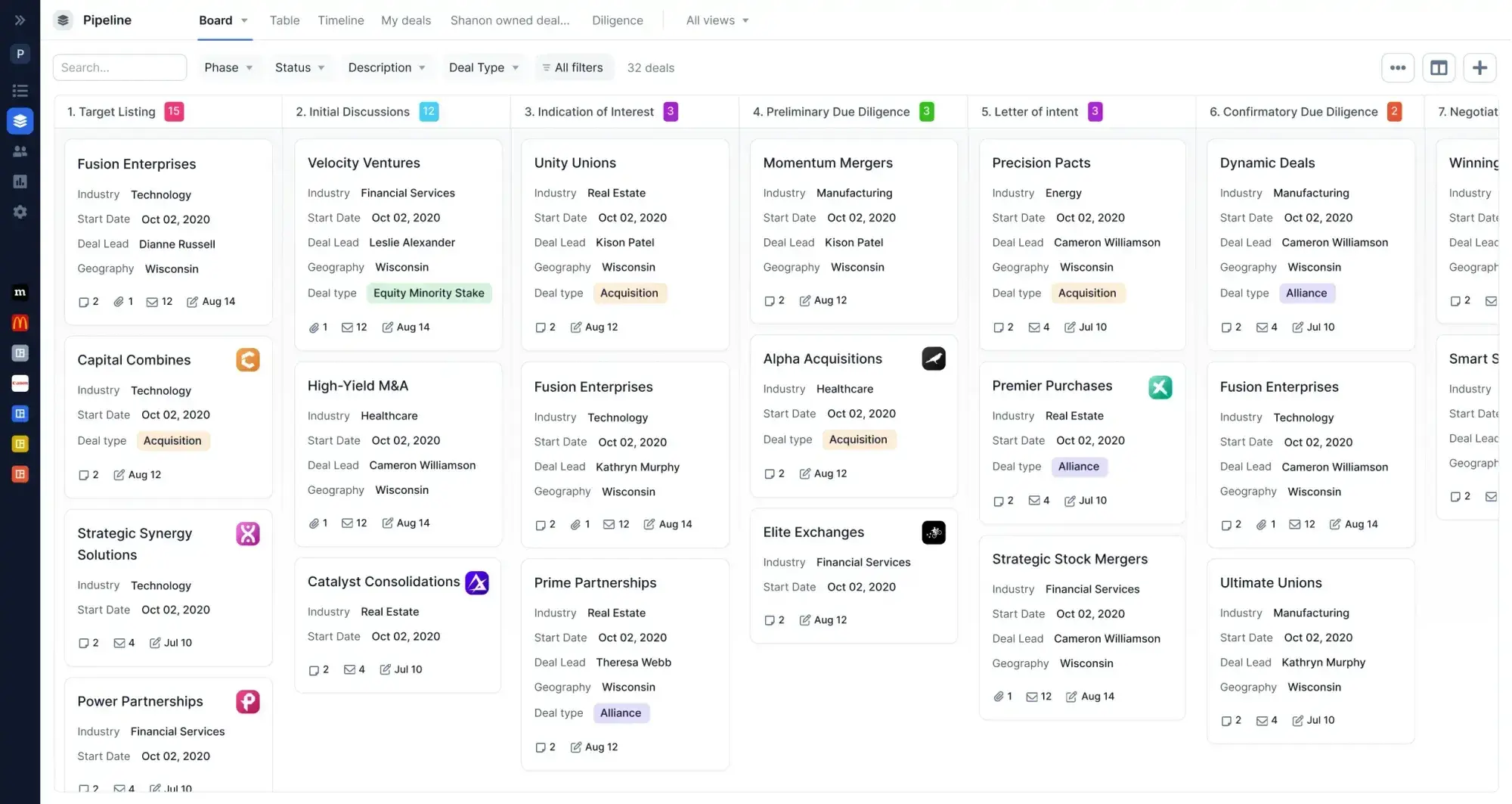
M&A Software for optimizing the M&A lifecycle- pipeline to diligence to integration
Explore dealroom

Want to wear your M&A expertise?
Check out the M&A Science store.