
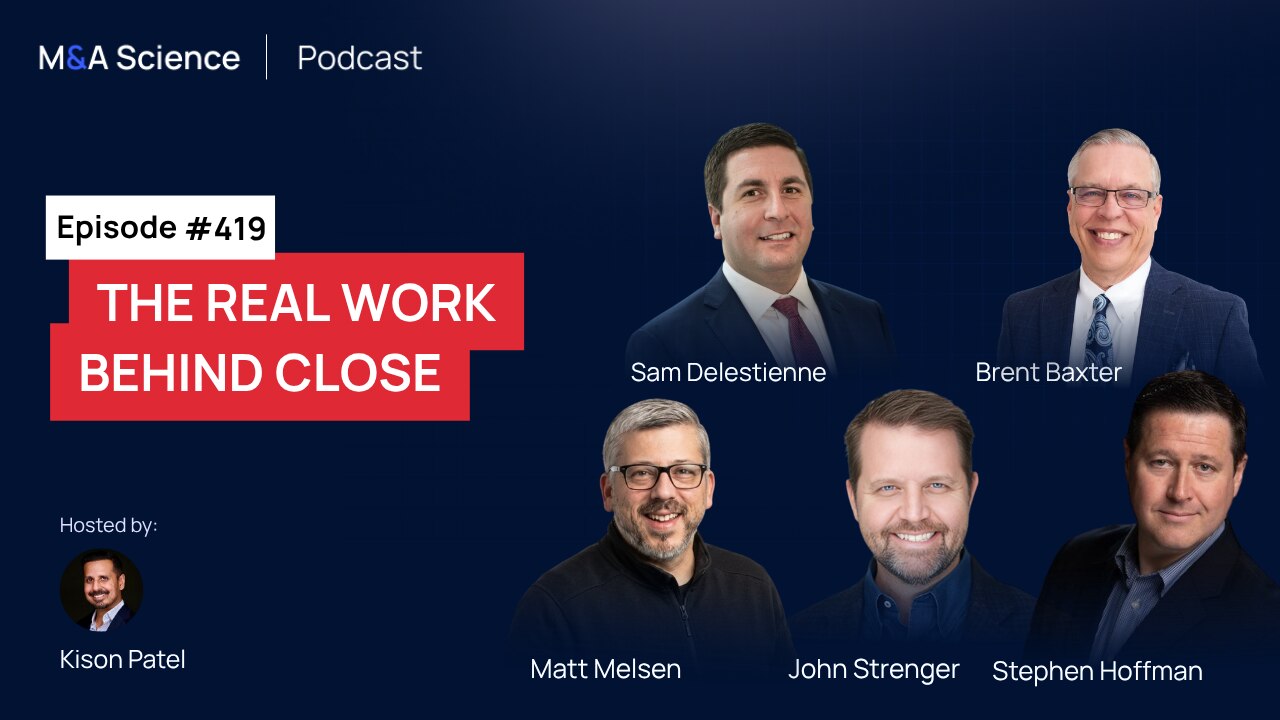
Diploma PLC (LON: DPLM) is a London-listed, $2 billion value-added distributor operating across electrical components, aerospace fasteners, flow control, and healthcare. Diploma acquires family-owned businesses and leaves them to operate independently under their original brands. 70% of attendees at their annual leadership conference came to the company through acquisition.
Vensure Employer Solutions is an HR solutions company operating across PEO, employer of record, global payroll, and workforce management in over 160 countries. The company has made 105 acquisitions in the HR space since 2004 and specializes in getting employees transferred cleanly across borders during M&A transactions.
Founded in 1954, the Association for Corporate Growth (ACG) has 60 chapters worldwide, representing 15,000 members. ACG serves 90,000 investors, owners, executives, lenders and advisers to growing middle-market companies. ACG’s mission is to drive middle-market growth.
SPS Commerce (NASDAQ: SPSC) is a cloud-based supply chain management platform that has grown through a series of tuck-in acquisitions, most recently expanding into Europe through its first cross-border public company acquisition in the Netherlands.
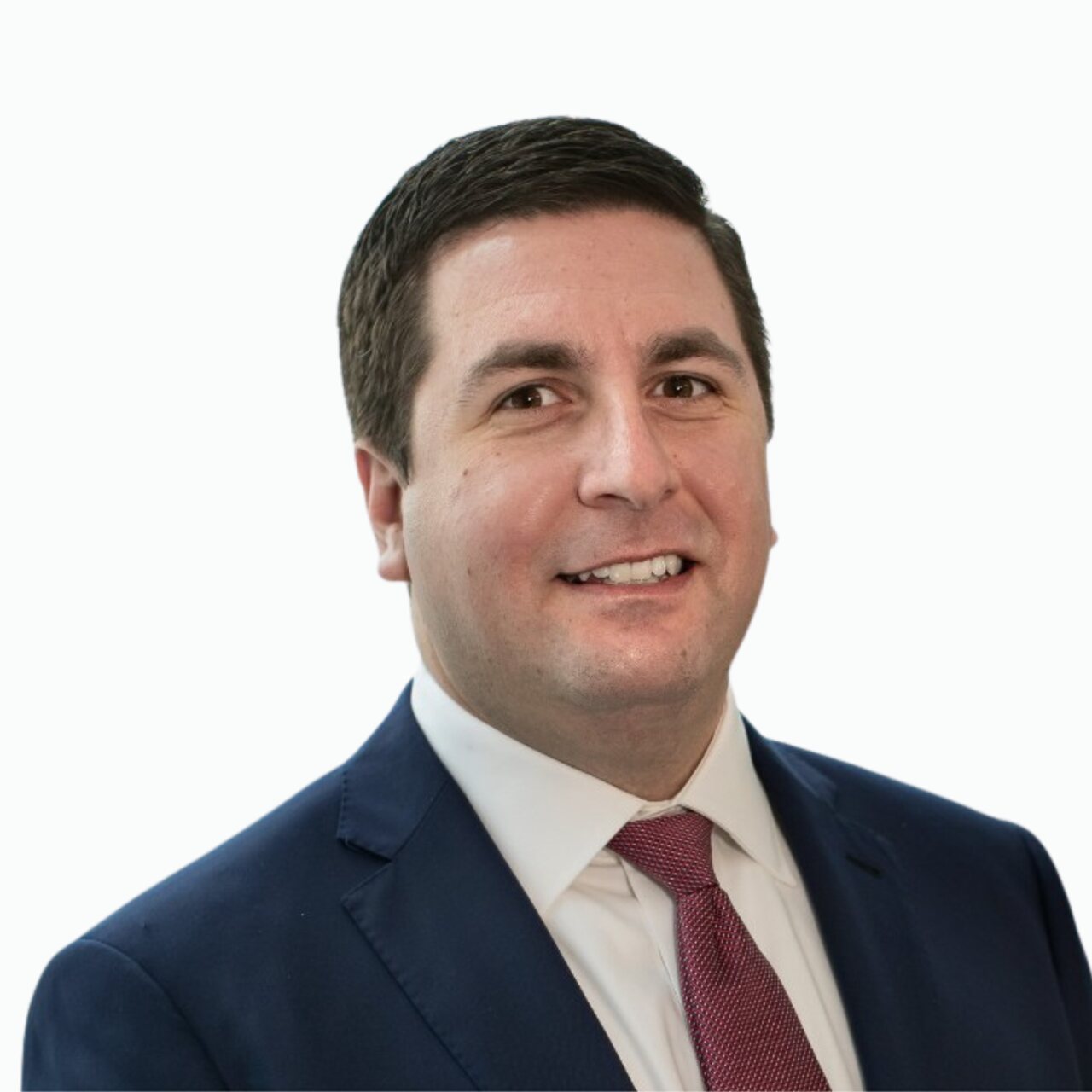
Sam Delestienne
Sam Delestienne leads North American M&A Corporate Development at Diploma PLC, where he has built a track record of winning deals on relationship and reputation rather than price alone. He was the architect of the Peerless Aerospace Fasteners acquisition, completed in early 2024, which is considered one of the best deals in Diploma's history.

Steve Hoffman
Steve Hoffman has spent his career building the infrastructure for cross-border employee transfers in M&A transactions. As VP of Global Partnerships at Vensure Employer Solutions, he specializes in the employment law complexity that surfaces in carve-outs and cross-border acquisitions spanning 160+ countries.
Brent Baxter
Brent Baxter is the Chief Executive Officer of the Association for Corporate Growth (ACG), a role he has held for seven months. With over 25 years of experience as an investment banker and extensive involvement in ACG's governance, including serving as chair of the board, Brent brings deep M&A expertise to his position. ACG, the premier organization for middle-market M&A, boasts over 15,000 members, including corporate strategic acquirers, private equity, investment banking, and various M&A partners such as legal, accounting, tax, and human resource consulting professionals.

John Strenger
John Strenger has led corporate development at SPS Commerce for 15 years, building a practice around tuck-in acquisitions from sourcing through close. Their European acquisition was the first international deal of that complexity in the company's history.

Matt Melsen
Matt Melsen partners with John Strenger on diligence, financial modeling, and post-close work at SPS Commerce (NASDAQ: SPSC). He was central to working through the legal, compliance, and cultural surprises in the Netherlands-based acquisition.
Episode Transcript
Brent Baxter — CEO, Association for Corporate Growth
I'm very privileged to be the chief executive officer of the Association for Corporate Growth. I've been CEO for just about three years, and I'm celebrating my 25th year of membership. For most of that time I was a boutique investment banker, so the question about deals is very relevant to me. I spent much of my career doing that.
A deal that came to blows
All deals with family-owned businesses carry memories, some great, some more complex. When you talk about memorable, I think about the business partners who had a literal fistfight in the parking lot over valuation differences. They came to blows. We got them back together, and we were sitting in the closing room with the buyer and the attorneys.
One of the partners got up from the meeting, refused to sign the paperwork, got on the elevator, and left the building. His other partner was apoplectic. The attorney on the transaction went down the elevator, out to the parking lot, brought the partner back, put him in a separate room, and he signed. His partner signed. The equity investor signed. We closed the deal. We did not have a post-closing party.
These were the sellers. Two business partners with a large equity investor. The two operating partners were not friendly to each other at all. They had reached the point where they knew they needed to get out of the relationship, and the third equity investor essentially compelled the deal to close. But they had real differences in valuation expectations.
I did not witness it. I was just told about it. There were no visible scars, so I don't know how hard they hit each other. When the deal almost died. I was surprised when one partner walked out at the closing table. By that point I thought we had reached a mutual stand-down and everyone would just be ready to be done. Apparently not.
In that entire investment banking career, I always said every deal craters on Friday. If you have six active transactions, three of them are going to go bad on the same Friday. Generally by early the following week you get them back together. This particular deal was precarious from start to finish. Had we not had that larger institutional party who wanted out, and they didn't quite have voting control, but they had enough financial power to ultimately compel the close, there would have been no deal. There was no unity between the disputing partners. I would be shocked if they ever spoke a word to each other after. But this was probably 20 years ago.
What the bankers didn't know going in
We were introduced through the financial partner, who then brought us to the two operating partners. He gave us a little sense that there was some tension between them, but no sense of outright hostility. When we met with the operating partners separately, both were very bullish on the business. They wanted to sell. They knew they needed to get out of the relationship. We did not discover the depth of the animosity for a while. Once we did, it was very real. And once you're engaged, the right thing to do is get to a close.
Managing emotions over managing the deal
I remember someone, might have been an accountant or a lawyer, a young person, asking me, 'Once you get to a letter of intent, what's the hardest part? Is it managing the data rooms and the attorneys and all the technical due diligence?' I said no. It's managing emotions. With family-owned clients, that is a critical part of what a great investment banker does. It's psychology.
For about 20 years we had two different offices. One was directly below the Psychoanalytic Institute of St. Louis, and the other was directly below a firm called Psychological Associates. We always felt like we were just an annex of the professional analysts nearby.
What DealMax is really for
This is a very layered event with many different constituencies. Not just private equity, investment bankers, and corporate buyers. We have the entire M&A support community here: attorneys, accountants, data providers. You build your network across all of them. The three words I settle on for ACG are more relevant connections. Relevancy is the right word, because everyone in this room has an ecosystem of deal.
You don't do it on an abacus and a spreadsheet anymore. You're using data rooms, artificial intelligence, accounting advisors, quality of earnings, legal counsel. If you buy a company, you're searching for a new CEO. Our focus at ACG and at this event is creating those more relevant connections across the entire deal community.
Record attendance and 26,000 scheduled meetings
This is a record year again for attendance. We're slightly over 3,500 attendees. In a statistic that still stuns me, we'll have slightly over 26,000 scheduled one-on-one meetings among those 3,500 people, and that's only a fraction of the connections happening here. That doesn't include everyone stopping by a sponsor booth or connecting at cocktail parties. There are probably well over 100,000 one-on-one connections occurring in this property over a few days.
About one-third of this audience is private equity, about one-third is investment banking, and about one-third is what we call M&A partners, the support community. Of those 26,000 meetings, the breakdown mirrors that same split. Everybody gets a seat at the table to build those more relevant connections.
Sam Delestienne — VP of North American M&A Corporate Development, Diploma PLC
I'm the vice president of North American M&A Corporate Development for Diploma PLC. Diploma is a $2 billion value-added distributor of essentially any type of components suite you want. We have about a $1.2 billion business focused on electrical components, wire and cable, interconnect solutions, and aerospace fasteners. Another division around $900 million in flow control products. And a third division that makes up about 10 to 15 percent of revenue in healthcare products.
The company is agnostic about markets and products. We consider ourselves a sales organization that can sell anything, and we look for good value-add businesses and help them lean into the growth they're capable of.
Finding Peerless Aerospace Fasteners
The most memorable deal I've worked on was Peerless Aerospace Fasteners in early Q1 2024. It was brought to market by Evercore, one of the strongest investment banks out there. Peerless was a family-owned business, privately held by a single family and a couple of members of management. They sold aerospace fasteners: nuts, bolts, rivets that go on the fuselage of an airplane.
We already had a business at Diploma called Clarendon Specialty Fasteners with a strong position in aerospace fasteners, but they were focused exclusively on the interior of the plane. Peerless operated on the exterior. Coming into this job I didn't know those were completely different markets, but once I found out, it became a real opportunity.
We had identified Peerless for years. Couldn't get them to talk to us. Then in October 2023, I reached out directly to the CEO. He took the call, and ended it by saying, 'This is a good conversation. We're going to keep talking to you.' Two months later, I got a call from Evercore: 'We missed you on this opportunity, but Bill loves your story. We'd love to have you in the process we're running.' I signed the NDA around December 10th.
When a door blew off an Alaska Airlines jet
A few weeks into the process, as indications of interest were coming due, a door blew off an Alaska Airlines jet because of a fastener issue. The bankers didn't disclose anything initially because nothing was disclosed publicly for the first month.
Everyone in the industry knew it was a fastener-related incident. But nobody knew: Was there a failure on the fastener itself? Was it improper installation? That uncertainty turned what could have been a big problem into a significant opportunity for us. We're in the space. We know the products. We knew where they were going. We had a high level of confidence this wasn't a fastener problem. On that door, there are dozens of fasteners, and for them all to fail simultaneously and cause a blow-off like that is almost impossible. We knew that early.
We were also excited because we knew a lot of the private equity universe competing against us wouldn't know that. If we moved quickly, we could build intimacy with the sellers before the broader market educated itself or got comfortable with the risk. So we proceeded down that path.
In February, the news came out that the fasteners simply hadn't been installed at all. No liability to any fastener supplier. The liability sat entirely with the people who did the replacement and repair work. That quieted a lot of the noise from other bidders for the month the market was trying to figure it out, and let us build the kind of relationship with the sellers that helped us get over the final hurdles. Our time with them would have been cut to a tenth if it had remained a massive, broad private equity process.
Winning at a discount to the highest bid
The process was still competitive. There were private equity-backed companies that got comfortable with the risk quickly. The Alaska door event significantly reduced the universe of bidders, but it was a competitive process until the very last moment. We were able to win despite not being the highest on value, we came in at about a five percent discount to the highest offer.
That's not something I'd like to bank my entire career on, but at Diploma we pride ourselves on being a very good home for privately held businesses. That's not just something we say, it's something we genuinely believe.
Throughout the process, that was very compelling to the management team that was staying on. They had been with the ownership group for generations and had real say in the outcome. About three or four weeks in, they came to the conclusion that they never want to go through a sale process again. It's tiring. It takes a lot of energy. They were intrigued by the idea of rolling equity into a PE-type vehicle, and we convinced them they could do that with Diploma as well. They did.
What sets Diploma apart from private equity
Diploma only has 25 to 30 people in our corporate group, that includes me, the CEO, administrators. We can't send someone in to tell you how to run your business. And largely, we don't. We leave businesses alone.
That was very compelling to Peerless management. They had been used to running their own business for years, decades, and they didn't want to suddenly become middle management in a big multinational conglomerate. We listened to that. We structured the deal around it. Every business at Diploma runs independently. Nobody goes to market as Diploma. Everyone retains their own brand. We invest in management more than anything else.
At our leadership conference last year, there were 150 people. Seventy percent of them came to the company through acquisition. That creates a real culture of entrepreneurship, and we try to show it, not just say it. With Peerless, we had management call recent acquisitions directly. I wasn't on the phone. Nobody else from Diploma was on the phone. It was just an entrepreneur talking to another entrepreneur who had sold his business to Diploma. That builds trust in the process and in the company.
When value is more than a number
The other bidder was very focused on value as a number, and they believed whoever got to the highest number would win. Diploma thinks about value as the culmination of everything that goes into a deal. There's a financial component, but there's also the owner's legacy. They don't want to sell to someone who's going to tarnish it.
I can sit in a corporate development role with 60 deals on a deal sheet and tell myself it's just business. To the people I'm talking to, it is the farthest thing from business. There might be only one thing more personal to them, and that's their family. If you don't treat a business sale with that kind of respect, if you make them feel like they're just another financial metric under a portfolio, you are always going to win only on price.
Reputation and trust can make up for a $15 million bid difference. It's massive.
To Evercore's credit, they called us and told us exactly where we were short. They told us we needed to get to a specific number — not a dollar over, but we had to get there or they were going with the other bidder. They gave us two days. We came back two days later and said we were at the number. We closed the following week.
Keeping the process collaborative
Trust and reputation aren't something one party brings to the table. It has to be every party: sellers, buyers, bankers, and lawyers. The lawyers are where you see the most distrust. Managing them to maintain a collaborative process instead of a combative one is really important. Once it gets combative, it just devolves into who can say the biggest number.
As the buyer, especially when you appreciate that it's more than just business, you have to keep that collaborative nature going. Because once it gets combative, that's all it becomes.
What nearly killed the deal
Every day there was something different. That's any deal, especially with good businesses. Good businesses attract interest, and that interest creates tension.
On the Peerless deal specifically, there was a lot of inventory that had been written off. Like inventory sitting on the books at zero that they had been selling through in the normal course of business at 100 percent gross margin, because it had been written off five years earlier. You're looking at a three-year look-back on financials and seeing all this high-margin revenue from zero-cost inventory, and the question is whether it's repeatable. Is there a cliff at the back end?
The answer was no. It was a private company with incentives to write off inventory for tax purposes. Legitimate. Done. You just have to plan and protect against the possibility of a cliff. The corporate development professional's role is to see through the trees, figure out what is actually value impactful and what is a red herring, and keep the deal on track.
The door was an interesting one. We got over it. The financials were challenging at times. If you want to find a reason to kill a deal, you'll find it. The adult in the room has to be the one saying, 'This is still a very good deal. We can deal with these problems.'
The lesson from calling the baby ugly
You have to do this eight to ten deals a year, and for you, it's business. For them, it's everything. One of the biggest mistakes I've made in my career was when I crossed that line — when I was a 30-year-old kid, probably more arrogant than I should have been, telling a business owner how to run his business. He put me in my place, and I've never forgotten that conversation. I realized afterward that I had called his baby ugly. You don't call people's babies ugly, especially when you're trying to adopt the baby.
That happened early in my career, and I'm grateful for it. Appreciating that early and building it into my regular approach in every process was important. It helps you know when to push — because sometimes they need it, or the deal will stretch out forever. But it also helps you read the signs so you don't push too far, because sometimes you push someone off the cliff and you can't get them back.
The art of it is to be very, very persistent without the other person realizing you're being persistent. There's no secret to it. It's just repetition, making mistakes, and learning from them.
If I could do that deal again, I would have gotten to it before the bankers did. That applies to any deal.
What we've taken from that experience is a more aggressive posture early in processes. We're working on a deal right now where we met with the owner in June, followed up two or three times, and then found out in November that they had hired an investment banker. If I'd made six calls instead of two, kept them warm, checked in, could I have kept them out of the banker's hands? Maybe. You're never going to be perfect at that.
What we do now at Diploma when we see a deal in market, whether it's just a teaser or a CIM , is put out a very ambitious offer early. We had a situation recently where a bank said they planned to run a broad auction of around 200 parties, but were giving five people fireside chats. We had enough materials beforehand to value the company, so we showed up to the fireside chat with an offer in hand, two turns above what a normal auction might yield, but below what the auction might generate if it really caught fire. We tried to take it off the market. We got exclusivity.
You'll see companies doing that more. For the right deal, an extra turn in purchase price is not going to matter. The deals I regret are the ones we missed at nine times that went at ten because someone else moved faster. It's so hard to get a deal to that stage. For the right business, you bid to not lose rather than bid to get the best price.
Equity rollover as a deal tool
Peerless management rolled over about five percent of their equity into the deal. From the synergies alone, and just from the market, they're going to see a significant return on that investment. It's been one of the best deals in Diploma's history, and they get to enjoy that upside.
For people with an entrepreneurial mindset, that kind of participation is genuinely compelling. It creates alignment and makes sure everyone is rowing the same way. It creates a lot of camaraderie, and a lot of fun.
Steve Hoffman — VP of Global Partnerships, Vensure Employer Solutions
I'm Steve Hoffman, VP of global partnerships at Vensure Employer Solutions, based in the Boston area. We are in many different businesses and have grown considerably since our inception in 2004. As an organization, we've made 105 acquisitions in the past eight years, all of them in the HR space, mostly domestic, with recent expansion globally.
Our core business is PEO. Beyond that, we do ASO, domestic payroll, global recruitment, and employer of record services in over 160 countries. We also do contractor payroll in any currency, as long as it's not sanctioned by the US government. And we have an offshoring and nearshoring division with over 35,000 employees across 23 countries, a large footprint in Latin America, the Philippines, India, and a few countries in Africa.
We help companies scale rapidly through our payroll solutions and through offshoring. We also work with private equity firms to support divestitures, acquisitions, and carve-outs. A successful transaction, from my perspective, is getting the employees from the selling firm transferred to the acquiring firm without breaking any employment laws.
A 125-person carve-out across 22 countries
The year was 2021, and I heard about a company in the music business that a private equity firm was carving out. The subsidiary had roughly 125 employees across 22 countries. Without a solution like employer of record, it sounds like a nightmare.
For those less familiar: an employer of record is an organization that has entities throughout the world, either directly owned or through partnerships, purely for the purpose of employing individuals on another organization's behalf when that organization doesn't want to set up its own entity in a particular country.
It could be for cost reasons, efficiency, or because they only want to be there temporarily. The EOR provider gives those employees actual legal employment, handles onboarding and offboarding, stays in compliance with local labor laws, provides payroll, tax reporting, and local benefits. It lets companies scale rapidly without the long-term commitment of entity setup.
Fourteen months of waiting
This deal was one of those hurry-up-and-wait situations. 'We've got this great deal, it's going to close.' Great. Next month? 'Maybe two months.' Wait two months. Wait three months. Four months. My boss is asking where the deal is. Keep waiting. Fourteen months go by, and they finally close, and I nearly forgot about it.
I had to pull in a partner firm because at the time, my employer was relatively new and didn't have all the solutions we have today. There were situations where we needed to set up actual entities, and EOR isn't appropriate in every scenario. For C-level executives, for instance, you can't use EOR because of permanent establishment risk, if an executive is making decisions and generating revenue for the corporation in a given country, that country isn't seeing any corporate tax from that activity, which creates a compliance problem. In those cases, you have to establish an entity.
The hidden trap of collective bargaining agreements
What made this deal genuinely complicated was the layering of different solutions: some positions needed EOR, others needed entity setup. But there was another layer entirely, in Western European countries and places like Brazil, where collective bargaining agreements are strong and benefits are rich, you have to make sure the acquiring firm offers at least the same level of employee benefits as the prior arrangement. Otherwise, you're in breach of the CBA and you're going to get sued.
The private equity firm had gone through exactly that experience with a prior deal. A different EOR provider had promised a fast close, didn't pay attention to the CBAs, and lost a lot of money in litigation. Because of that experience, the PE firm refused to deal directly with any EOR company. I had to work through an intermediary. That added a real layer of complexity.
Working through an intermediary
I couldn't deal directly with the private equity firm. They had been burned. My message to anyone in that position: not all EOR providers are created equal. If you've had a bad experience with one in the past, do your due diligence and find the ones with a serious eye toward HR compliance. The industry was genuinely the Wild West before 2020. What put EOR on the map was the pandemic, everyone needed remote work solutions quickly, and EOR was ready. The landscape has changed considerably.
My challenge was that the partner firm I brought in to handle entity setup had a natural inclination to recommend entity setup over EOR, because that was their business. Even when EOR was clearly the right solution, they'd push toward entities. Spain is a good example: EOR isn't formally recognized by the Spanish government, but every major EOR provider offers it there and it works. My partner would say EOR wasn't legal in Spain. Technically true, but in practice it's widely used and functional. They wound up setting up an entity where we should have done EOR.
If I did that deal again, I'd pull in a different partner, one whose interests were more aligned with mine. When the deal came back to life after 14 months, it was like waking me up from a dead sleep. I wasn't ready the way I should have been.
The bigger lesson for anyone going multi-country: work with an EOR vendor that has deep compliance expertise, and make sure your partners have your best interests in the deal, not just their own service model. If you're dealing with a SaaS-only company in this space, you're going to hit a wall. M&A, especially global M&A, is too complex for a chatbot or a support ticket. You need a personal relationship with someone who owns it, knows it from start to finish, and will follow through when you need an answer at an unusual hour.
John Strenger and Matt Melsen — Corporate Development, SPS Commerce
Matt and I have worked together for about six years. I've been at SPS for 15, leading corporate development. We're a two-person team. I focus on deal origination, sourcing, and relationship management through to when we really sink our teeth into a deal. Matt gets heavily involved at that point, modeling, running the diligence process, coordinating across the business. We both team up all the way through close, with a bit of integration work on the back end, though not as deeply as some other corp dev teams.
From slam dunks to a European acquisition
Probably the most challenging deal we've done was a European tuck-in acquisition. Before that, we had been very focused on tuck-ins, mostly domestic, founder-led, straightforward, quick-close deals. Easy to execute. Integration wasn't even really a word for us. This European deal stretched our limits and took us somewhere we hadn't been before.
We had never done anything international of that nature. It was a publicly traded company in Europe, which brought regulatory approvals we hadn't navigated before, plus genuine cultural differences. It was based out of the Netherlands, but had presence in Germany, France, Spain, and a few other countries.
Why SPS wanted this deal
They had e-invoicing capabilities we needed to expand our service portfolio, especially in Europe, where e-invoicing is a mandated requirement across various countries. That was essential not only to expanding our product range in Europe but also to building real presence there, offices, people, customer support. Before this acquisition, we really just had a sales office in Europe. Afterward, we truly had a business there. Adding another set of time zones for 24/7 support coverage was also a real strategic benefit.
When the US playbook stops working
We took our standard diligence playbook and applied it, knowing there would be some European nuances. Then the nuances started stacking up. Data residency. Local jurisdiction requirements. Our US lawyers were helpful, but we needed local expertise in the Netherlands, and then French counsel for the French operations, because no Netherlands lawyer was going to opine on French labor law. You learn fast that Europe isn't one country. Every country is different, and there's a different expert for each one.
There's a language dimension to this too. We were buying a company out of the Netherlands, and a lot of documents were in Dutch. None of us knew Dutch. You're working through translation errors in documents and in conversations, alongside the cultural differences, while still trying to close on a competitive timeline. You just had to get comfortable being uncomfortable.
The works council and the three-week vacation
The works council concept was entirely new to us. We'd ask whether there was a works council, and they'd say no. Then we'd hear from someone else that they probably did have one. Just understanding what a works council is and what it means for a deal was a learning curve.
Then there was the vacation situation. We'd be in the middle of closing a transaction and get told that a key person was going offline for three weeks. In Europe, that's normal — you take three weeks, you're not accessible. You won't hear that from someone in the middle of selling their company in the US. It was a real eye-opener. Understandable in context, but you need to know it going in.
A $100 million tax exposure that wasn't real
This was also our first deal where we signed with a delayed close, so we were negotiating things we hadn't dealt with before. The one that stands out: our tax advisors came back and flagged what they framed as a $100 million tax exposure. I remember thinking there was no way. I got on a call on a weekend with the tax team and walked through how they got there. When we really got to the bottom of it, the actual exposure was a couple million dollars, and even that was a one-in-a-billion scenario. The sellers' tax people and our tax people sorted it out.
External advisors sometimes build things up more than they should. Part of the job in a deal is knowing which risks are real and which are theoretical. If you can't imagine how anyone actually executes a European deal given all the rules being cited, that's a signal to dig deeper into what's actually required versus what's a worst-case reading of the law.
Build your local advisory bench first
The one thing I'd tell a practitioner running their first European deal: build your bench before you need it. Know who your advisors are going to be in each country before you get in. If you're buying a truly pan-European business, you need local expertise in every country you're entering, not just for the deal execution, but for the things that come up after close. Escrow resolutions, local compliance questions, employment issues. Having local counsel who was part of the process means they can carry those through to final resolution.
And don't get scared off by everything your lawyers and advisors flag as impossible. Some of it is real. Some of it is legal conservatism that gets resolved the moment you ask how other companies actually do it. Data residency was one of those. We were told the Dutch employees' data couldn't be moved to our US corporate systems. It started feeling like you could never actually do a deal in Europe. Then we dug in and found out it wasn't true. There are very practical ways to handle it. Yes, certain parts of those rules are real. But there are also ways through them that don't require gymnastic workarounds.
What finally clicked for the European team
A lot of it was simply cultural gelling and going about things the way we like to do them. Any time you pivot a business from how it was operating, you're going to see a short-term dip in performance. We had changes in leadership and had to settle that down. Once we got the right leadership in place with a go-to-market playbook they understood and were behind, we started seeing the results. They're now beating the plans we had for them.
They truly operate as our European wing now, not as SPS Europe or SPS e-invoicing as a separate entity. When you can operate as one company, you cut down on the friction and animosity that comes from differences, and execution becomes cleaner.
One more thing: get over there. Matt mentioned it, and it really matters. Just because your new team is on a 10-hour flight doesn't mean you ignore them or wait two months until a Europe trip is already on the calendar. In-person presence is valued more in European business culture than it typically is in the US. Get leadership over there early, finance, sales, back office, everyone. You need to integrate the entire business, not send one executive over for a speech.
M&A Software for optimizing the M&A lifecycle- pipeline to diligence to integration
Explore dealroom

Want to wear your M&A expertise?
Check out the M&A Science store.
_Easy-Resize.com.jpg)


