Wind is a European venture capital firm backed by top-tier institutions and successful exited entrepreneurs across Europe and Asia. Founded by operators-turned-investors, Wind focuses on pre-seed and seed stage investments. The firm specializes in working with founders through the complete lifecycle from early-stage funding to exit strategy.
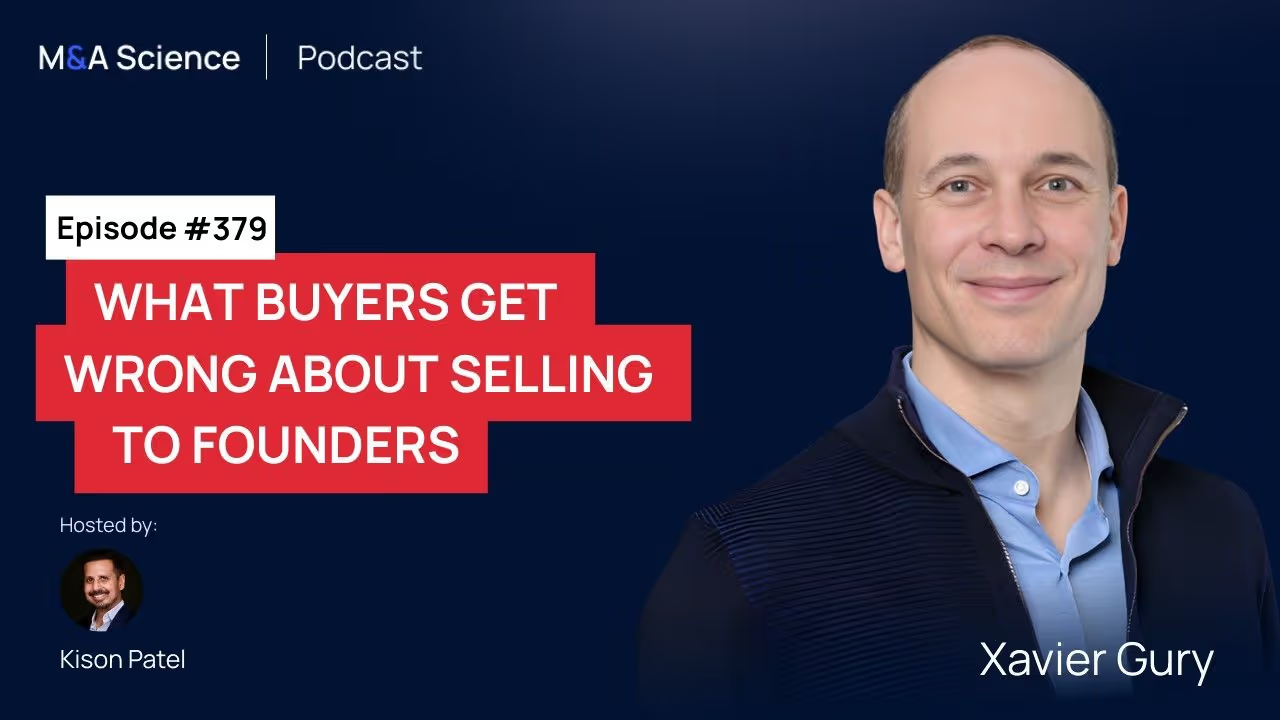
Xavier Gury
Xavier Gury is a founding partner at Wind, bringing 15+ years of entrepreneurial experience to the venture capital world. As a three-time founder, he successfully exited companies to public companies and L'Oreal, including one deal where he stayed through a performance-based earnout. His operational background gives him unique insight into deal structuring, post-close integration, and the founder mindset during M&A transactions.
Episode Transcript
What Buyers Get Wrong About Selling to Founders
Kison: [00:00:00] I am Kisan Patel, and you are listening to m and a Science where we talk with deal professionals and learn valuable lessons from their experience. This podcast focuses on stories, strategies and what actually happened during m and a deals.
Kison: Hello and welcome to the M and a Science podcast. This [00:00:30] podcast is part of a mission to rethink how m and a is done. The old school settle letter approach, it's dead fire led m and a is all about strategy, alignment, and efficiency. Putting value creation at the center of every deal. And let's be real. It's not just about closing the deal, it's about making it successful.
Kison: We uncover what truly works in m and a by learning directly from the best. I'm your host, Kisan Patel, CEO, and founder of Deal Room and Chief Scientist at m and a Science. Today I'm joined [00:01:00] by Xavier Guri, founding partner at Wind, a venture capital firm backed by both top tier institutions and exited entrepreneurs across Europe and Asia.
Kison: Before becoming an investor, Xavier was a three-time founder who exited companies to publicists, L'Oreal, including one deal where he stayed through a performance based earnout and helped grow the business from a hundred to 250 people. In this episode, we're gonna unpack what actually makes an exit [00:01:30] successful from deal structure to post close execution.
Kison: Xavier now applies those lessons when backing the next generation of founders. Xavier, how are you doing? I'm great.
Xavier Gury: Did I pronounce it right? I didn't get it quite right.
Xavier Gury: Thanks. Having Mihir, happy to be there with you. Hey, we're here live in Paris?
Kison: Yeah, in the. Thanks for making the time. I really appreciate it. My pleasure. Can we kick things off a little bit about your background?
Xavier Gury: So my background, I'm a computer science [00:02:00] engineer. Choose to follow that path 'cause I was a geek.
Xavier Gury: It was the kind of geek that you call all the time to fix your computer and also because I'm not coming from a rich family and it was for me is the one of the easiest way to make money. Uh, being a student. They're this biggest, uh, this better, best student organization where the proposed work to students.
Xavier Gury: It was a good way for me to enter in the real life, working life. I did all kind of different jobs from being a in-company training, Excel. My first [00:02:30] training I think was teaching people in company how to use Alta Vista. So I'm talking only to the boomer like me, the old guy vis this search engine and internet before even Google exists.
Xavier Gury: I'm sure you remember Kaizen. So I was doing this kind of teaching. I even teach how to use a computer world excel to prisoner in jail for six months. So, yeah, good experience. I learned a lot about myself talking to people about technology. Very quickly, I found myself being an entrepreneur. It was [00:03:00] in the years, 1999, if you remember.
Xavier Gury: It was like this crazy time before the internet bubble where a young guy, 19 years old, could just like come up with an id, a business plan, an Excel spreadsheet, and a Power Point, convince business angels that was not so numbered at that time to invest in this company. So this is what I did. I jumped in when I was 19, funded my first startup, funded a few crazy business angels to follow me and this first id.
Xavier Gury: And then I, I launched my first company. I [00:03:30] raised my first run with Bernard Arno, the CEO of LVMH.
Kison: Pretty well known. Yeah. Which
Xavier Gury: at the time had a VC fund to invest in startups. As I say, it was, uh, this moment, if you. We're not part of this movement. If you were not an investor in, in a startup, you are a loser.
Xavier Gury: So it was a time where it was easy to raise money. Actually, too many money has been raised and a lot of, uh, startup failed. My first startup actually didn't work, so we raised something like three or 4 million euros. It was still the, the, [00:04:00] at this time before the Euros, currency didn't work. Private started from scratch with Cherry, my partner, who is still my partner today.
Xavier Gury: Ultimately we turned the company, which was like a marketplace for knowledge management into something more practical, which was how to make website, uh, digital communications working with luxury companies like Di Joe Chanel, but also institu public institutions that had money at that time. And we ended up being 100 people by the end [00:04:30] of 2007.
Xavier Gury: It was a good journey. We went through all step of entrepreneurship. As I said, we raised, we private, we acquired a competitor that was filling bankruptcy. Ultimately we, we saw to, to public this and we went through a three years earn out a good way to learn about being entrepreneur, going through all the states.
Kison: Yeah. You had a startup that didn't work out and then you bounced back to another one. Ended up having a successful exit. You had some other exits too.
Xavier Gury: Yeah. Yeah. And then after that I moved to San Francisco and [00:05:00] Singapore. So first Singapore, I spent few years there. Uh, we met other funders, uh, based in US and based in France at the time.
Xavier Gury: My co-founder Terry, was in Shanghai and we funded a perfume company that has been acquired by L'Oreal later, another good venture and a completely different business where the challenge was more like, uh, international deployment. We're also investor in that project. So also a good exit for us. And the funny thing, we did a third exit recently, if you remember the first business that didn't work, actually, there was [00:05:30] one side of this business, which was like a translation company, basically having a onboard thousand of translator in their native language.
Xavier Gury: Being able to connect them through a workflow to other people who need their service. And this part of this business worked pretty well. We sold it, uh, two years ago to a German company. It was like, uh, our third exit together. So we had like three babies. And the three babies worked pretty well.
Kison: Wow, okay.
Kison: It's interesting how you expanded and got diversified in these different industries. [00:06:00] You find that there's some fundamentals. I, us we'll talk more about this, but like that just generally apply from those early experiences, even though you're going different industries or is it just you thrive off of learning new things?
Kison: So the reason I bring it up, 'cause I feel like when I see a lot of founders that exit, they tend to do the exact same thing again. They'll wait till the non-compete runs out and then they do the exact same business again.
Xavier Gury: Is any turn to be boring? I mean, I was happy to change of industry and today if I'm an investor, it's also another challenge.
Xavier Gury: It's, for me, it's very, very entrepreneurial journey. Also, I find myself [00:06:30] like fundraising a fund is very, very similar to fundraising a startup, except maybe it takes a little bit more time. Normally a startup, you fundraise like in six months. A fund, it takes more like one to two years depending on the market and how good and lucky you are.
Xavier Gury: But it's the same on your side. You come up with an id, you pitch, you adapt your pitch. Depending on how people react to the id you propose reframe your deck. You go back pitching and you try to convince people and ultimately at the end you get the money and you have to execute your strategy. So [00:07:00] very similar.
Xavier Gury: One common denominator is pitching. You have to like pitching, you have to like, uh, yeah, that's
Kison: true.
Xavier Gury: I find it like you have to have this sell vibes inside you. The first steps at least raising money and convincing people. And then you have convinced startups you have to enjoy pitching story and pitching business.
Kison: What's your secret sauce to pitching? Is there, is it all about confidence in the story?
Xavier Gury: Where I'm good at is listening and adapting. I mean, understanding what my audience wants and [00:07:30] adapting my speech to the audience. I don't think I have a very. I iq. I think I'm pretty good on eq, emotional, uh, questions.
Xavier Gury: I'm pretty balanced on the EQ and the iq.
Kison: A lot of these big investment decisions are based off of emotions. Most of the time. There's an element where the numbers gotta line up, but then you know, you got a lot of things that look like both.
Xavier Gury: Both, as you said, both are mandatory. And if you let your emotions too much fix, you can just jump on a project on a deal.
Xavier Gury: That sounds amazing because it's gonna cure cancer, but [00:08:00] for many reasons, there is no economical rational behind. So you end up losing your money.
Kison: Yeah. To balance the two out. Can we take apart the publicist experience? I like how you went through the whole journey. You went through a process, you ended up actually sticking around, which is what most buyers want, and you continue to go and build success post close.
Kison: Can we walk through? And you mentioned too, you did an acquisition before you sold the business. Can we take that apart a little bit? Yeah. The acquisition and the business was like, is more of like a digital agency, right? Yeah. It
Xavier Gury: was digital [00:08:30] marketing and communication agency and we were not the most shiny one or project.
Xavier Gury: Now what, what
Kison: year, what year was this when you started this?
Xavier Gury: So we started the business in two with the pilot was 2001.
Kison: That's what I mean. So you're early like digital agencies. Yeah. That's a new concept back in 2001.
Xavier Gury: Yeah man, it's, it was at a time where making website was disruptive. It was complicated.
Xavier Gury: There was no word, phrase, weeks, whatever, to help you to build your website. So, so you need technical competencies and this is what we were bringing and [00:09:00] then. You need to make a beautiful website. So you need artistic directors, creative people. Then came the flash. So you, what was interesting in that business is that you had to gather in your team competencies that were very versatile, coming from very good color to amazing artistic director.
Xavier Gury: We were not, the, the most shiny or project was very, uh, public institutions. 'cause at that time, I mean they need their website. Like all the cities, all the governmental agencies. They needed a website, very technical. And we were good at that. The [00:09:30] other agency we bought, they were like just better from all side, all on Girls.
Xavier Gury: They were just better than us. Their name was better. It was W Cube Super name like three W, three WWW. They were super competent. They were older than us. They have been part of a Swedish group that was big, big, more than 1000 people in that company. But they didn't manage well their cash, which we did well, we started from zero, but.
Xavier Gury: We grew organically and we were good at managing, getting your cash, [00:10:00] not picking up the most shiny project. You can work for Dror, you're super happy, you can claim, but they don't pay you and they're super, super demanding and at the end you spend half a year for 50 K project. So we focus on more like a rational and economical, viable project.
Xavier Gury: This worked pretty well and it put us in a position to acquire competitors better than us. When the market changed and where everybody was filling bankruptcy, they were still like the good student like us to acquire [00:10:30] them. It was an interesting journey because I was like maybe 20, 21. Wow. And I wasn't acquiring a team.
Xavier Gury: It was like 30, 40. I was like the CTO at the time, and the guy we acquired from the team, he was a CTO with 10 years more experience than me, is obviously better than me. So there was like all this challenge of merging people together. With all this human relation that you have to handle all this ego that you have to handle.
Xavier Gury: And I think we're pretty well at doing it. Everybody needs to find this place. This was one of the first [00:11:00] milestone that we achieved, which was how to integrate people coming from another company. With your company, with your DNA,
Kison: you guys are direct competitors.
Xavier Gury: They were like direct competitor.
Kison: Yeah.
Kison: Wasn't there like a negative sentiment that comes with it? Like when you're bringing these people over?
Xavier Gury: Because at that time the market was like super fragmented. They were competitor, but there was like thousands of competitors. Okay. And at the end of this, uh, market consolidations, only few of them remained.
Xavier Gury: Yeah. There was this kind of ego also for them because they were like the small duck wearing the giant [00:11:30] dragon, but it worked pretty well. What's the
Kison: headcount difference at the time of the acquisition?
Xavier Gury: So we were like 10. Wow. And they were like 100.
Kison: Wow. So
Xavier Gury: what we did, when you save this company at the, how do you say in France is like court.
Xavier Gury: We decide whether the company field competitive bureaucracy or you. Keep some assets if you keep some people of the team. So in France we have this like very favorable unemployment program, which means if you decide to just being part [00:12:00] of the bankruptcy, you take the money for two years, you are paid by the government and that's one option.
Xavier Gury: The other option, say you jump in this new venture with us, you're gonna have to work, but you are part on a new adventure. And the good thing is the CEO of the studies that we acquired was a super Iranian, super good commercial sales guy, very good business developer, not super good financial guy. He join us and he help us to select the best profile [00:12:30] for the team he had.
Xavier Gury: So we kept the 10% best of the team. Okay. Wow. And that's why in the team there is always a range of quality of people and competencies. We get the best. So we started with, uh, the best element of the former.
Kison: Was that like a big break, like a pretty pivotal change in terms of direction and growth after you did that acquisition?
Kison: Or was it
Xavier Gury: No, it was the, also the beauty of the deal was that we were also very complimentary. We were very technical and these guys, they were super creative in much [00:13:00] pretty well, and we were able to address the market with all what this market needed at the time. Competencies that were super technical and competencies that were super creative.
Kison: We gotta continue growth after this.
Xavier Gury: Yeah. So we grew from basically 20 to 100 when Publicis, uh, acquired us. Crazy time. We have always been like a perfect time to market. We raised capital from our first company in February, 2000, just before the internet bubble burst. We sold to Publicis [00:13:30] two months before Lehman brother.
Xavier Gury: So very good time to market. Very lucky. At that time there was this like consolidation of the market, all these big groups like. Euro, RSEG, Publicis, Omnicom v Video, all these big advertising groups. They were super good at doing advertising in the metro television radio, but they were pretty bad at digital.
Xavier Gury: And we were what at this time was called a pure player. Pure player, because we were purely digital and they needed [00:14:00] to acquire people like us. And for us, the question was whether we stay alone and we try to thrive, but then we're gonna compete against this giant who are going to acquire competitors to be also a digital group, or they're going to develop internally their digital competencies.
Xavier Gury: So for us, it was the right time seeing this, uh, consolidation of the market to say, okay, we need to join a bigger group than us, or we'll be a small player in the big world. The customer [00:14:30] we had. They were working with us because this big group didn't have the competencies. But once this big group will have the competencies, they will not work with us anymore because they will take what we call a 360 approach.
Xavier Gury: These publicists will propose a TV campaign and on top of that, a digital campaign. And because they will have the competencies internally, they will not work with a small agency like us. So it was the right time to market to join Publicis for another one. And we selected Publicis because they were the [00:15:00] worst in digital.
Xavier Gury: And we knew that the value added and earn out will depend on how much we'll be able to drive innovation and to drive digitalization in a big group. And actually this is how our earn out was shaped at the end. So publicists were not the biggest check upfront, but it was based on the formula. And I always tell to the startups who are working with that, the value doesn't come only from the valuation value of the deal, it comes from the [00:15:30] term.
Xavier Gury: In that case, the terms were pretty risky, but pretty favorable in case of good execution. The deal with the most potential believing in us and believing we're we'll be able to bring to drive digitalization in a big group.
Kison: Did you run a whole process, like hire a banker and then have all these bids come in?
Xavier Gury: Publicis, they are doing, I don't know today, but at that time they were doing 10 to 20 acquisition every year. So they had a big m and a service on our [00:16:00] side. We had nobody,
Kison: how'd you get multiple offers?
Xavier Gury: We had multiple offer. I said, but Publicis was the best one in term of potential. And the funny thing actually, at first, we're not supposed to be acquired by this entity of Publicis.
Xavier Gury: So Publicis is a conglomerate. They're like more than 100,000 employees today with many, many, many agencies all over the world. They had this internal agency dedicated only to production of digital assets. And at first it was supposed to [00:16:30] be this entity of Publicis that was supposed to acquire us. We were okay.
Xavier Gury: It was a good offer. Everything was fine until one day we opened the TV and we see that our direct competitor bigger than us has been acquired by this entity of Publicis. So we were like, wow, okay, we are screwed. A few hours later, we've been AC called by Maurice Levy, the CEO of Publicis. We told us, no, no, don't worry, I'm still acquiring you, but I will locate you.
Xavier Gury: I will put you in [00:17:00] the French entity of Publicis, which was actually much better for us because otherwise first option would've been a small French digital player in a big digital, uh, group. And in the second case, the one that happened, we became the king of digital in a group that didn't do nothing in digital.
Xavier Gury: So we were able to brought much more value. And this is the reason why also the earnout was so good at the end. Many, many reasons for that. But one of them is that you No
Kison: investment banker? [00:17:30] No.
Xavier Gury: So actually I don't consider myself a finance guy. I'm more like a entrepreneur.
Kison: Okay. So no investment banker, but did you proactively go to other agencies to seek out offers or interests?
Xavier Gury: Everybody was looking for acquiring a pure player like us.
Kison: Oh, so you got a lot of inbound at this point? So we got
Xavier Gury: a lot of inbound. Yeah. We didn't have to do too much work for finding the potential buyer. Uh, yeah, as I said, good time to market and once the market knows that you are for sale, and we had a lot of [00:18:00] inbound from people, different profile of companies, some companies that were like pure technical companies, consulting firms, whereas a multiple of EBIT was like five x because it didn't bring a lot of value.
Xavier Gury: Other groups like Publicis, Euro, SCA, windman, that were bringing more like 10 to 12 X people of ebit because you were bringing to them more value. It was like mandatory with more competition.
Kison: That's an interesting point is looking from the buyer's point of view and how [00:18:30] they value your business because of the synergies and and what value add opportunities you would bring.
Xavier Gury: Definitely
Kison: timing felt right. You're already seeing consolidation happening in the market and to really compete on an ongoing basis, it would make sense to join a bigger platform. Got a lot of inbound interest and with that you sort of understand this perspective of different buyers putting value on it, seeing a range, but then you mentioned.
Kison: Publicis wasn't necessarily the highest offer. You did see that hey, even though they bought another competitor, they [00:19:00] wanted to put you in this different group where it's an opportunity to actually create more value 'cause they didn't have capabilities and things that you were doing.
Xavier Gury: Yeah. This is in a way some luck because I'm pretty sure if we had been picked up to be part of this operational part of Publicis dedicated to deliver digital asset, you know, earnout would've been much, much lower in that case, being in charge of transforming group that was purely focused on TV ads, traditional [00:19:30] ads, to something that was digital and ultimately at the end it would be the digital that will drive all the other assets.
Xavier Gury: At first, all this group, they were coming with one creative ID that was made for tv and then you were producing other assets for the subway, for the street, the radio. Everything first come from the TV perspective. And when we left Publicis, everything was like [00:20:00] a different paradigm. You first think on how we gonna promote that brand, promote that product on internet with all the power of what you can do in the digital world.
Xavier Gury: And after that, you're gonna think at how this can be advertised on tv, how this can be advertised in the subway. But it was a completely different creative process, integrating the digital in the way you will promote a brand of a product. And this was our job for three years to us to [00:20:30] train, train the team in Publicis, to make them our best ally to evangelize the customers and the world group about how digital was powerful and how they should rely on us at Publicis to make their business.
Xavier Gury: And obviously the more digital business they were doing, the more business we were doing in the group. And the biggest was the earnout at the end,
Kison: like pretty transformative for them to acquire you as a startup and saying, Hey, we're gonna challenge our own business model [00:21:00] instead of being TV first. We're now moving to more of a digital first approach.
Xavier Gury: Yeah, exactly. If you ask me why it worked, 'cause ultimately it's Earnout worked pretty well. We know that when a company is taking over, like a small company is taken over by a big group, it's not easy. The size, the scale, the company completely changed. Your employees that were part of the family became part of big groups, so they became more like a number.
Xavier Gury: Whereas before they were like really part of the family. It's really challenging and in our case it [00:21:30] worked pretty well for many factors. One of them is clearly the, the human factors. The team within Publicis that took over a company had a deep inside an entrepreneurial mindset. They could have been amazing entrepreneurs.
Xavier Gury: They not decided to follow that path, and they had a great career, but they could have been an entrepreneur. I think they, they lived a bit, this, uh, entrepreneurial journey through us, through our ventures and our interests were completely aligned. And this is because the deal was shaped in a [00:22:00] good way where if we win the group win and the people who manage us on the day-to-day win, and there was this like alignment of planet and interest for everybody where they had to make us thrive being successful, for them being successful, it goes down to the way the deal was shaped, the formula of the earnout, et cetera.
Xavier Gury: Another factor is when you are a small startups. You are very lean. You try [00:22:30] to, to save money on everything. And then you join this group and they tell you to absorb, to embrace their process, which are not compatible with our way we managed the company before I gave you an example, we were using all our IT stack was open source, so cost zero.
Xavier Gury: And you join this group and the first thing they tell you, Hey, you know every employee is gonna have to migrate on Lotus Nut. I dunno if you remember lot. Yeah, I remember lot. I'm not sure that still exists.
Kison: Maybe it was
Xavier Gury: [00:23:00] like Windows 365 before Windows 365, but the worst possible option and the cost per headcount was like 1000 euros per month per headcount.
Xavier Gury: So it would've damage or EBITDA too much. But we had to fight to explain that no, we don't want, uh, we have to do a lot of politics and convince, and you have to have in front of you people that are ready to listen to you and understand. We won a few battles that make the difference at the end. I think
Kison: that's interesting.
Kison: So it [00:23:30] wasn't the smoothest, but it sounded like there were some elements that allowed you to continue growing, which is for them just being more entrepreneurial minded that, hey, we're acquiring the startup, learn from them, but then there are some points of friction you gotta push back where Yeah,
Xavier Gury: definitely.
Xavier Gury: I think what Publicis managed to do well is a lot of m and a firm, they make the deal and what's happened next is not too much
Kison: exactly their problem. They don't think about that.
Xavier Gury: And when it's managed, like the way they did it internally, I'm [00:24:00] pretty sure they were incentivized on what the company will be the next three years.
Xavier Gury: The success will not be only based on the signing of the deal, but what this merge will bring to the group three years later. It helps a lot to make it successful.
Kison: So in terms of those factors that made the integration successful, you know obviously there's compromises. So human factor, there's compromises.
Kison: I wanna talk about the deal structure because that's interesting because you even mentioned that you had a higher offer, but you took this one, you looked at the earnout being a bit more [00:24:30] aligned or, and post-close and that just opportunity to lot more value. I always think about these like dials of the deal, right?
Kison: In this case you have the valuation dial. Where are we getting valued at? And you got the terms of the deal, which in case built in earnout was one of the terms that was pretty favorable. I feel like there's like the people factor. You kind of saw like, Hey, these could be good people to work with.
Kison: Sometimes they're not. You overlook that and then it just turns into total disaster because people talk about culture clash and all this stuff. How did you like think through that? Does that sound [00:25:00] fair? Like, to look at those sort of dials? Because I, I want to reference this back on how you look at deals today.
Kison: When you're on the investor side and you're kind of coaching, uh, you know, an entrepreneur about thinking through exit. Is that the right dials that I should be thinking about or I missing anything?
Xavier Gury: One thing we've done pretty well at that time is to. Identify the 10 key people in the company from 20 years old coder, but we believed was key to build around aim in the next years [00:25:30] to the business development guys that was like 45 and we incentivize 10 key people in the company.
Xavier Gury: This help us to have a core team fully align on the goals and the goal was to maximize the earnout three years later and it saves you a lot of challenge and a lot of problems. The first one being you have no more management issue managing these people.
Kison: So they're all annual
Xavier Gury: review are very easy [00:26:00] because they are in the same boat as you.
Xavier Gury: They're aligned. They have shares of the company and they will benefit from the earnout at the end.
Kison: So they're all tied to the earnout. So
Xavier Gury: everybody is working head down to make sure that the earnout will be maximized. A good example is what the point of getting a very high salary. If you believe in the exit and if you know that the exit will be 10 to 12 x, the EBITDA for $1, you get a salary is $9 you lose at the exit.
Xavier Gury: So normal fight on salary for [00:26:30] the next three years, everybody's aligned. We're not very well paid during the three years, but not like amazingly well paid because we prefer to bait amount of the EBITDA three years later. It makes like the management of the company very easy to do.
Kison: Was it easy for you to communicate with the, because you found like 10 key people, they were part of the team already?
Kison: Yeah, they're part of the team, but I find that sometimes even we have options for all employees in our company and I can tell like some people value it and understand it, some don't. As you find yourself having to, so it
Xavier Gury: was [00:27:00] before the stock option even exists. So it was like shares as a company. So same class of shares than us, you know, stock option.
Xavier Gury: Sometimes they are not, they're vested, et cetera, et cetera. There was, in this case, they were like fully aligned with us, same class of shares than us.
Kison: They, I understood, okay, we we're gonna optimize the business. We get hit this earnout, which is gonna be bigger win than just collecting a salary.
Xavier Gury: Yeah, it was for us.
Xavier Gury: But what we decided is that us and also our business engineers, remember the crazy business engineers from the beginning [00:27:30] that be on the first startup that didn't work. They were still on board and we kept them. The only thing we did is we acquired back our shares from when we did the private. I didn't mention that, but this was like the pretty smart move.
Xavier Gury: We had almost all the shares of the company 35, or I don't know how we know LVMH had at the time, but we acquired back our shares before to do the private, telling them that our business was completely new, that we will probably not make any money with this new business because it was like not a very disruptive business.[00:28:00]
Xavier Gury: It was, but it was not the business be on originally. So we back shares. What we did when we decided to give incentive to our key employees, we gave part of shares and we took also to our business engineers to share part of their shares also with these 10 key people. And we explained them that, yeah, maybe it will be less loading in shares, but at the end your shares will work three times, four times better because you will have this team super motivated and align [00:28:30] with you and with us.
Xavier Gury: And this worked pretty well.
Kison: Did you find any points or friction on this earn out? Because I hear stories about earn outs going sideways and they turning into lawsuits and people pissed off.
Xavier Gury: No,
Kison: it was just really clear. And what was it based on? Was it based on revenue ebitda? Like what? What was the earnout?
Xavier Gury: It was a multiple of EBITDA segmented by the growth of the revenue.
Kison: Okay.
Xavier Gury: More or less, two more points. If the growth of the revenue was both certain threshold. Basically a [00:29:00] multiple of ebitda. So it's pretty clear, pretty, uh, healthy. You don't pay as a startup based on the revenue that it's making, but based on the performance, uh, the company is making like the financial performance, it helped us push us to be lean.
Xavier Gury: Yeah, we had a very good, uh, gross margin, like 35% gross margin, which was like less in class at the time in the market. And once again, everybody in the company was paying attention to the spend. The spend is not like a restaurant or trips. The [00:29:30] spend is how you optimize your resources on the project, how you watch that this client is too much demanding.
Xavier Gury: At some point you have to say no because it's very easy to satisfy your customers and to degrade your profitability. Exactly.
Kison: What were like the synergies that you found that, hey, it was a publicist brand, made a lot easier to do business. What were the big value add resources that you got?
Xavier Gury: Yeah, the Publicis brand definitely helped us a lot.
Xavier Gury: Give us access to
Kison: some people. People answer the phone more often when, [00:30:00]
Xavier Gury: remember me. Definitely it helped. I don't think there was any downside. Yeah. What we did is uh, at some point we became too expensive for some of our old customers and this is just like the natural
Kison: increase price wave life.
Xavier Gury: So you increase your price.
Kison: What about like strategy? Did you get extra help with strategy and just thinking through go to market, things like
Xavier Gury: that? No. No. I guess it's like, uh, being entrepreneur.
Kison: Yeah. So it's more of a giving you a platform but just incentivizing you Yeah. To keep growing. Yeah, exactly.
Xavier Gury: So another was not inside the synergy was [00:30:30] like definitely the brand.
Xavier Gury: One thing also, you don't have to focus on paying your employees at the end of every month. All these paperworks, admin things is one less things you have to think about because there is a staff dedicated for that. So you can focus more on the business, which is good.
Kison: That's a key thing that's keeping, letting you have the autonomy.
Kison: So I think there's an interesting balance that they, yeah, ultimately created. You got autonomy to grow the business independently, but also got support from the larger organization. Let's break that down. Thinking [00:31:00] from the buyer led perspective, what point of view or advice you could give to buyers to help them create a better experience for founders on their exit?
Xavier Gury: Yeah, as I said, one of the reason the deal worked pretty well with Publicis is that the deal was really balanced. I really believe in the yin yang, MEAM and a, and the deal has to be fair for everybody. Very often the buyer feels that the power dynamic is in his favor, so he's gonna try [00:31:30] to push the cursors the maximum in his favor, and maybe at the closing time he gonna feel like he won.
Xavier Gury: He's gonna flatter his ego. But what I've seen, and especially in that kind of deal, is that he's not a sprint some. It means you're gonna have to work for a very long period of time to realize the benefits and the profits of this merger and this acquisition. If the deal is unbalanced, at some point the seller will feel like we lose [00:32:00] motivation.
Xavier Gury: We cannot lose sight of why he did the deal, and there will be this not involvement in the business. And at the end, it'll make a bad deal for everybody. The good model is when one plus one makes three. This is what happened with Publicis. I created a lot of value for them, a lot of value for us. And when the deal is unbalanced, when you try too much to make it favorable for yourself, then one plus one got zero.
Xavier Gury: [00:32:30] Everybody lose the value creation that could have been. And this power dynamic works when you're a buyer on where, when you are a seller, the same thing.
Kison: So having a good balance of. What's in it for each person? A lot of that carried over with this earnout structure because it gave you potential for a significant amount of upside.
Kison: What did that look like? Is it a sort of a percentage? You know, we can make up some numbers just to give a rough idea. Was it like, hey, here's yield value, whatever, 50 million, then earnout comes out to [00:33:00] like 20 million. Like what was the like ratio? Yeah, so the
Xavier Gury: company publicity obviously listed, so I cannot disclose everything.
Xavier Gury: Yeah. Rough idea. The structure of the deal, how much percentage? It's interesting, you're right. The structure of the deal was we get one check up front, which is a small check, but still, you know, you've been working for seven years, very hard since 19 years old. You are happy to materialize this work in, in some way to be able to buy a house, whatever.
Xavier Gury: So this was the first check and then there was an [00:33:30] intermediary payment over the three years based on the same formula. So you were playing the formula and obviously you are in the middle of the journey. So not the full value is realized, but they play the formula and they gave you a second check based on the exact same formula of earnout.
Xavier Gury: And ultimately at the end, in our case, it was three years. They play against the same formula. Normally if you do good, the total is much bigger than the first and the second check. And they were [00:34:00] just like offsetting the two first check they paid. In our case. What is interesting is I'm pretty sure that what it costed to public, this was over what they budgeted.
Xavier Gury: 'cause when you close a deal, you say, okay, one, to acquire this company and based on the forecast, it should cost us 50 to 80 million. And if you do very good because it's a formula with no cap, then it costs them more than what they were expecting. But just like a proof [00:34:30] that the merge worked and that the acquisition was a good acquisition.
Xavier Gury: At the end, it's a good signal. It means that WC is able to acquire small companies, is able to merge, to create value. And yes, cut them more than budgeted, but it mean it was a success. So not a bad signal for
Kison: this deal. There's actually a lot of the value is actually on the earnout.
Xavier Gury: Yeah. Yeah. I mean like more,
Kison: like more than half the value was,
Xavier Gury: uh, much more than that.
Xavier Gury: Upfront check was 10% of the, this is crazy, of the [00:35:00] value to value. There was other options where we were getting like a 50% upfront, uh, typical deal, you get 50% upfront, 50% will be based on the performance. But then it was, it would've been for sure. Now looking back, it would've been a much more earnout in total at the end.
Kison: I'm, I'm trying to absorb this mindset, right? 'cause it's, uh, you have nothing much to lose, but you're,
Xavier Gury: you're taking a huge risk, kids. So if you get for the best and you believe in yourself, you believe in your team, you believe in the market, you do the kind of same bits that I'm doing today, the [00:35:30] idea of my startup idea,
Kison: exit.
Kison: The idea of exit is to realize value, but in this case, you're taking on a bigger risk. Yeah, we like that. It was an interesting example. I didn't realize that it was actually huge chunk on, on this or not. Yeah, I
Xavier Gury: 15%, but not much.
Kison: Yeah. I still not getting, as I
Xavier Gury: say, in our case, we believed more in the terms than just in the upfront valuation.
Kison: You ultimately looked back and said, Hey, we actually made the best out of that exit. Yeah, definitely.
Xavier Gury: Which was the best path for sure. We could have been executed even more and [00:36:00] make the numbers being bigger at the end. But in terms of path. There's also luck in that path that we followed.
Kison: Teach me as a buyer, how do I do this?
Kison: If I'm looking at a a company, how do I convince them to put 15% up front? Really base a lot more of this on Earnout. As a buyer, for you as a seller, you had a level of certainty. I'm just wondering, as a buyer, how did they get to that point to create that out structure?
Xavier Gury: Pretty sure it cost them more than what they budgeted, but honestly it's a win-win deal.
Xavier Gury: Yeah. Because they [00:36:30] don't have to put that much money. I mean, is the dealer is the merge doesn't work, doesn't cost us much, and is the deal works really well. They win, cost them a lot, but it means you have created a lot of value for the group and that was the goal of the deal because the deal was to transform the group.
Xavier Gury: How did they, the more you transform the group, the more you pay at the end, which is like pretty fair.
Kison: How did they come to terms with this? Because I don't think this is their standard playbook. Like this isn't what they offer everybody. It's
Xavier Gury: 2007 market conditions, not many players to be acquired services that this [00:37:00] culture of acquiring, I mean.
Xavier Gury: I think they're good. They're good enough being able to draft deal, being flexible. I mean, we negotiated that deal. Obviously it was not the first uh, version of the deal they drafted, but they were pretty flexible and ready also to take some risk and try something that bit out of the market practice.
Kison: That's fascinating. I'd love to talk a little bit about your current role. You've had this experience, you've gone through the whole cycle. Now you run a venture fund. Now you're working directly with founders [00:37:30] through their journey, and this is a big value add. There's just capital, but then there's capital with the people experience.
Kison: How, how do you kind of help and guide them to even just start thinking about this? I feel like it's always an interesting conundrum when you talk to founders of, Hey, is it really focused on a mission and you just stay focused on a mission? You don't really think about exit, it just comes up. Or are you really thinking about exit early, early on?
Kison: Are you sort of building for the exit? What's your philosophy when you start working with these founders?
Xavier Gury: We try to [00:38:00] explain the funders that the exit is not the result of the final battle. We try to explain them that you don't shape your exit at the final battle, but you shape it. You design it at every round where you have to fight every battle to get the best terms.
Xavier Gury: And we try to explain to them that terms matter more than valuation. Our job is a bit schizophrenic in a way that is like, uh, [00:38:30] the magnet in an EV engine. It keeps changing polarity all the time, right? And us is the same. You start being on the buy side. You want to enter the deal. So you want to convince the startup that you are the best investors to work with them.
Xavier Gury: This is the first approach. And then you are in the cap table part of the deal. More or less align with the other investors and the funders, and you're gonna reach the next round. [00:39:00] And in the next round you're a seller. You're gonna have to pitch the company to other investors to temp them, to tease them that they should be part of this journey.
Xavier Gury: They should be part of this startup, and they should invest in this startup. So you turn from a buyer to a seller. Ultimately, if you go to the end, you reach this exit moment where you look at the waterfall, and very rarely everybody is aligned. There will be people and convertible knots with a discount.
Xavier Gury: There will be people with liquid press, [00:39:30] there will be people with participating, and not everybody's aligned. It's super exciting. It's a lot of strategies like a chess game. How you gonna handle and navigate this waterfall and this cap to defend your interest and the interest of your LPs that trusted you in the fund.
Xavier Gury: What we try to, to explain the entrepreneurs is that the value of the exit is not only in the. Number of shares they will get percentage of the cap table they will get. Because very often you see entrepreneurs like [00:40:00] fighting a lot to have like 1% more in the capital, but at the end it will not make big difference.
Xavier Gury: What makes the difference is the terms. This is like the first things we try to communicate and to teach with entrepreneurs. And the second thing is if you look at what is the success of an exit, is it only the money you're gonna make or is it just like the fact that you gonna create value and you're gonna be successful [00:40:30] and being successful, you're gonna be able to raise money for our next journey, next adventures.
Xavier Gury: And actually very few people knows exactly how much each funder is going to cash out, but everybody on the market will be able to recognize the creation of value made by the funders with this startup, with this product, with this service. And they would be able to see that. This player, big player, acquired your company because he was bringing value to this big player.
Xavier Gury: Ultimately, [00:41:00] what matters is not how many millions you can make. It's more jumping in this journey with the right partner, the right investor that's gonna be here when everything is bright, but also during the storm. And will it help you to make a success at the end? And whether you cash out with 20 million, 18 million, 15 million, or even less, what you want as a people, as a human being is to be successful.
Xavier Gury: And just like the beginning of your career, the beginning of your journey, [00:41:30] usually you are young entrepreneurs is not going to be your only venture. So I try to teach them that focusing on the success is more important than focusing on just the total amount of money. And the success doesn't come from.
Xavier Gury: Maximum of percentage of the cap table. I this come from having the best partner to help you to thrive your startups.
Kison: Yeah. And you had a good point. Like you have a cap table with different investors that are gonna have different perspectives, different expectations, maybe different terms. How do you benefit the greater whole of the cap table?
Xavier Gury: It's [00:42:00] not easy, I have to admit. This is our day-to-day job. I am learning it firsthand.
Kison: The messier of the cap table, the harder it is to do the deal.
Xavier Gury: It's just, but it is not easy for an entrepreneur, which his job is to develop his business and not to focus on the strategy of the waterfall at the end, uh, to understand all that.
Xavier Gury: And that is good when you have fund friendly work with you. As I said, I don't define myself as a financial guy. I'm more like a entrepreneur who, who likes to be part of other entrepreneur journey. Where we can also make the difference compared to other [00:42:30] VCs are gonna be, but also, but maybe more like focus on the return only.
Kison: You know, if I was a company looking to raise money, be it VC or growth equity, what are like the terms specifically because valuation we always look at, but now we're realizing terms are more important. What are the terms I should really pay attention to? Right? There's obviously like liquidity preferences.
Xavier Gury: There's so many different terms, but definitely pre or no pre participating and no participating makes a big, big change. Participating is kind of game changing, so that's super [00:43:00] important. And then the typical good liver, bad liver, always. Macy is a lot of fight about that.
Kison: What do you mean? So let's explain this.
Kison: If you have a participant, now, this is a funny one, right? Participating, that means you basically get your preference.
Xavier Gury: So participating, I gonna try to explain that in English. Be turn,
Kison: don't, don't worry. I'm gonna try the best because I, I, I know this like the same way even I know I know you English I still can.
Xavier Gury: So. It all comes to the waterfall and the final [00:43:30] payment. So participating it means you gonna first gate as a percentage of your shares. So let's say you have a 10% of the cap table, you can attack your 10% of the total, a amount that's going to be paid, the investors and to the funders. You offset this 10% from the top line, and after that, you are going to get once again your percentage with all the other, uh, funders.
Xavier Gury: But the first [00:44:00] 10% are secured
Kison: right at the top, secured
Xavier Gury: for you, right of the top. You are playing for another run after with everybody, but in a scenario with the company is not performing as good as it should. If you run all the simulation securing your liquid press, participating. Can become changing.
Kison: Yeah. Big time. You're gonna
Xavier Gury: be the first serve and you're gonna be served twice.
Kison: Is it ideal to have one X non-participating? Is that the ideal term to go for?
Xavier Gury: You know, I've seen everything I've seen like four express. Wow. When the deal is super defensive, [00:44:30] and this is at the moment where you need to have dry powder.
Xavier Gury: Typical example is you invest in a startup run. Not everything goes accordingly. Company is not doing well, not easy to find anybody else to join the next round, but the company still has some potential, but need to be like reshaped you. If you are an insider of the of the deal, it means if you have been closed to the funder all the time, not the business angel that put his money [00:45:00] and lost sight of the of his deal, then you know.
Xavier Gury: What this deal is about, is it defensive or offensive deal? And you know, if you have to play again, put another coin in the machine, or if you just have to drop. This works only if you are an insider of the deal. If you have been close to the fronters at that moment, what might happen is that you're gonna hit your arm, which means like the first dollars you have invested in the deal are over, but you have a chance [00:45:30] to play for another run.
Xavier Gury: Sometimes I could pay to play. It can be even worse. You know, it can be even worse. It can be like you got four x press, the new run coming, and if you don't participate, your old share became common. So it's like it's a double penalty.
Kison: Ah,
Xavier Gury: and if you're an insider of the deal, you know what you have to do.
Xavier Gury: And if you have enough dry powder, which happens that some people, they paid all their, they did, uh, all in temp care, they did all in at the last run. They [00:46:00] have no more cash. For this next run and all the value is gonna come from the next run because you have RX press and the company is going to start a new adventurer.
Xavier Gury: So you have to believe in this new adventure. Typically, you have a kind of identify potential buyer that is pretty secure. You know that if the company reach like this kind of few milestone, then you have likelihood that, uh, the deal will happen. And then because you are aware of everything, being an insider, you decide to play a game.
Kison: [00:46:30] Yes. Terms matter. Terms matter.
Xavier Gury: Are there any other big like gotcha terms that are
Kison: things to think
Xavier Gury: about
Kison: besides this sort of
Xavier Gury: preference stack? Most favorite nation, MFN uh, ratchet is good. Also. It's a good protection. It means like if the next run is below the previous run, they will give you more shares.
Xavier Gury: To compensate the loss,
Kison: uh,
Xavier Gury: make it simple, so it's a good protection
Kison: as an investor. You have about over 30 exits now. Yeah. What advice would you focus [00:47:00] on when it comes to like the Pure Exit event?
Xavier Gury: I have a funny story about that. One of the first deal we did with Wind one, the WIN one was our first fund, uh, self-funded by tier and myself, roughly $40 million, four zero.
Xavier Gury: I mean, we did, uh, this belt on the team that was developing a log management product, so a SaaS, SaaS business 2015. This is the moment where everybody's doing SaaS and this is the beginning of this new trend working very well. [00:47:30] And so we bet on this team, we bet on that space. And the company is doing pretty well.
Xavier Gury: They're selling their log analytics system to many companies, but unfortunately happen, sometimes the funders disagree, the dynamic of the funders doesn't work, so they decide to sell quickly. They have a buyer. They haven't realized a lot of value creation from a sales perspective, but from an it from a product, they have a good product.
Xavier Gury: And I'm a young investor, [00:48:00] rapid entrepreneur, batching investor at the time. And the deal is pretty good. A good IRR. We get maybe three x or four x in two years of time, so we are pretty happy. So we kind of signed the deal quickly and what's happened is that this startup being acquired by a US company, the valuation was not so high because the funder were loaded in shares of the company, the mother companies that was occurring, the startup, we didn't see too much.
Xavier Gury: We didn't pay too much attention to [00:48:30] that. And also at that time, this US company was not what it is today. Ultimately. Long story short, this US company that acquired the startup became listed on the NASDAQ today. It was 50 billion. The market and the product they sold is probably one third of the revenue lesson taken is that try to be as much as possible aligned with the fund terms when there's an exit.
Xavier Gury: If I would've got the same [00:49:00] percentage of share ratio of shares that the funders get, I think I would be, uh, very happy today. Yeah. So there was like the asymmetry disalignment in a way. And that time we found it fair. But my lesson from this deal is that next time I will try to be more aligned with the same term than the funder.
Kison: How'd you end up with different terms?
Xavier Gury: Uh, because it was like everybody got the same. The valuation of the company was obviously the same for everybody, but they got incentivized with [00:49:30] shares of the mother company.
Kison: Ah, with their company. You didn't, you just got exited out with cash. No, just
Xavier Gury: exactly.
Kison: So if you would've converted to shares, that would've been the whole,
Xavier Gury: we could have been converted or we could have noticed that, hey, maybe we should value the shares you are giving in the total value of the deal.
Xavier Gury: Or we could have asked, uh, to, as you said, to get a half equity, half cash,
Kison: for instance. Yeah. Because they would've probably been open to doing that. Rolling over the equity.
Xavier Gury: I'm not, uh, bitter about that. It's a good story. I'm, and I'm super happy for
Kison: That's a good lesson learn. That's a [00:50:00] good lesson
Xavier Gury: to learn.
Xavier Gury: Like being party pass with the funder deal.
Kison: Paris, what does he, what does it mean?
Xavier Gury: Uh, Paris is not something, uh, it's a Latin word, but Paris means like Same terms.
Kison: Same terms. Yep. Harry pass. Same terms. We it
Xavier Gury: a lot in French. Yeah. Yeah. Looks fancy. We gotta
Kison: bring this in. It's part of MA science we've gotta bring in.
Kison: Uh, you got more m and a French terms. Vu that happens too. De what is your philosophy when it comes to exiting versus double [00:50:30] down? Kinda gave that example of you got this other opportunity where you can get exited out or do you play into the next journey or next round? How do you think through that? How do you work with your, your entrepreneurs on that as well?
Xavier Gury: I don't have one philosophy, but what I think made us kind of, uh, successful in fund one is to enter early, because we're doing like pre-seed and seed, basically we were able to do multiple secondary round. Sometimes it could be like counterintuitive because you're gonna basically [00:51:00] sell your shares to people like Sequoia, tiger, NGP, that are bigger, smarter than you, and you sell when they enter.
Xavier Gury: So you're a seller when they're a buyer. So it looks like counterintuitive because, and why sell? When the company is doing good and when everybody wants to enter the deal and buy your share, and typically they usually buy it with a discount, but when you enter very early in the deal at series B, you can do 15 x [00:51:30] time.
Xavier Gury: Next run, 30 x. So this is what we've done with a startup. The mobility space we did like first secondary 15 x look together with my partner. Like 15 x is not bad. I mean, never know what the future will looks like. So maybe we should secure bits or let's say like 10 to 15% of our shares sell it, company, uh, keep growing secondary, uh, next round, 30 x yeah, 30 x.
Xavier Gury: We have to securize the bit of that. You have to secure a bit of that. So we sell again maybe 10 to 50% again. And ultimately [00:52:00] at the end, the company will do a spec, not a good spec, but in the capital. We were probably the, the best in term of IRR,
Kison: right?
Xavier Gury: Because we have done secondary where people enter the last round and then there was this pack and this pack.
Xavier Gury: Well, the secondaries actually
Kison: helped you out.
Xavier Gury: So we always had this philosophy of securing a bit and keeping the rest for the potential.
Kison: Right?
Xavier Gury: I dunno if it's a philosophy or a theory. I didn't make it a theory, but looking back it [00:52:30] worked pretty well. And I can give you a counter example. Sure. The context really dependent the performance of the company.
Xavier Gury: So in that case, first situation, as you described, the company was not yet profitable, but an amazing growth and being acquired by a big US player. It was one context. Second example is a US company. I've been board member of the startup for three, four years in the mobility space, also based in San Francisco.
Xavier Gury: Company is doing very well. We entered the [00:53:00] A RR was 30 K and today they are doing 32 million a r. So huge growth. And this is the second time that, uh, growth equity fund is joining. Basically, a few weeks ago we had this option of getting all our cash back or staying in the adventure for the next round.
Xavier Gury: It was a few millions, actually a line worth few millions. I decided to stick to the company and to stay in the adventure because I say, okay, I get this few millions. [00:53:30] Is there a better way to invest this two millions than staying in the adventure? I know the startup, I know the funder. I've been board member.
Xavier Gury: I know the market and I have the potential of the market, and I guess the growth equity firm that's joining the adventure did all his due diligence. It is pretty sure the gross equity fund is not as early stage.
Kison: Yeah,
Xavier Gury: the risk is limited and I'm sure they did all the due diligence to make sure that they will do a two to three X in the next three to four years.
Xavier Gury: Today, [00:54:00] I'm not sure that I could find right away the better investment that to stick to the funder team I know I trust and the markets I know and I trust. So in this case, we decided to stick and it's been like two to three rounds that we could have, uh, cashed out, but we decided to stick to the adventure.
Kison: That's looking good. Yeah. '
Xavier Gury: cause the company's profitable. Now. I profitable is like self-finance.
Kison: That's an interesting view on that from the investor perspective of you have your own view on exits that there's a founder view, but he's got like different [00:54:30] perspective an operator and he's playing the long term versus you.
Kison: You have your different angles of diversifying your risk, whether partial versus holy, and looking at that.
Xavier Gury: And yeah, the luxury is like when you can decide. When we did secondary before, it was because we had like obvious opportunities cash out and reinvest this money in new opportunities. But right now this is fund one.
Xavier Gury: Fund two is already a big fund, has a need to be more finance. We have plenty of LPs now in this new fund. That's true. So [00:55:00]
Kison: you gotta assess it against your alternative bets that you could be making.
Xavier Gury: And I really believe in this rule of 40, this startup is one of the best in class following this rule of 40.
Xavier Gury: Pretty safe business. Now
Kison: that's true
Xavier Gury: with B two G.
Kison: The rule of 40. Basically your combination of your EBITDA margin plus your growth percentage equals your, and ideally you wanna be over 40, that's your rule of 40. So these
Xavier Gury: are, your growth is like 30%, but your um. EBITDA [00:55:30] or you are positive on ebitda and your growth is like 30%.
Kison: I feel like I run a business right now, we're right at 10 million a rrr, like 50 people, and we always think of Rule 40 as well. We're always focused on growth, like we're pushing to get the 40% year over year growth. So it's intentionally operating right at breakeven. Is there a spot from your perspective as an investor that, you know, maybe there's like a sweet spot between it, right?
Kison: Because you, you got kind of a line you can, you could push. Yeah, I like, I could literally go, I like the
Xavier Gury: question. I like when the Abit is below zero, [00:56:00] but very well controlled. Very well controlled. It means like you don't need to be above. If everything is under control, it's better. You'd be a little bit below and it'll help you to grow faster.
Xavier Gury: You can feel as an investor, as, and Nika, you can talk to the funders. You can feel how it's in control of the global, uh, trajectory of the company. You know, you're gonna be like minus five, minus 10 and the ebit, but the big growth and you know that at any time. You can cut some cost right? In being breakeven, [00:56:30] which is game changing, uh, the perception of the startup, it has to be acquired of finance.
Kison: If I ask that question a later stage investor, they might give you a different response.
Xavier Gury: Exactly. Different. You tell me like five to 10, this is what I will do. If you tell me I'm doing what Andrea, I will probably give you a different answer.
Kison: Yeah, no, that it makes total sense. 'cause we've a, a num couple years where we're doing, you know, 30 plus percent EBITDA margin, so we built cash reserves.
Kison: Now it's easy to sit there and teeter or run, you know, negative five, 10%. It's like not a big deal. We have cash on hand. I think you're [00:57:00] right. When you kind of know your total financial picture is, is sound, then you prefer that push forward on growth, which totally makes sense.
Xavier Gury: And another thing I will look at is your churn.
Kison: The customer. Yeah,
Xavier Gury: the churn and the value of your contract. This other task startup I mentioned from San Francisco, it's a B two G business, so it's hard to enter business to government. It's hard to enter, but then it's super resilient. The churn is very low and the startup and history of very, very low [00:57:30] churn, like actually a positive churn because they're upselling the current customer.
Xavier Gury: When it's been like this for five years, it means like it's pretty safe and um, and you can take more risk because you know that you're not going to accumulate a downside of the market. And at the same time, customers are going to drop, they're very sticky. They have to integrate the product with our system.
Xavier Gury: So churn will always stay very low. And it's like another way to remove the risk from a deal and assess the investment.
Kison: What are the biggest reasons your [00:58:00] investments go sideways? The, because you had that reference earlier, like the founders don't get along and they wanna sell.
Xavier Gury: You name it. Like you cannot control everything.
Xavier Gury: This is why it's called. Capital risk. You see virtual capital,
Kison: macro trends, you can't control.
Xavier Gury: No. You cannot control everything. And we've seen startups where there was couple working, managing the, a couple men or women
Kison: Yeah.
Xavier Gury: Managing, managing the business. Statistically in Paris, 50% of the couple split.
Kison: Yep. Yep.
Xavier Gury: So you know that on top of all the risk market technology, whatever, [00:58:30] you add this risk on top. So I had one bad example of company going sideways because the couple split, and I have another example of uh, uh, working together and did amazing. So I have no philosophy, but I know for me, when there is a family involved in the business, it's an additional risk, additional risk factor ticket.
Xavier Gury: Like that one case I did more than 80, 80 investment for 100 now is the second one. One example of fraud.
Kison: Oh wow.
Xavier Gury: Not disclosing the right information or even disclosing the [00:59:00] fake information. It happened once on a very small deal. I didn't lose much, but it happened. It's very, very rare. I mean it's, this business is all about reputation also.
Kison: That's so true. You get a reputation for a good investor. I'm talking to investors now and it's like number one thing I'm looking into
Xavier Gury: and then other reasons to go sideways are multiple, but can be the market in a way that you bet on. You are relying too much on Apple, for instance. Another example is I did once [00:59:30] a startup back when I was in the US B2C apps and Apple is changing its terms and the apps can no longer be on the Apple store.
Xavier Gury: This happened to many startup actually, and so this is when it can be sideways and it's very hard to predict. It can be a completely bigger change of trend. You were in the translation business. You did amazing translation apps and chat. GPT is coming and you're dead and this going to [01:00:00] happen with many, many because of the ai.
Xavier Gury: This going to happen to many, many companies.
Kison: Are you in the business of taking calculated bets or are you gambling?
Xavier Gury: No, no. I'm really calculating bets. IQ and eq. The EQ is important. We have to believe in the team to have a fit with the team because we're gonna work with the team. Uh, we are gonna have to love the market, but there's always someone in the team that is going to take a spreadsheet and run all the simulation, all the scenario, and at the end, I understand Xavier, you really like this deal, but look, it [01:00:30] doesn't work.
Xavier Gury: So that's the market is too small, then we don't do the deal.
Kison: Fair enough. Maybe I'm too much of Silicon Valley culture. I always imagine them on a rollette table just putting chips and numbers and
Xavier Gury: ah, but maybe we're not, uh, following enough or intuition sometimes Jason Wong, the CEO of Nvidia was telling that Americans, they focus on the 1% reason why to make the deal when European focus on the 99% reasons why not to make the deal.
Xavier Gury: So we [01:01:00] try not to follow that rule, but recognize some part in that.
Kison: That's funny. I love that. I gotta ask Xavier, what's the craziest thing you've seen in m and a?
Xavier Gury: Uh, definitely easy answer. Uh, the PAC is dead now. It's good thing that he's dead because for me it was a, an aberration. It was a pinnacle of what can be the worst in finance.
Xavier Gury: Completely misalignment between the sponsor and the investor. Signing a blank check, not knowing exactly what would be in the, [01:01:30] in the package at the end. It's like you are signing to get married, but you don't know who will be the right.
Kison: Yeah, that's actually really great. So it was funny,
Xavier Gury: it was crazy for me.
Xavier Gury: This was gambling. Hey look, this company did APAC and did amazing. Let's do apac because one did good. I think 99 did bad. So it was like what the worst could be done in finance. And the only winner is that the transactions were the bankers and the lawyers.
Kison: Yeah.
Xavier Gury: These guys made tons of money with SPACs.
Kison: Absolutely. The SPAC [01:02:00] raise, you're right, because there's a lot of fees to go to do doing a SPAC and just public and it wasn't kind of capital efficient. I mean when you look at it, that's a big chunk of expense to, to run through a spac.
Xavier Gury: I follow some deal. I was part of the deal, uh, to fees. The lower fees and the bunker fees were like something like 10 to 15% of the total value of the deal.
Kison: Talking about
Xavier Gury: big numbers like in the billion. So
Kison: I'm very capital efficient.
Xavier Gury: Yeah. Yeah. Spike differently.
Kison: [01:02:30] Xavier, this has been great. I appreciate you taking the time to have this conversation. Learn a lot. Thanks for me. You helped me become a better MA scientist. Those of you still tuned in. Fellow MA scientist.
Kison: I appreciate you listening and stay in tuned. Love to hear what you think. This is another different interview, different topics. Reach out to me on LinkedIn, likening the feedback. The other topic ideas, just general feedback's always welcome and the criticism. I'll take it until I get better at doing this.
Kison: With that, the next time, just to the deal.[01:03:00]
Kison: Thank you for taking the time to explore the world of m and a with our podcast. We love hearing feedback. Tag us on a LinkedIn post, add a review on Apple Podcast. We'd love to hear from you. If you need help standing up an m and a function or optimizing one that you already have. We're here to help, and if we can't help you, we probably know [01:03:30] someone that can.
Kison: You can reach out to me by email Kisan, K-I-S-O-N, at ma science.com, or you can text me directly at 3 1 2 8 5 7 3 7 1 1. If you just want to keep learning at your own pace, visit ma science.com for a lot more content and resources. That's where you can also subscribe to our newsletter. Again, that's ma science.com.
Kison: Here's to the deal.[01:04:00]
Kison: Views and opinions expressed on m and a science reflect only those individuals and do not reflect the views of any company or entity mentioned or affiliated with any individual. This podcast is purely educational and is not intended to serve as a basis for any investment or financial decisions.
M&A Software for optimizing the M&A lifecycle- pipeline to diligence to integration
Explore dealroom

Want to wear your M&A expertise?
Check out the M&A Science store.