M&A Science Podcast
 / 
Listen Now:

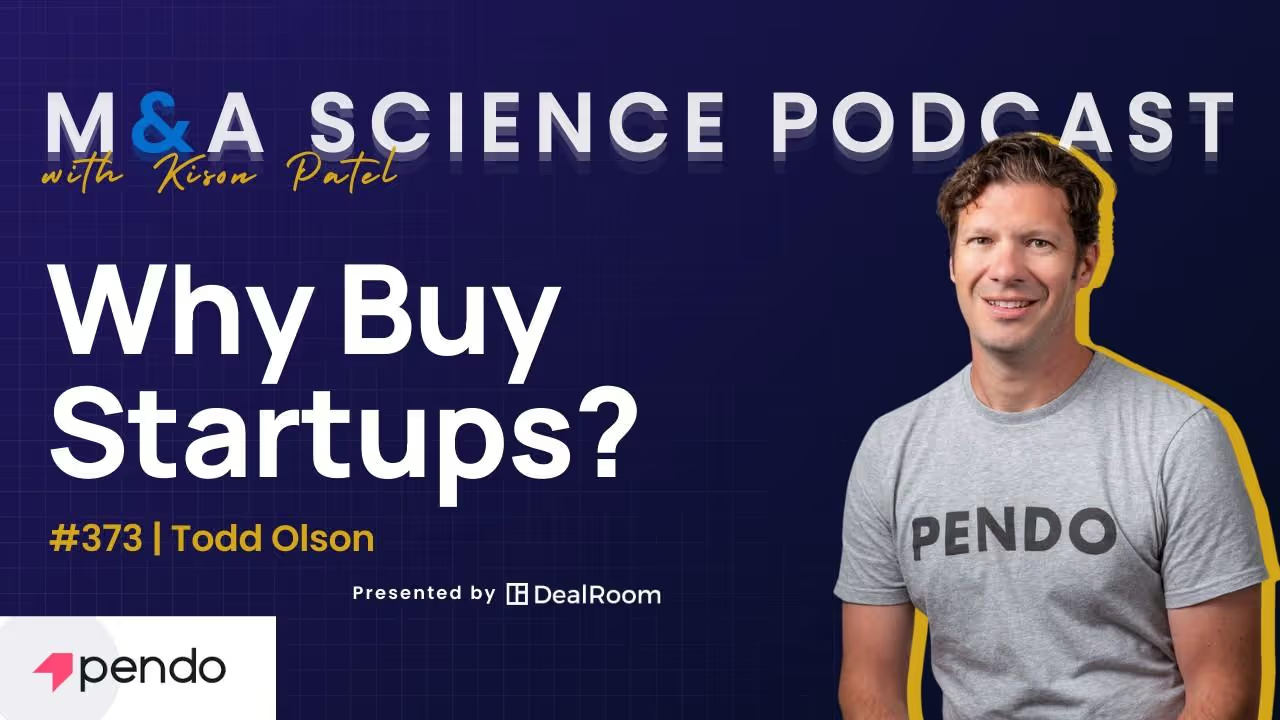
Why Pendo Buys Startups (And It’s Not for Revenue)

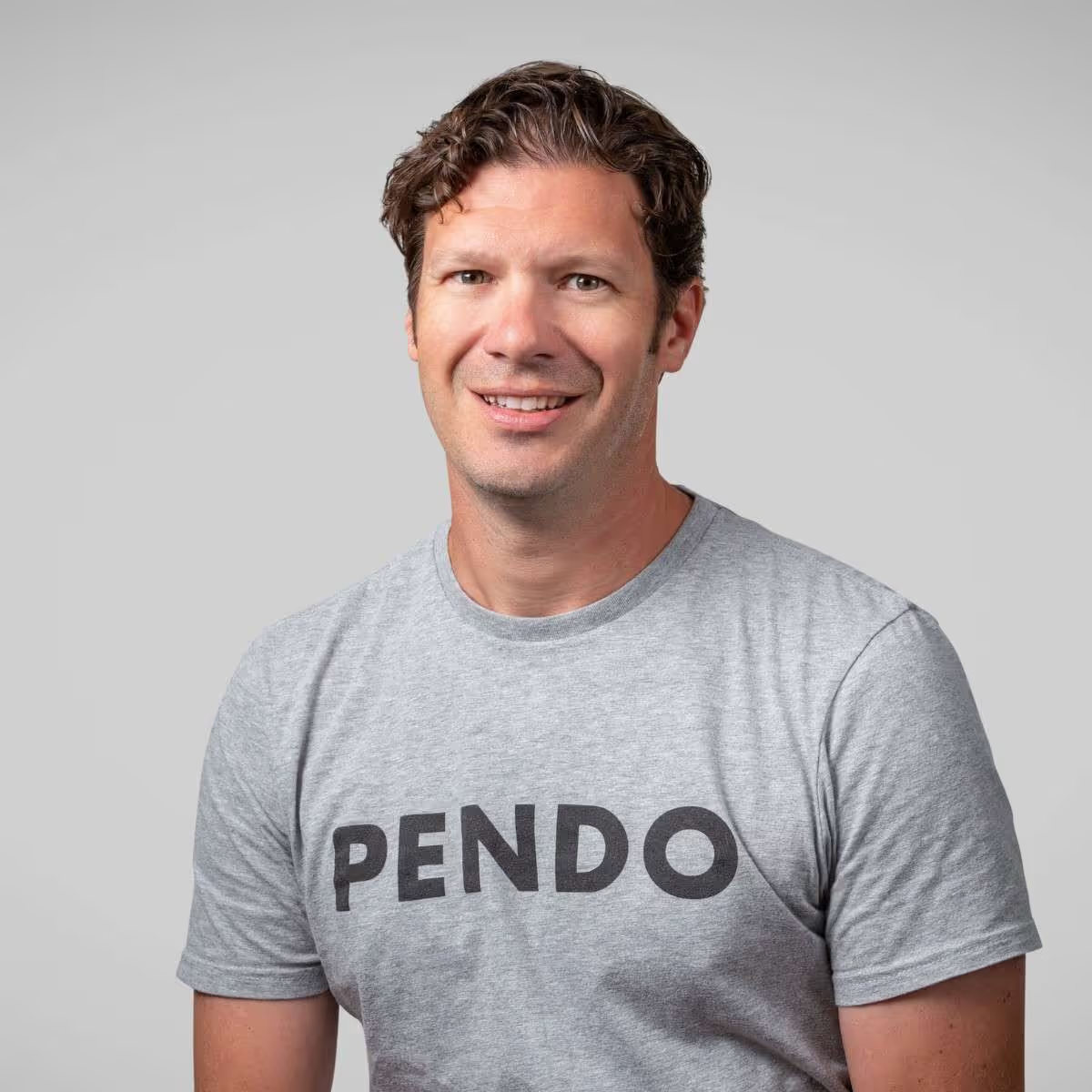
Todd Olson,  CEO and Co-founder, Pendo

From buying startups to speed up roadmap execution to preserving founder autonomy post-close, Todd breaks down the real levers behind successful acquisitions. This episode dives into how Pendo thinks about M&A without a corporate development team, why it rarely buys for revenue, and how Todd’s team avoids common post-close integration mistakes by keeping culture, product, and people at the center.

Things you will learn:

  • Why speed and product alignment—not revenue—drive most of Pendo’s acquisitions
  • The cost of delaying integration and how Todd learned to fix it
  • How to retain founder energy post-acquisition without over-relying on cash

Pendo is a product experience platform that helps software companies improve adoption, collect feedback, onboard users, and ultimately drive better product decisions. By enabling teams to understand user behavior and engage customers inside their applications, Pendo empowers product-led growth at scale.

Industry
SaaS / Product Experience Software
Founded
2013

Todd Olson

Todd Olson is the Co-founder and CEO of Pendo, a product experience platform used by thousands of software companies around the world. A three-time founder with a background in engineering and product, Todd brings a deep understanding of how to scale teams and products. His M&A approach emphasizes product-first thinking, team retention, and long-term strategic fit over transactional value.

Episode Transcript

Why Pendo Buys Startups

Kison: [00:00:00] I am Kisan Patel, and you are listening to m and a Science where we talk with deal professionals and learn valuable lessons from their experience. This podcast focuses on stories, strategies and what actually happened during m and a deals.

Kison: Welcome to M and a Science. This podcast is part of a mission to rethink [00:00:30] how m and a's done the old school settle that approach. It's dead fire, that m and a's all about strategy, alignment, and efficiency. Putting value creation at the center of every deal. And let's be real. It's not just about closing the deal, it's about making it successful.

Kison: We uncover what truly works in m and a by learning directly from the best. I'm your host, Kisan Patel, founder and CEO of deal room, and Chief Scientist at m and a Science. Joining me on the podcast is Todd Olson. Co-founder and CEO of [00:01:00] Pendo. If you're in SaaS, you already know the name. Todd's led Pendo from startup to scale up with a product first mindset and a sharp eye for customer experience.

Kison: What's more interesting for this conversation, he's taken a refreshingly different approach to m and a, one that's less about revenue and more about people, product and culture. In this episode, we dig into how Todd thinks about buy versus build, the role of founders post acquisition, and why speed and entrepreneurial energy matter [00:01:30] more than the playbooks.

Kison: Todd, how you doing?

Todd Olson: I'm

Kison: doing well. I'm doing well. Thanks for having me. Thanks for hosting me in your New York office. Yeah, it's wonderful to have you here. So a lower

Todd Olson: New York office.

Kison: Yeah, absolutely.

Todd Olson: Can we kick things off a little bit about your background? Yeah, so I'm Todd. I'm the CEO co-founder of Pendo.

Todd Olson: This is the third venture funded startup that I founded, so you could call me a serial entrepreneur. I have traditionally been in a more technical roles, so I've. Been coding since I was a teenager and worked [00:02:00] professionally actually since then. So I, I've always been sort of in a CTO Chief product Officer role.

Todd Olson: This is the first company from start where I've been the CEO. I've been in a position where I've been acquired prior to Pendo. I have led acquisitions at other companies as well. So m and a is something that I do have some experience with, some decent experience through my sort of 30 year tech career.

Todd Olson: As you said, a lot of people on SAS knows who Pendo is, but just a brief introduction about Pendo. Pendo is a [00:02:30] company that's really on a mission to improve software experience. Software runs most companies and runs the world, and Pendo helps make sure that software delivers on its value

Kison: to its users. I asked my team, 'cause we use Pendo.

Kison: Yeah. So I asked them to explain to. I can almost quote this. It helps us track activity, adoption rate of new features and enables easy in platform communications with our users, especially around things like events we're doing. Oh,

Todd Olson: there you go. [00:03:00] That's a great description.

Kison: It's always better when the customer says it.

Kison: There you go. The background's interesting. Third venture, how come they trusted you to be CEO now? What, what were the skills that evolved? Well, I trusted, I mean, when I started the company

Todd Olson: I said I really wanna be CEO. And given I was one of the founders, it, it's kind of how it all worked out and, and I've done other podcasts around why that was important to me.

Todd Olson: But throughout my career, if you come from a technical background like myself, you often can have some level of imposter syndrome around like being the [00:03:30] CEO around the non-techie stuff like sales and marketing and even finance. I don't have a degree in those things. I don't necessarily have lots of experiences scaling those things.

Todd Olson: And guess what? It's true, I don't, you could argue now maybe I do. I wasn't as focused on it, but throughout my entrepreneurial experience, what I saw was like, you don't need that stuff actually, in many instances to be good at this job. And I look, I wanted to crack at it. It really comes down. I wanted to crack at it and I guess I'm still doing it.

Todd Olson: So I like it and it suits me. [00:04:00]

Kison: I guess the thing I've learned from doing these podcasts, you can learn the soft skills, but you can't go back and learn the engineering skills. There's like a certain window that you need to learn those in.

Todd Olson: I'd like to think that my background as an engineer helps me approach problems in a very disciplined way and the fact that I understand technology, and guess what, we're a technology company like at our core, we build software and we sell it.

Todd Olson: Like having a background in knowing how to build software. Yeah, it's useful. It's never not useful. I can tell you that.

Kison: One of the things I've noticed is from the get go, you've taken a pretty proactive buyer led [00:04:30] approach. Something that I distilled into a framework, just looking how organizations evolve from doing their first acquisitions where maybe banker presented a deal, very reactive process.

Kison: After you do a number of deals, your process evolves and becomes more and more buyer led. Correct. In terms of just thinking through the whole end state, how you're gonna integrate the company and so forth. Now it makes sense with your intro. You've been on the other side being acquired, you've been involved with m and a right away from the beginning.

Kison: It's like you're already putting a lot of the best [00:05:00] practices in play. The general direction I wanted to go is, as this early stage company, how do you know when it's time to do m and a?

Todd Olson: The fact that I had done it before two of my other, actually maybe all four of the co-founders had all been part of m and a transactions.

Todd Olson: It just means that it wasn't a foreign concept. You weren't completely afraid of it. Now you don't wanna rush it and do it too soon. You could argue when you're creating a company, you're building culture going and immediately like squashing or merging that culture with another culture like is gonna have [00:05:30] unforeseen consequences if you don't have some confidence and feel like some good foundation.

Todd Olson: So I feel like we didn't go out and start really doing an m and a until what? I felt that we had a decent foundation and for us, that ended up being about three and a half, four years in. So we made our first acquisition in 2017, which is very early for a company. We were, for context, a 90 person company.

Todd Olson: We were probably around 10 million in a RR. We had just concluded our series B, but we're contemplating [00:06:00] a series C. So we were, yeah, not a big company when we actually performed our first transaction. So look at it, it comes down to accelerating roadmap, going faster and bringing on skillsets you just don't have.

Todd Olson: That's really what it's about for me. And so if I go back to 2017, we were a company that primarily worked on websites, web products, web-based software, and there's a lot of web-based software in the world. And we're doing well, and we were growing really fast, but we had obviously a major gap and we didn't [00:06:30] support mobile at all.

Todd Olson: And obviously a lot of companies have mobile apps. Those mobile apps are important part of how those companies. Deliver experiences to their users. So we knew we had to do it. This isn't a question of do we need to do mobile or not? Should we do this or not? And we had probably just one engineer full-time working on it.

Todd Olson: And guess what? We made almost no progress on it. Like one engineer trying to like support every mobile framework. Just think about that practically, and we go to these offsites and one thing may come up in this [00:07:00] conversation. I like to run a tight cadence with my direct reports. So every quarter we're doing quarterly planning.

Todd Olson: Every year we're doing annual planning. The number of times our leadership team gotten almost yelling matches about mobile around, we're not investing in it. We don't take it seriously. And I'd say it's moving too slowly. It was a fight. Finally when we saw this and then we started exploring and getting introduced to companies that had expertise in here, we learned, we just don't know what we don't know on this problem domain, and [00:07:30] we are not experts in it.

Todd Olson: And we can try to hire a bunch of experts so we can go out and acquire a team that's already built the product. Seems to be a good product. I like their vision. They have skillset. That's kind of like what led it to us. That's that first opportunity and that kind of like started it off for us.

Kison: The first deal was basically around bridging a roadmap gap or picking net mobile.

Kison: It's not progressing that fast. Why don't we acquire? Was it the strategy got clarified that we should go acquire this capability? Then you went on a [00:08:00] search, or did the company pop up and then you personalized? The company

Todd Olson: did pop up. It came up from one of our investors. They wanted to make an intro. I spoke with the founder.

Todd Olson: We talked about it. It seems interesting, but then I'll never forget, this is an Israeli company. I'd never been to Israel in my entire life, myself. My co-founders would get on a plane. We fly into Tel Aviv for the very first time. We go on site to this customer and they start doing a demo. It blew me away.

Todd Olson: I was like, wow. It looked magical. It basically looked like what Pendo did. For the web, but for [00:08:30] mobile. And yeah, obviously there's some differences. It wasn't a complete one for one replica, but it was pretty darn close. And it felt as magical as our product felt. And I'm like, I want that. Our customers will want that.

Todd Olson: That fits how we think about product design. That sort of matches our vision. It's just four different type of application, mobile based applications. It is really like the product hooked me and then of course, then the team and the process and all the other stuff was Check the box. But yeah. Yeah. [00:09:00] I'll never forget that first meeting.

Todd Olson: 'cause really, look, at the end of the day, I'm a product person. I fall in love with the product. It's like, yeah. And that's part of your job. Your job is you know, your customer bases and your users and you know what they love and what they love about your products. When you see something that's like lines, it's like, oh, our customers are gonna like love this.

Todd Olson: And I think still to this day, if you talk to our customers, it is pretty amazing. It's beautiful in the way it's implemented and the way it works and in in some ways still magical and, [00:09:30] and this is years later, but all the box checked on this one,

Kison: you go hear about the company, have a brief introduction, the team flies out, you meet them in Tel Aviv, super impressed with the product.

Kison: That's what gets you excited. It sounds like you're pretty impressed with the team to get to know the team and seeing that there could be a good working relationship and it's all underpinned by the fact that the customer is gonna love putting all this stuff together.

Todd Olson: Yeah, exactly. Fast forward to today, that is what, at least eight years later, core engineers are still [00:10:00] here.

Todd Olson: We still have an office there. We've grown that office. Of course it's a major hub for Pendo. And yeah, the fact that we still have people from that original company, which are his title, but like distinguished engineer, like basically the highest level of engineer that we have. We have an individual in that office and we have several various very senior engineers, like still part of the company and yeah, really proud of the way that's gone and.

Todd Olson: Still a lot of innovation happening in mobile all out of that office.

Kison: Yeah. This was already part of the company strategy was to get in mobile. It was, we knew we had to do it, [00:10:30] but it was going way too slowly. You didn't necessarily have a proactive m and a search. This sort of company came, but it did align with the company strategy.

Kison: So then it's, it's, there's pretty clear business case to put together if we're gonna deal. Yeah. It was it

Todd Olson: opportunistic.

Kison: The investors that came and said, Hey, you guys should look at this company. One of our

Todd Olson: investors is one of their portfolio companies. But the crazy thing, sometimes things work out the way you plan it.

Todd Olson: Not always, but this is one of the ones where you're in the middle of negotiating this whole transaction and I kind of went to our management team. It's like, look, here's the order of [00:11:00] operations. We're gonna negotiate this transaction in parallel, try to raise our series C at the exact same time because we'll need the series C in order to actually complete this transaction and have enough of cash, like all the details, like so it all works.

Todd Olson: If we can close this and then close that, boom, all within a month, and we did that. I was fortunate. I just hired our CFO, who, she's still with the business like a month before this and said, Hey, you have to close up financing and you have to, you have to buy a company all within two months. [00:11:30] So had you for two months in the job and by the way, onboard and it was crazy, crazy, crazy.

Todd Olson: Time in the company. It was a call 2017 sort of an inflection point for us. Before that, we had only one office. It was in Raleigh that year. We expanded actually our, we opened our first New York office that year. We opened San Francisco that year. Then of course, we opened Israel that year. We added three offices in a single year.

Todd Olson: So just a crazy explosive year for us.

Kison: How, is there any nuances with doing this deal in Israel? Yeah, of course. You know, it's one thing

Todd Olson: to

Kison: do your first deal, then [00:12:00] you're doing it international. I

Todd Olson: know. No, you have to hire international council. A lot of the bylaws are, I feel like we're in Hebrew. We had to get people to read 'em and translate 'em.

Todd Olson: We had all these employment agreements that were different. The way they do equity is slightly different. So yes, it was different. And then that company had some sales team in the US so we sort of integrated some of those folks as well. You go back to people too, some fascinating nuggets from that acquisition.

Todd Olson: One, their CFO, we moved to the us [00:12:30] He was a longtime VP of finance at Pendo. He went on to be a sort of a CFO of another American based company. So that's a life changing move. We had a, a woman who was writing blog posts for this small startup in Israel that we moved to the us. She, we put her as editor in chief of a product brand called Product Craft.

Todd Olson: Fast forward today, now we have like Mind the product, which is the largest independent brand. So that was like the early [00:13:00] workings of this community strategy. If you Pendo, like community's been a big part of our. Strategy. She ran the first community. Fast forward a few years, she runs all brand for Pendo.

Todd Olson: When she departed, she became the chief marketing officer of a venture capital fund. So here's a person running blog posts for a company we bought back in Israel in 2017. Now the CMO of a vc. So when you think about that, there was just amazing talent at this little startup that when put in the right environment, and I'd like to think [00:13:30] we're a very good environment for strong talent, they just took off.

Todd Olson: That's part of the magic of acquisitions is like people that self-select into entrepreneurial companies and the startups, some of 'em have incredible bars that you just need to give them the environment to flourish and watch 'em grow. This one had a, a lot of great examples. I'm very, very proud of that aspect of this story.

Todd Olson: Yeah,

Kison: people was a big value driver. The strategy was tied to essentially the tech capability to bridge a roadmap.

Todd Olson: Correct. [00:14:00]

Kison: Was it revenue is a factor at all in this deal?

Todd Olson: Yeah. Look,

Kison: we

Todd Olson: looked at the number of customers that we knew had mobile applications that we weren't servicing, and we sort of did a classic m and a mile has some level of attach rate.

Todd Olson: Attach rate is for existing customers and prospective new customers. Which percentage of 'em can you like upsell this additional capability? And we had a, like a forecasted attach rate and it essentially is revenue generating. And a big part of our thesis, and you'll see us do this and you mention it in your premium, but we rarely acquire for the revenue itself.

Todd Olson: And this company did have some revenue, but not [00:14:30] one that's memorable. I don't remember how much it was. So it was more about the potential of what you can, but the potential is, hey look, we had a good sales team at the time. They knew to sell Pendo. We figured they could figure out how to sell Pendo for mobile.

Todd Olson: It's the same product, it's just for different types of apps. And that was the ultimate thesis and that that's how it's part of our strategy today.

Kison: There's a big bet on being able to integrate this technology into your tech stack. When I talk to folks and that's always the, Hey, we miscalculated everything and then you have a Frankenstein product afterwards, or things didn't integrate a year [00:15:00] later.

Kison: Yeah, we

Todd Olson: screwed this up, we screwed this up, and I'll tell you what, screwed it up. And it's just honestly, probably one of my weaknesses. One of the organ, I always joke if it's I have a weakness, the company probably has a weakness. So like we, we are impatient human beings. I'm a wildly impatient human being.

Todd Olson: We get a lot. So when you're an impatient human being, you buy something, you're like, it's pretty good. I fell in love with the demo. Let's just go sell those customers now let's get some revenue now like it works. You wanna [00:15:30] announce something, get all the PR around it, get the little tech crunch article.

Todd Olson: Customers are gonna call, prospects are gonna call. You wanna start taking some orders and get some wins. That is a natural motion. You want wins, I want wins, I want revenue, basically always. So that is my standard mode. We should not have done that. That was a mistake because then you start selling something and, and it was like ho, like our entire product was hosted on GCP, but they were hosted AWS.

Todd Olson: Now we're managing AWS and GCP. Fast forward today, by the way, I think we finally got the last [00:16:00] customer off AWS like last year. So 2024 from 20. So you can do the math on how many years We did support two, two different stacks. They had such a inconsequential amount of revenue to us at the time. We should have stopped selling, completely rewrote.

Todd Olson: It's really the backend, the front end didn't really need to change. Rewrote the backend on our backend on GCP. Just gone for it. And we just didn't,

Kison: we didn't, we preserved their tech stack and then we're trying to, yeah, we thought

Todd Olson: it was good enough. We're impatient. We just go after it. [00:16:30] And now eventually we did.

Todd Olson: Of course. Yes. That is all rewritten in 20 19, 20 20. We had this like massive project rewrite the whole backend and look we succeeded in. Now it's fully integrated. Now it's like exactly what you've wanted from day one. Now if I had started that way, could we have gotten there? Yeah, we probably gotten there faster.

Todd Olson: The other interesting fact I, I'll tell this story 'cause it's actually a funny one as well. This startup that we acquired thought they're gonna sell, and I'm not only name the bank, but one of the largest banks in Europe, A million dollar deal. It was in the [00:17:00] pipeline. Their head of sales was like, it's coming next quarter, we're gonna close this deal.

Todd Olson: So look, I buy this company, they have a million dollar deal in in their pipeline and I want that deal. Like I want it a million dollars. I would've been our first million dollar customer at the time. And we're like, yes. This is amazing. I. So of course once we acquire the company then you know, our sales team takes over.

Todd Olson: My CRO takes over, I take over and we're vetting it. And this is a real deal, okay? Davi, they will only work on AWS at the time the bank had yet not yet certified Google Cloud [00:17:30] for, uh, for hosting. So for as cloud provider. So we did this dance with this company for nine months. And the crazy thing is this company, 'cause they really wanted this product so badly, they kept paying us money for trial.

Todd Olson: They weren't even use it in their product, they were just paying us to keep us talking with them. 'cause they wanted the product so badly. Again, all on AWS but they kept doing it. So part of our calculus was like trying to get this million dollar deal. Finally, after like three or four quarters of trying to get this deal, talking to our board about this deal, watching in my [00:18:00] stupid pipeline not move on this deal, we fired the customer, which is, yeah, it's very hard to fire a customer like that.

Todd Olson: It would've been a game changing customer for Pendo at the time. Even then. And I can tell you what, like I. The team felt so good after doing that, probably underappreciate how much stress they were having around how are we're gonna support this million dollar customer on this stack that we know we're throwing away on this, all this old tech.

Todd Olson: When we want to invest in the new tech, we want to be aligned. But the team actually [00:18:30] wanted to integrate the products, but this customer was the reason we didn't because we knew that the only way we're gonna win 'em is by supporting his whole stack and firing that customer. Being one of the best decisions I've ever made at Pendo.

Todd Olson: And it's felt so hard at the time, like any good decision, it felt so obvious after the fact. I like agonized over this decision for weeks, maybe months, and then the day after, I felt like a massive weight was lifted off my shoulders. Guess what? We started moving faster. Each decision was a little bit easier.

Todd Olson: We've obviously. Now [00:19:00] have multiple million dollar customers and many of whom use our mobile app, we're gonna come. That's an incredible lesson. And making sure you the right customers at the right time.

Kison: So you're picking up a lot of this, the engineering act, short view versus long view. Correct. You're being open with the lessons learned 'cause that go to market is one that people will clin on and you get aggressive on doing it.

Kison: Correct. But then you gotta get the tech integration, which people don't talk about that. That's gotta align just as well. Yeah.

Todd Olson: Yeah. And look, like I said, it's one of my weaknesses and like you'd go to our like next acquisition, which would've been 2019, a company [00:19:30] called Receptive in Sheffield, uk. They had a bunch of customers, but they had very low average contract value customers.

Todd Olson: So they had a ton and we decided to keep it on as well and not integrate the backend. Guess what? We just finished integrating last year? The whole product is now one product. By the way. You're always gonna do it. If you think you're not, you're just lying to yourself. And, and the funny thing is, despite the fact that we're experienced people, we have done this before, like you still fall into very similar [00:20:00] cha because you sort of get like addicted to the revenue.

Todd Olson: You don't want to have the hard conversation with customers and telling 'em, Hey, you're sun's setting this, you're turning it off. You're end of lifeing it. These are by the way, not fun, not easy conversations to have, but that's ultimately where you end up. So our first two major product acquisitions, we did not integrate it first, but what ultimately did, and we probably paid the price for it, what is that price?

Kison: Because you, you had this sort of near term of disappointing customers and risking that. Yeah. Near term revenue. The

Todd Olson: prices

Kison: long term, what is the cost? You get

Todd Olson: to a point, [00:20:30] yeah. You're managing multiple stacks, so it gets costly. So you're

Kison: adding on technical debt basically. Yeah.

Todd Olson: You're having to, you're having to like keep a team on some product.

Todd Olson: That's not the future. We call that waste. So waste is a piece of it. This product from Sheffield. It was built on a technology set that the rest of Pendo had no experience doing. So you had to keep engineers on it and just they couldn't scale. So that's the other problem is scaling and architecture. It's like we, we, at that point, we had some decent sized customers.

Todd Olson: 2019, even if we go to 2020 when we're really in market [00:21:00] selling it, we're starting very large businesses. And now this startup, which was not architected for very large businesses, their database started just like falling over. Now we're like scrambling to fix it. We're calling to apologize to the customer.

Todd Olson: We're now having to explain that it wasn't architected for scale. We're like, it's a Pendo product. All your other products are architected for scale. Why is this one not the product of an acquisition? And we didn't rewrite. So you have these conversations which are really bad excuses for customers. And I'll never forget, there's a CEO, actually, he's here.

Todd Olson: I'll quote him 'cause I, I'll [00:21:30] bring him in. It's Daniel from Greenhouse Greenhouse's a great company as well. I'll never forget he was doing m and a, this is probably five years ago or so, and he was saying something to the effect of, people apply their expectations of your brand to this small company you just bought.

Todd Olson: And guess what? It's not your brand. Like it's a small company. It's very unfair. It's incredibly unfair, but that's the way customers think. And you slap your logo on it, that's the first thing you can do. You can always change out the logo. It became a Pendo product pretty fast, but then people expected to be a Pendo [00:22:00] product and it wasn't, I mean I guess it wasn't technicality 'cause we owned it, but it wasn't architected originally by us.

Todd Olson: So like that's an area where a lot of learnings in it.

Kison: What was the strategic driver for this receptive acquisition in 2019?

Todd Olson: That one was an area where we do have, we call market maps or slides with different like adjacent spaces. We're always asking ourselves, you look at our core buyer. What else are they using around us?

Todd Olson: In conjunction with us And one of our core [00:22:30] personas is a product manager at a product and nearly every product manager has to deal with customer feedback. There's been solutions for years around either having customers vote 'em up or like subscribe to 'em or collating by customers, but you want some way to manage customer feedback.

Todd Olson: It's painful. The thesis was all of our buyers have this problem in pain. All of 'em are gonna need a solution. This area gonna be a great part of our overall platform story. That was a thesis. We looked at a few companies. Yeah, it's a great one. 'cause again, it won't go into names, [00:23:00] but there was another company that we looked at that felt like the more obvious choice, it was bigger, had more revenue.

Todd Olson: A lot of their team was actually in Raleigh, our hometown. How many tech companies are in Raleigh? It's not in New York City or San Francisco. So the fact that they were there, I was like, whoa, this is like a match made in heaven. But no, we ended up buying a company in Sheffield, uk, another place I'd yet to ever visit in my life.

Todd Olson: Sometimes the most obvious decision isn't like the right one. Wait, wait. Why though? Why?

Kison: Doesn't seem like it's a product, but is it more of like the culture of the team type of thing?

Todd Olson: Bigger isn't [00:23:30] always better. The company had a long history, a lot more complexity to it. Some of the customer contracts and situations were just, I don't want inherited, I want something cleaner.

Todd Olson: They had some actually very large customers that I thought could have been churn risks and you'll see us avoid buying something where I'm gonna churn a bunch of their customers. Like in general, you don't wanna like buy churn because one, you're probably paying for the revenue and then you're gonna lose it, or your team's scrambling to save it.

Todd Olson: So we tend to [00:24:00] be much more careful around those situations. So this is a situation where bigger was not better. Bigger were just more challenges. We opted to go with a simpler, lighter approach. While they weren't from our hometown of Raleigh, the founders, we really clicked with 'em. Good, scrappy, entrepreneurial people that were just passionate about what we're they're doing and just frankly, really good people.

Todd Olson: Smaller is easier to consume. So it was like four or five person company. Yeah, it ended up being really just a good [00:24:30] fit. And now to this day, the Sheffield office is one where great office, great vibes. And interestingly, both founders have actually since departed, they stayed probably four-ish years. One's I think professor at university and one I think is probably dabbling in some startups.

Todd Olson: But they left a culture that really still embodies this entrepreneurial spirit. Interesting fact. Post COVID, we were trying to get people back to the office and that team, just without really any like top down push, just started coming back every day. [00:25:00] People in the office three days a week. At some point they were coming back five days a week because they just liked being together.

Todd Olson: Nice. They liked being together, like building together, like collaborating and they like talking about the, I mean, you just feel this good vibes when you're in that office. Yeah. That's when you know it's, it's a good acquisition.

Kison: When you say that you go through this exercise and market mapping, is it centered around here's your ICP, our ideal customer and then mapped the universe of other products or things that they would do?

Kison: Product leader example, is that how you look at it or is it more of just [00:25:30] broad category segments and

Todd Olson: Yes. I'm look usually starting with our buyer, our personas and like what else they use in a day-to-day basis. If I'm trying to build a solution that's a single pane of glass for a role at a company, what other things do I need to have in that single pane that that's a big way about it.

Todd Olson: We build our own market maps. We don't really leverage any third parties or analysts. Sometimes our VCs will help us with diligence or looking at companies sometimes, but not always. Not always. We often like to do our own work. Now we [00:26:00] have obviously things like Chee Deep Research and things like that, which like actually pretty powerful for work like this.

Todd Olson: So that's a new part of our process we just started using more recently. But yeah, it's, it's kinda how we think about it. And look, I like to use these products. We have to play around with them. Would we use this product? Does it make sense to go with ours? That's always a good proxy.

Kison: The most recent acquisition, since we're getting on the stories of all the deals you've done, Zel, you tell me a little bit about that one.

Kison: What was the strategic driver there? It's actually

Todd Olson: almost a continuation of [00:26:30] receptive, the Sheffield based acquisition. So, so that product started to bring us into with more qualitative data about what people want in products. Specifically users are asking for these features. Now, by the way, it's a great solution.

Todd Olson: But there are product requests and signals all over the enterprise. They're in support tickets, they're in call recordings for your go-to market teams, like they're all over the organization. The right solution, the right long-term solution isn't just a form where people like go in specifically ask it.[00:27:00]

Todd Olson: You should be like harvesting this data from all these different systems. So that's like kinda the backdrop of the problem Domain. Large language models obviously are like amazing at certain things. One of the things that they're very amazing at is looking at large quantities of text and pulling out certain insights based on prompts.

Todd Olson: They are amazing at it. What was a hard problem maybe be five years ago to like ingest an entire company's Zendesk tickets and tell you what their customers want With [00:27:30] LLMs, it becomes a much more practical solution and we also realized like we just didn't have people at Pendo that had. Huge LLMs for this application.

Todd Olson: So we went out and started looking for companies that can add this capability to our stack. Look, if the future of software and technology is gonna be AI or agentic, it is gonna be, that's a pretty safe bet. A lot of smart people believe that. We just didn't have all that skillset and [00:28:00] experience on staff.

Todd Olson: And look, it's one thing for us to build up a prototype to do it. The bigger question there is how do you scale it? What are some of the challenges of this technology? There's this concept in, I'm pretty confident in the Lean Startup. Yes. In Lean Startup, where they talk about validated learnings. Yep. A large part of my thesis around acquisitions is I'm, what are you paying for?

Todd Olson: Especially if you're not paying for revenue. And by the way, most of these small companies, revenue multiples are never the ending deal. Price like revenue multiples are companies like Pendo, like established [00:28:30] companies that have been around for a while that have pretty durable revenue. There is no revenue.

Todd Olson: Multiple, you can apply to a subm million dollar a RR business, like it's a strategic purchase. So the question is how do you think about valuing it about like what are the validated learnings I'm buying? So that is what I'm buying. I'm buying validated learnings and maybe some customers, some tech and some human beings.

Todd Olson: That's sort of how I think about all this is that they've made a bunch of mistakes and if we buy this company, we will make different mistakes, but not those elementary ones and that's worth it to me [00:29:00]

Kison: to make different mistakes. That's interesting you Yeah. They've already gone on this learning Jo journey.

Kison: Exactly. It's like a form of equity you're acquiring there. Exactly. Not have to go through that again. Exactly. That's actually really interesting. What about the devaluation where as soon as you slap AI to a company, it's like, you know, I always joke, what's the rate valuation from companies?

Todd Olson: What are the two parties Agree it is.

Todd Olson: That's really what it comes down to. Yeah, I agree. It's really is most basic is that the question is what are each party's alternatives? And each party won't share those alternatives because that'd be [00:29:30] bad negotiation. It really comes down to what those alternatives are. When I think about AI companies, if you're a B2B AI company and you get to any level of product maturity, at some point you're probably thinking, do I need to build a go-to market team or not?

Todd Olson: That is what you're probably thinking is guess what, if a B2B company, you probably will need to build a go-to market team. If you're a technical founder who's an AI expert, the question you have to ask yourself is, do you want to build a go-to-market team? And some [00:30:00] will. Some will. I did. I'm a technical founder.

Todd Olson: I built a go-to-market team. Don't regret that decision at all, but if you just are really passionate about solving hard and technical problems, sales is kind of scary and don't want to go out and hire a bunch of people. By the way, the quickest way to burn capital is go out and hire a bunch of salespeople and have them not sell anything for a period of time.

Todd Olson: That will just, oh yeah, burn cash. I learned that. Yeah, we all learn that. So like, that's just the way the, the life works. So for those people who wanna keep building, really passionate around [00:30:30] ai, we actually could be a really nice destination for them because you can build here, we've proven that we've kept people from previous acquisitions as builders, and they get plenty of autonomy.

Todd Olson: And guess what? We have a huge go-to market team. We have 150 ish quota carrying reps, 150 global. Like you don't need to build that. You just take your product, integrated it in maybe a three, build the backend to be in our data center, which we did Zeta. We Zeta was one where again, we'd made two mistakes.

Todd Olson: We [00:31:00] were not gonna make a third. That would've been So

Kison: you're a lot more practical. Oh yeah. We

Todd Olson: just stopped selling it. We fully wrote the backend in our data center, like everything's totally native and fully integrated in. And then we launched it subsequently and that was the right call. I feel really good about it.

Todd Olson: And we're off to the races now, so now it's looking pretty awesome. There's no like hacking necessarily building a go-to market team. Yeah, you can do PLG, but PLG just depends on the product domain. And that's usually more B2C like use cases. But if you're B2B, yeah, it's [00:31:30] still decision to make, do I want to build this or do I want not?

Todd Olson: So

Kison: what do the structure of these deals that you put together, is it, there's always cash as a lever to pull. There's earnouts if there's a valuation gap, rollover equity. Have you found a combination that works well? We tend to like equity

Todd Olson: based deals. We do have cash historically, sometimes had cash. Part of the deal just depends on the situation, but not a lot.

Todd Olson: So if cash is part of the deal, it's. Very small and or [00:32:00] tied to some sort of like milestone or something like that. We've had conversations. We haven't actually transacted one where cash has been a more significant component, but actually I'll be candid, we had a very significant deal that spent a lot of time on that ultimately didn't transact for that very, very reason.

Todd Olson: I just couldn't see a world where we load someone up on cash and they had any incentive to continue working. The question my board's gonna ask me is, how do you know they're locked in? How do you know they're gonna stay there? You're gonna acquire 'em. They show up and three weeks later they're piecing out taking their money and like [00:32:30] starting the next thing.

Todd Olson: They're entrepreneurs, they like starting things like, how do you know you're gonna keep 'em there and retain them? So retention is something we spend a lot of time on in these deal constructs. It's like, what's gonna keep 'em here and how do we know we're gonna get a return on this investment? That's only when I, when it comes down to is, are we gonna get an ROI and can we retain people?

Todd Olson: Because there's a natural belief that if you're an entrepreneur, you won't want to be at a bigger company. As good as we are, as Cova culture, as much as autonomy, it is a bigger company. It is bigger. There are gonna be some hoops to go through. You're gonna buy [00:33:00] something. We've got like a professional procurement system that will take like a few steps.

Todd Olson: You can't just go put on your credit card potentially and it'll piss off a few entrepreneurs. It has pissed off entrepreneurs. There's nothing I can do about that.

Kison: There's some trade off in transition for these incoming entrepreneurs. Regardless, you can't

Todd Olson: a hundred percent paint the

Kison: golden road for, so there

Todd Olson: is no magic in it.

Todd Olson: Look, earnouts, you be very carefully constructed. Simpler is always better, shoulder's always better. I have throughout my career, seen games played with earnouts on both sides. I don't like [00:33:30] games I've done. Simple earnouts are just retention based bonuses. Be here for six months, one year, two years, show up and I'll

Kison: pay you the vote.

Kison: Yeah,

Todd Olson: I like those. I'll use those. The goal there is retention, but then where an earnout becomes more interesting is when there is a disconnect on the valuation of the business. And the disconnect is predicated on what maybe the seller thinks they're going to contribute to your business. Oh. We're gonna contribute in future revenue, $10 million.

Todd Olson: Great. Okay. Are you willing to [00:34:00] bank and earn out on it? Because I'm totally comfortable not holding you accountable to that number, but we're not gonna gross up the deal to that either. So when you can't come to an alignment but you still wanna proceed, earn out could be a way to bridge that gap.

Kison: There's some financial considerations to keep 'em in, be it earn out rolling over equity.

Kison: Right. Uh, it sounds like this is a big part of just thinking about unlocking value post-close is you already talked about you like the product, you like the team, but keeping that team around, keeping them incentivized, you got some great examples [00:34:30] where people continue to thrive, post deal. Any other things that contribute to that, that you're making this a good transition for them to, and this is to me like the magic 'cause people don't think about this and where deals go south as everything after close.

Todd Olson: Yeah. So we start doing integration planning pre-close. We have an internal owner of the integration always pre-close, close. Because three of the five acquisitions have been product level. We always have a team in the [00:35:00] US assigned to help that technical team onboard because this is the other big failure pattern.

Todd Olson: We realized if you don't have a team on the core engineering team working with them, they don't know how to integrate in your product. They don't know your stack. It's not like just hiring one person or two people or three people and you're putting on existing teams. You're hiring teams of people and you're saying go at it.

Todd Olson: So like we always have an like a team that is a shadow team or the integration team, like the conduit between the core product architecture and the new product. That's something we've done in every [00:35:30] single case. We're the kind of company that I already mentioned, discipline and cadence. We like running with some set number of either initiatives or OKRs on a quarterly and annual basis.

Todd Olson: So this integration always becomes an OKR. So by definition that means regular check-ins, specific key results and data being measured. Readouts at every town hall, which is biweekly. So we're gonna bring a lot of visibility to it. If it's an acquisition, that's generally worked. The only thing we didn't talk about, [00:36:00] talk about all the product acquisitions we, we did buy community, which is kind of a different, actually about two communities.

Kison: I'd be interested to talk about that.

Todd Olson: Yeah, it's pretty fascinating story. As I said earlier, we start as concept of community and the vision between community was, I always thought one of our barriers to long-term growth was the number of qualified product managers who could use our product. If there are an infant number of product managers who use a product like Pendo, we'd have a much bigger tam.

Todd Olson: But the truth is there aren't. We need to go educate more. We need to. Help do the change management of teaching people how to be product [00:36:30] managers in long term, like long term tam. We need more people that can take advantage and use our product in a meaningful way. And so we need to grow these people and we need to invest in these people.

Todd Olson: So community was a way to get people together, share best practices, educate others on how to leverage these sorts of technologies. It's particularly relevant for our business today, like we work with now companies like traditional business like banks and retail companies, and they're taking people who have been subject matter experts or business analysts, [00:37:00] their companies for years and trying to teach 'em how to be product managers.

Todd Olson: And the cool thing is they're buying a lot of that education from Pendo now, and we're actually helping partner with them to help transform their business. So it's not just that you buy product from us, we're also gonna give you tools, certifications, and training in order to like

Kison: was that part of that, these community acquisitions?

Kison: They already had certifications and things like that, so, so

Todd Olson: yes and no. We had product craft, it was working, but it was small. We got approached by mine, the product, and they asked if we were interested. The way [00:37:30] about that strategy is there's a great, it's part of one of the Jim Collins books. He talks about firing bullets before firing cannonballs, and if that whole concept is like run little experiments, seize what's work before you send the cannonball in product craft, all our other work was like little bullets.

Todd Olson: We knew it was working, but we wanted to go on the strategy. We bought mind, the product Mind. The product came with a ton of content, came with training, came with trainers. I came with multiple large conferences. So it's like [00:38:00] taking what we're doing and like growing it by five, 10 x and, and also brought a whole team that were experts in doing that.

Todd Olson: Once we did that, we saw the opportunity to add the certifications and we challenged that team with creating the certifications. Then that's the team that formed all the certifications and that drove another level of growth for us within the community. So yeah, it's kinda all part of one strategy. The vision was, it's pretty simple.

Todd Olson: We want community grow. Of course, if I had to think about it from an ROI perspective, it is a lead gen [00:38:30] engine for the companies. You do look at like the future of how you generate leads, specifically in a world of declining web traffic because of AI and other things. And you've gotta find other sources that's creative.

Todd Olson: This group not only has large conferences, they also run meetups globally. So it gave us global reach. Just gotta think creatively about how do I grow my business? And this felt like a pretty good alignment.

Kison: It's so true. This is the trend as a tech company need a media component to it.

Todd Olson: Exactly.

Kison: We've seen the same thing firsthand.

Kison: Web traffic, even paid ads, [00:39:00] all declining. And this reason, this podcast generates a lot of leads for our business. So it's absolutely true. Yeah. You need to be creative.

Todd Olson: It's been a really good one. And then we doubled down the strategy when we bought Product Collective, which was a a US based community. We ran the industry conference in Cleveland last year and that was also, again, it comes down to people and talent.

Todd Olson: We've known the leaders of that for well over five years. We've been sponsoring that conference and we just really good humans and we thought they'd be great marrying with [00:39:30] mind the product. And at the time we needed probably leadership from Mind the Product. So we acquired Product Collective. The leader of Product Collective now leads mind the product.

Todd Olson: So it's like one big happy team. And we have now, yeah, a pretty solid presence there and they're doing really great work. So that's an area we're really happy with that strategy.

Kison: This is interesting because it's, if you think about what you described for strategy ICP, but now it's almost like you're flipping around to the go to market and it's, this is a strategy of the go to market that you're actually accelerating with this [00:40:00] community play because it's not in a traditional market map where here's all business.

Kison: No, that's not

Todd Olson: traditional market map. That is when we look at our business and look at what's special about Pendo, like how do we differentiate, I've long said that we're more than just a software company. We want to help transform and change businesses. And if looking at some of these traditional companies, like the banks, like the other ones, they need our help in transforming step back.

Todd Olson: I and I kinda described Pendo, the way I described it was like every company's becoming a software company. We need to [00:40:30] help them, teach them how you run a software company and what roles you need, and that's part of this vision here. We realized early on that we needed to help companies transform. So it's all part of that strategy.

Kison: Yeah, you definitely help them optimize. Running a tech company basically. Yeah, that's the vision. I still don't get how you stick through like mapping.

Todd Olson: Think of it this way, we'd already been doing this, but doing it at a smaller scale, we had a few people on it and we started modeling out like what would make this attractive for us?

Todd Olson: And you started looking at the [00:41:00] numbers and you start understanding what it would do for adjusting some of our essentially marketing programs. Then also our international reach. When we made this acquisition, we were still primarily at North American business and they have meetups in, I don't know, probably 30 to 40 outside the United States.

Todd Olson: So it's also just trying to get more global reach. Do you run independently or did you end up holding them in And The brand is owned by Pendo, so we, we own it. Volunteers actually run the individual meetups in different cities. Pendo [00:41:30] will probably sponsor food at some of 'em. We'll send speakers to 'em.

Todd Olson: That's the other thing. If we have customers in regions that want professional development around speaking in front of audiences and other things, we now have a outlet that we can say, Hey, would you like to speak at a meetup in your local community? We'd be happy to have you do the July meetup, which is, it's a win-win for everyone.

Todd Olson: One, you get to hear this person's great insights. Two, they get good professional development and experience. Three, maybe the recruiting for folks and they can meet people.

Kison: I just think it's an ultimate win, [00:42:00] win-win. This has been good. I can tell you coming from m and a background, I'm deal happy. We're at the stage.

Kison: You mentioned pretty early. We're about, well, just under 50 people, 10 million a RR. I'm just like, wanna go do a deal? Wanna do a deal? But most of mine are drivers around revenue For some legacy tech that you gotta take apart, try to migrate the customers over dealing with churn risk. Everything you just discussed is like the driver is having the strategy for a brighter future as opposed to fixing crap.

Kison: I [00:42:30] feel like that's a good challenge for me. I think there's a little deal, DNA coming from the m and a advisory that you just wanna do deals, and these are, oh, we can turn this thing properly. Well, I wanna do deals. And that's You're sticking to strategy. That's the thing that's, yeah, I, I'll be honest though.

Kison: I'm learning is easier said than done.

Todd Olson: I am maybe not as much of a deal junkie as you, but I like, do I like doing deals and look, I like doing customer deals too, so I'd probably prefer those over m and a deals. But I, I like these things. I get excited by 'em. It's just my personality. Get excited by 'em. One of the interesting [00:43:00] rubrics is, but I have two co-founders that are just very cynical people.

Todd Olson: So one of the things that the three of us can agree, we always feel better about doing a deal. And guess what? We've only agreed a handful of times since the number of deals we've actually done. But generally it's, it's sort of easy to be a deal person. It feels like winning when you get something done, it does it, it's gratifying.

Todd Olson: The other interesting fact is we've never had a corp dev person like ever in the company history. So all these deals means that it's ticking away from something in our day jobs. And that is very time consuming. [00:43:30] And we do look at a lot of things. At any given time, we're probably looking at two to three things and not like full-time active, like in a real cycle, but we're like having exploratory conversations, we're learning more.

Todd Olson: I never wanna miss out on something and be like, why didn't we get the call on that? Like, that's not fair. I've made a point like if you even read our press releases, I've made been very, very clear in all the language that we are open for business, call us. If I'm gonna be, we're open for business, I have to actually then answer the call and respond and [00:44:00] engage.

Todd Olson: And so we do do that despite the fact we've only done a handful of deals. We'll look at a lot of things, we'll talk to a lot of people and we build good relationships through these things. Like there was a, a company we spent a lot of time with didn't end up working out. Boy, I like those people though I.

Todd Olson: Good people. Could they be part of Pendo one day? Maybe You just never know. But I don't regret a minute I spent with that team because they're just such good human beings and like I learned something. And as you know, like it's actually pretty hard to get deals done

Kison: like you described. Like you wanna [00:44:30] be rewarding at the end of the day when you get the deal done.

Kison: They didn't put yourself out there. No. Corp dev team. You guys are just under a thousand employees. No Corp dev Use bankers on your deals? Never. None. Never. No,

Todd Olson: we definitely don't. We have interacted with bankers on the other side. One very memorable process, but probably a couple others as well. But honestly I've never enjoyed it.

Todd Olson: And why is that? The bankers are always trying to control the process. Yes. And I guess that's their job. So they're being very kgm. What [00:45:00] information's being shared? And I just think it's honestly, I know that they're trying to do a good job for their clients, but I. I never get raw with the entrepreneur to understand who is this person?

Todd Olson: What are they all about? They never let me, I always get some shield and I like, like to know what I'm partnering up with. So I like to know who they are, what makes 'em tick. It's just a lot harder to get to the truth. So yeah, it hasn't worked. I'm not opposed to it and I, I have friends that are bankers, love you all.

Todd Olson: You're all great people, but it's been a little more challenging. Yeah, a little more [00:45:30] challenging.

Kison: Yeah. The control, the timelines of just being able to work with that party, the element that you go through to build trust. This

Todd Olson: don't give you data. You get a lot more data from the company if they don't have a banker involved.

Kison: Yeah. So once the

Todd Olson: bankers involved, like some analysts has approve their worth by like cleansing something or something or doing something. So like it just to me. You have a lack of transparency, just slows everything down. I gotta go fast.

Kison: You gotta be proactive. What's your approach to getting ahead of these opportunities before they turn into an auction process?

Todd Olson: You always gotta be meeting [00:46:00] people and talking to people. I don't go to a ton of trade shows anymore, but I block time. I gotta walk the floor. I talk to, try to talk to as many startups as I can. Obviously I'm focusing on ones in our market or adjacencies, things like that, right? But I'm walking around and I get ideas all the time from that, so that's helpful.

Todd Olson: But even on the internet, I'll have entrepreneurs reach out to me, Hey, I want to chat. Even if someone who looks like a competitor, I'll take a meeting with anyone and entrepreneurs who know me know I'll take a meeting with anyone. It may turn into something, it may not, but I'll certainly take the meeting and I'm transparent.

Todd Olson: You [00:46:30] can probably tell I am even on this podcast. I don't think there's much I'm gonna share with some of these entrepreneurs that's gonna be dangerous for app. Pandora dangerous for them. At the end of the day, we all have to just execute.

Kison: Yeah, I agree. I agree. Execution

Todd Olson: is what separates winning and not, yeah.

Todd Olson: I'm not gonna like divulge my entire pipeline to a competitor, but I'll share a roadmap. I'll like, you can ba, you could probably get it if you worked hard enough anyway, so I'm not gonna hide anything that you couldn't get publicly anyway. For us, we do meet with a ton of people like I do it, a co-founder and chief product officer.

Todd Olson: He does it a ton. [00:47:00] We're always meeting companies. You're just constantly meeting with companies. That's our job. Our job is another market.

Kison: Exactly. You gotta be experts. Totally get that. You can't get around it. You gotta go meet folks, get understand the market. Know who's who. When you get to that point, when you found something that's interesting that you could see potential in, how do you turn that actionable?

Kison: Do you convince people to sell their business? Yeah, of course. Tell, teach me how there's no magic. I get the here's a better together story, is what I'm concluding from love. Yeah,

Todd Olson: and,

Kison: and

Todd Olson: look it first. I do believe it's gotta [00:47:30] be authentic. It's like when I sell a customer, like I authentically believe our product is gonna be great for all of our customers, or I would probably lose a lot more than I don't like.

Todd Olson: I really believe it because I know it because I've seen it and I know that we're gonna stand behind it. So I believe in this and, and so when I talk to entrepreneurs, one, you go back to my past, like I've sold companies before to other companies. I've been part of m and a before. I've seen good and I've seen probably bad and ugly Pendo treats.

Todd Olson: Its acquisitions really well. If you do reference checks on a side and oh, give people, [00:48:00] go talk to this entrepreneur, even if they're not here. I'm totally comfortable with you going and calling people. I have every confidence that I know what they're gonna say, and it may not be all perfect, which I'm fine with if people think any path is perfect.

Todd Olson: They're probably kidding themselves. And I'm like, look, if you wanna go to battle with me and go win, let's go do this. That's what we're selling. We're selling that. I think we're selling our culture. One of the great things about joining a company like this is we do have a huge customer base that you could sell into immediately, and that's pretty attractive.

Todd Olson: If you're an entrepreneur that's positive. [00:48:30] I'd like to think that the people we're acquiring in maybe see me and some of the other members of our leadership teams as mentors and people that they can learn from. Like some of the things I'll say to some of the entrepreneurs that join Penda as a, look, I have no illusion.

Todd Olson: This will be the last job you ever take in your life. It will not be certainly depending on their age, but generally speaking, they will not be so given this is probably not your last job and you have a now history and track record of being an entrepreneur, how can you leverage your tenure here?

Todd Olson: Whatever [00:49:00] you start next is just a little bit better, bigger, more significant. I. How can we get to the end of this sort of like tour of duty of you being at Pendo and you go start something and I write a check as an angel into it. I love to have that as the scenarios. I wanna be an incubator for future startups and future entrepreneurs.

Todd Olson: So you bring entrepreneurs in, you help them build some more skills. Hopefully it's wildly successful for everyone and they go off and they do it again. And if they do that, I'm happy. I will not be [00:49:30] upset. I will not go to you and try to force you to stay or what have you. Like I am totally cool with you coming in, contributing us, work together on this and then you go out and do something else.

Todd Olson: That's kind of what I think is a pretty compelling story to an entrepreneur in, in a handful of cases that gets worked. That's no,

Kison: that says it right there. That's truly fostering the entrepreneurial culture. It sounds like two big elements. There's sort of the business case, hey, we're gonna grow better together in terms of business and and revenue, more customers.

Kison: But then there's [00:50:00] the reputational slash culture component, which is why we're actually gonna work well together. It seems like those are the two big elements to convince somebody to sell their company.

Todd Olson: Yeah. A really proud moment for me happened earlier this year that we mentioned this mind, the product community.

Todd Olson: We bought this, it was Postcode 2021. And look, it was a very different, it was a community, it wasn't a software product company. So I will say of all the acquisitions, we had some changes in leadership. We had some folks depart. Unfortunately, then we acquired Product Collective. [00:50:30] That team is now working collaboratively and now leading the Mind, the product.

Todd Olson: And they just hosted their first big conference, their signature conference called Mind the Product in London and earlier this year. And I had several founders of that. Of mine, the product walk up to me and just congratulate me on successful integration that the conference was great, as good as it could be.

Todd Olson: It felt culturally as it was before. The great news is like, we bought something, didn't fuck it up. Pardon my language. I dunno if I could say that on your podcast, [00:51:00] but like, but knowing that we took something, it's bigger, it's still going well and it's still maintain the essence of what it was. It says we're doing something right.

Todd Olson: We had a vision for how it could all integrate. It could both be Pendo and mind the products. And actually the thing that when it comes to culture, you don't actually wanna eradicate a culture of a company acquiring, they'll feel sad and it'll be bad. You wanna blend it and you wanna enhance both cultures.

Todd Olson: We have generally done a good job on it and you can see it in Sheffield, you can see it in [00:51:30] Israel, and you can see it in mind, the product. We've done a good job with that piece. That felt really good. So

Kison: I gotta ask you about these hidden nuggets that you discover post-close. I feel like you go through this exercise, you find the opportunities, you build a business case and it's the financial picture.

Kison: A lot of what you describe are very untangible things, how you're using your brand, which now a sudden customers have expectations around it, but then you found some gems and people that continue to thrive and accelerate and grow and roles. Can you talk to me about what are [00:52:00] those like hidden sort of golden nuggets that you discover post-close?

Todd Olson: It is really, really funny 'cause you spend so much time when you're formulating a deal and like your finance team's gonna be involved. A lot of spreadsheets on assumptions and Lyft and like ROI and this is why I'm willing to pay this much and blah, blah, blah, blah, blah. I'd be shocked if we hit any of those assumptions.

Todd Olson: Shocked. Yeah, we're an optimistic bunch. I'm sure we've been wildly optimistic on a number of those things. We'd still rate pretty much all of them as a success. I don't know, we'd [00:52:30] all remark 'em as a plus, but certainly BBB pluses and being good in m and a is hard. Like most stats you here is like more than half fail.

Todd Olson: Yep. Ours have not failed, so I feel good about that. Look at the nuggets thing. It's how you approach these things and maybe it comes back to this last story. I don't think we come into acquisitions saying, oh, we're big Pendo. We know better than all you people. You gotta do things our way. Certain things that we know and we understand around our customer base that you probably should do, but we [00:53:00] acquired you because we wanna learn from you.

Todd Olson: We want to add you to our culture. We want something new and something different out of this event. Being curious and open-minded and like searching for positives at every juncture is great. I'd never been to Israel. I'd never been to Sheffield. And look, we had a lot of questions around Sheffield. How big of an office can we grow there?

Todd Olson: What's the overall talent density look like in that region? If you told me to say, Todd, I want you to open a remote office, probably would not be in the top a hundred companies. [00:53:30] That list, especially given I hadn't heard of it, but yet we're there. We've been pretty open-minded over, let's try to win. Okay, we're gonna do this.

Todd Olson: Let's try to win. What do they need to win? We need to invest in certain town, we need to certain people here, we need to do this sort of investment in hosting certain events, real estate, A lot of the startups we acquire have like pretty terrible offices. The last thing you wanna do is they come to visit headquarters in Raleigh.

Todd Olson: It's like gorgeous. And then they go back to their town. It's like, why is my office so sad? So we have upgraded everyone's real estate nearly right after the acquisition. 'cause we want 'em [00:54:00] to be in a space that sort of feels like Pendo. So our office experience team is part of these things, but that unlocks new ideas.

Todd Olson: 'cause then some offices do things slightly different. 'cause their culture was like this, that maylin come back into our culture. So being open-minded and not trying to like. Pink Wash a company when you acquire 'em. Pink's our color folks. So like pink wash would just be like coming in and a little bit too.

Todd Olson: Yeah, it looks good. Just like coming in, making 'em all exactly like us. We've done a pretty good job of not doing that and because of it. We've had little nuggets, little [00:54:30] surprises, things that we weren't anticipating that come as a byproduct of each and every one of these acquisitions.

Kison: Huddle sends mindset to unlock value.

Kison: Curiosity, open-minded.

Todd Olson: Yeah. That's not rocket science, but I guess it's worked for us. You forget.

Kison: It's a funny thing. It's common sense, but then we forget. You forget. So there's a deficiency of common sense. Then well, look, I didn't

Todd Olson: be arrogant. If you're buying something, you wanna sell this company. You're excited about it.

Todd Olson: Oh, the stories I hear about this, this gold rock. Respect. Yeah. I mean, look, I was acquired early in my career by company that was incredibly arrogant. [00:55:00] I'm not gonna name the company, but our company, this goes back a few years, was selling software downloadable on the internet. Just not a shocking concept, but this was pre-cloud.

Todd Olson: But this company had only ever sold software in physical boxes. The amount of time I spent with a team designing a box, designing a cd, and then we could only ship this damn thing like only so often because it was physical. Yet our whole business had been download from the internet. Guess what the world became like only a few years ago.

Todd Olson: Everything was downloaded through the internet, but they basically tried to stop us from doing it. [00:55:30] Wow. It wasn't being open-minded. Weren open. It wasn't being pure, no, this is what we do. Yeah. We do it this way. Told even though it's like patently stupid. Yes, we're gonna do it that way. So I learned from that, like we can learn something from these small companies next to the AI.

Todd Olson: One's a really good one where this most recent one, they've been using AI more than we as a company had. This isn't just like building AI for our customers. They've been using it more. So they've been changing the way we develop software, their sort of CTO. I was in a [00:56:00] meeting with him at a bunch of other engineering leadership and engineering leadership was saying, AI's bad at this, AI's bad at that, but can't handle this algorithm and look all correct ai.

Todd Olson: It can generate cool prototypes, it can do things, but huge production code base. And I don't think there's tons of use cases where it's working on massive production code base. At least not today. Who knows? It's changing every day. So maybe tomorrow there will be, but that's at least what we've seen. But the CTO was in this meeting and he like said, well, well hold on.

Todd Olson: I can spend two [00:56:30] hours typing or 30 minutes reviewing what AI generated for me. What's actually faster? What's faster? Yep. It's the question that no one in the room was asking. But for a startup that didn't have like teams of engineers like Pendo did, had to find a way to move faster. He had developed a process that was different than what our engineering team done 'cause he was out out of necessity.

Todd Olson: And but imagine if we take that process and then have all of our engineers do it, think of the amount of efficiency we're gonna gain for [00:57:00] our business. But that's something where you want that. Creativity and newness in your business constantly. That's what I'm talking about. This is unlocking

Kison: that hidden value.

Todd Olson: Yeah. Little details like that. They add up and they stack up and they are how we got here to today. Like these companies change us a little bit if you let them in good ways and it makes us all better for it.

Kison: That's the craziest thing you've seen in m and a

Todd Olson: in 2021. A lot of deals were getting bid up at like exorbitant multiples and things were just like [00:57:30] literally nuts.

Todd Olson: Then that's probably one of the craziest things I've seen. So I saw a 20

Kison: x term sheet in that period.

Todd Olson: I don't know if you Oh, I, I think we've, we put down like probably a 25, 30 x term sheet, so I, I wasn't just like deal, I mean I was in the middle of it and then those were just really crazy times.

Kison: A lot of people underwater and their options, that's for sure.

Todd Olson: Yeah, we were really hot on this one space. Really hot in this one space. We looked at a bunch of companies and these numbers were very large numbers. These were eight, nine figure deals. So these are not [00:58:00] small like high multiples, eight, nine figure deals and we didn't transact one. So that's like the long story.

Todd Olson: We ended up build, not buy and we ended up being a really good decision. It's really funny, we, we spent so much time in the buy case and we were so just hell Ben, we're gonna do this. We really hadn't spent much time in the build case. The deals fell apart because they were just frankly madness in terms of valuation madness.

Todd Olson: I just couldn't justify it. We backed out of both and it was also cultural issue. There's a million issues. The reason we backed [00:58:30] Apple, just they fell out, they fell apart. We were left with what to do. We went back and challenged our teams and turns out like that product we had the skill sets in house, like it was pretty adjacent to what we already do.

Todd Olson: Turns out we know how to build that kind of stuff. Like really well. It's like actually what our whole product does. It just, you know, it's a different use case, blah, blah, blah.

Kison: There's truth to that. There's times when organic can be more rewarding than doing an acquisition.

Todd Olson: And then, then we launched that product and it's doing very well and being a good amount [00:59:00] of revenue and guess what?

Todd Olson: It's fully integrated into our core product because we built it that way from day one. So we, there's no integration. And I was talking to my wife about it, who I confide in all lots of things and she's like, aren't you gonna pay like nine figures for something like that? And aren't you glad you didn't do that?

Todd Olson: Yeah. It doesn't seem like a bad decision. It is an old

Kison: saying. Some of the best deals of the deals you don't do. Yeah. Yeah. That

Todd Olson: one.

Kison: But you'll never know.

Todd Olson: Yeah, you'll never know. We could have gotten some nugget from those that, that I didn't realize then. Yeah, I don't look at it quite like that. Uh, and look, even those companies, I like [00:59:30] people.

Todd Olson: I spend a lot of time with 'em, really good people. So sometimes deals work, sometimes they don't. Well, they always say, don't get attached to any one deal too much. That's probably a really good. Thankfully, I don't think I do. Yeah. I want some of these things to work out, but uh, you can't get too attached 'cause there's a lot of factors.

Todd Olson: Oh, this has been a great

Kison: conversation. Yeah. You've helped me become a much better m and a scientist today. Hopefully. Well, hopefully there's something in there. Those of you still listening all the way to the end, fellow m and a scientists, I appreciate you, love hearing your thoughts on what you thought of this [01:00:00] interview.

Kison: Any feedback, ideas for other topics I haven't covered, reach out to me on LinkedIn Until next time, here's to the deal.

Kison: Thank you for taking the time to explore the world of m and a with our podcast. We love hearing feedback. Tag us on a LinkedIn post, add a review on Apple Podcast. We'd love to hear from [01:00:30] you. If you need help standing up an m and a function or optimizing one that you already have. We're here to help, and if we can't help you, we probably know someone that can.

Kison: You can reach out to me by email Kisan, K-I-S-O-N, at ma science.com, or you can text me directly at 3 1 2 8 5 7 3 7 1 1. If you just want to keep learning at your own pace, visit ma science.com for a lot more content and [01:01:00] resources. That's where you can also subscribe to our newsletter. Again, that's ma science.com.

Kison: Here's to the deal.

Kison: Views and opinions expressed on m and a science reflect only those individuals and do not reflect the views of any company or entity mentioned or affiliated with any individual. This podcast is [01:01:30] purely educational and is not intended to serve as a basis for any investment or financial decisions.

Show Full Transcript
Collapse Transcript

Recent M&A Science Podcast Episodes

The Next Chapter After 400 Episodes
Integration Focused M&A: Why Execution Should Inform Strategy Before You Sign Part 2
Integration Focused M&A: Why Execution Should Inform Strategy Before You Sign
M&A SCIENCE IS SPONSORED BY

M&A Software for optimizing the M&A lifecycle- pipeline to diligence to integration

Explore dealroom

Want to wear your M&A expertise?

Check out the M&A Science store.