M&A Science Podcast
 / 
Listen Now:

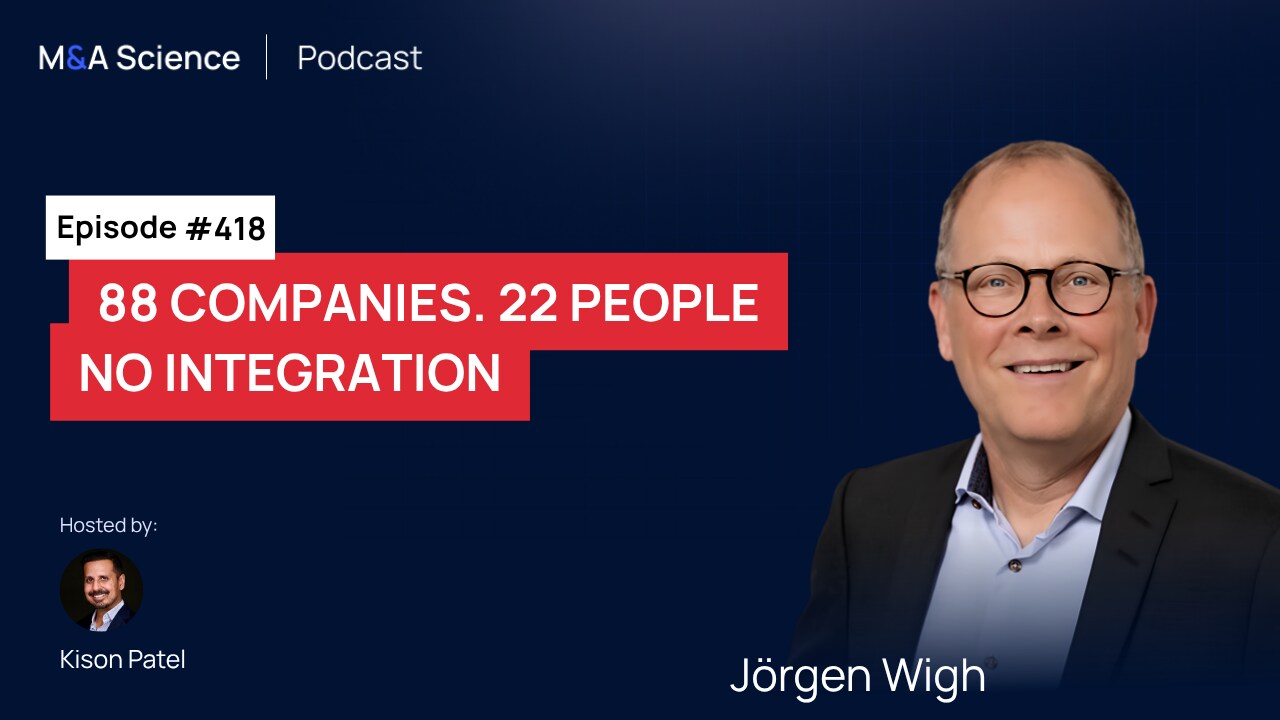
The Nordic Compounder Playbook: How Jörgen Wigh Runs 85 Companies With 22 HQ Staff and No Integration

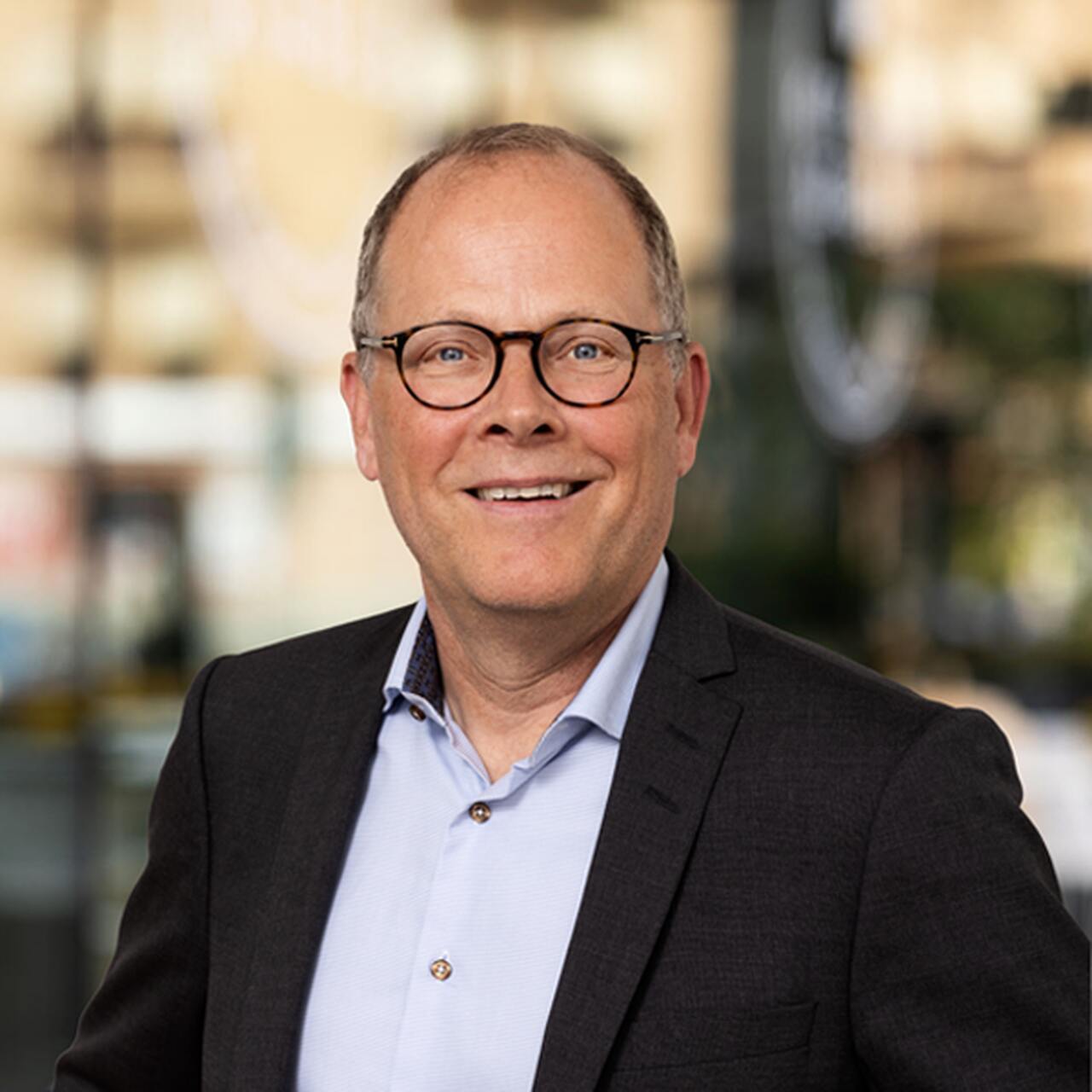
Jörgen Wigh, CEO of Lagercrantz Group

CEO Jörgen Wigh runs 85 niche B2B companies with a 22-person headquarters and no integration, no exits, and no value realization targets. If you haven't listened to Part 1, start there. It covers the deal model: 

How Lagercrantz sources proprietary deals from family businesses years before they go to market, how Jörgen holds pricing discipline at 4-8x EBITDA when private equity shows up at 11x, and how earnouts are structured to keep sellers motivated after close.

Part 2 is the operating culture behind it

Jörgen has fielded the same question for two decades: why does this model exist almost exclusively in the Nordics?  His answer points to culture, transparency, and 120 years of compounding heritage that cannot be compressed into a three-year hold. He also gets into deal governance, failure rates, cross-border friction, and what he would do differently today.


What You'll Learn

  • How Lagercrantz governs 85 autonomous companies with 22 people at headquarters
  • Why the person who sources the deal always stays on the board post-close
  • Why the Nordic compounder model exists here and almost nowhere else
  • What makes a founder walk away from a signed deal twice
  • What a 10% deal failure rate looks like when it's working as intended
  • Why building this from scratch today takes at least a decade
  • How cross-border deals get done when the SPA runs 30 pages instead of 300

If you’re dealing with governance across a decentralized acquisition portfolio, DealPilot (powered by M&A Science) has the M&A Competency Assessment to help you benchmark how well your team executes under acquisition pressure.

******************

This episode of M&A Science is presented by DealRoom.DealRoom just launched the only MCP server built for Buyer-Led M&A™ — so your AI and your deal data finally work together. Connect Claude, ChatGPT, or Copilot directly to DealRoom and let your AI read your pipeline, analyze due diligence documents, and automatically write findings back. See for yourself: dealroom.net/mcp

Lagercrantz Group (STO: LAGR-B) is a NASDAQ Stockholm-listed technology group of 85-plus niche B2B companies operating across Northern Europe, the US, China, and India. The group acquires and holds companies permanently, managing them under a decentralized model where each company operates autonomously under its own brand and local leadership. Acquisitions target 15-20%+ EBIT margins, priced at 4-8x EBITDA, funded entirely from internally generated cash flow.

Industry
Mechanical Or Industrial Engineering
Founded
2001

Jörgen Wigh

Jörgen Wigh is CEO of Lagercrantz Group (STO: LAGR-B), a NASDAQ Stockholm-listed technology group he has led for over 20 years. He completed 90+ acquisitions, delivered 15 consecutive years of record earnings per share, and funded every acquisition from internally generated cash. No capital raises. No exits. He is also Chairman of Bergman & Beving. Earlier in his career he spent a couple of years at McKinsey and co-founded Price Gain, a pricing and revenue management consultancy.

Episode Transcript

Deal Governance and Sign-Off Process

The division team finds a deal and an opportunity, and then we have discussions along the way. We have one discussion before putting in a bid for the company and another one before signing the LOI. Those are the two important checkpoints. My deputy and the core team are involved in those sign-offs, and before actually closing the deal, we also bring it to the board for every significant transaction. Below a certain threshold, the division team can move independently, but anything significant goes to the board.

We do not like the handover model. We want the people who did the deal to also take care of the company afterwards. We do not want someone to have made a deal that the operational people do not like. And the person leading the deal will very likely end up on the subsidiary board, so the accountability stays with them throughout.

Headquarters Team and Group Structure

Beyond the M&A function, we have financial people reporting to the stock market and handling investor relations, as well as a central sustainability resource. We are a publicly listed company, so those functions are necessary. In total, we are about 3,600 people in the group. Of those, around 20 to 22 are not working inside the operating companies. That is effectively our headquarters. The rest are all in the businesses.

Those 22 are not all in one office either. We are becoming increasingly international. We have one person in the UK, one in Finland, one in Denmark, one in Gothenburg, and one in the north of Sweden. The group is distributed, but deliberately lean.

Geographic Footprint of the Portfolio

Most of our 85 businesses are headquartered or have their subsidiary headquarters in the Nordics. We have around 10 to 12 companies headed out of the UK, a couple in Germany, and one operation headed out of the US. The others we think of more as extensions of the Nordic companies, whether that is an export arm, a distributor, or something similar.

For the M&A team specifically, the divisions are structured with regional coverage built in. The international division, for example, has one person working out of Stockholm, one in Copenhagen, and one outside London. It is not a matrix structure, but each person also carries some responsibility for a certain geography.

Why the Nordic Model Produces So Many Compounders

Many people ask me this, and it is not easy to answer. There are a number of circumstances that have made it advantageous to work out of the Nordics. One is transparency and openness. Another is our management style. It is very non-hierarchical, so people feel they can be open, and things can be managed from a distance. The Nordics have always been very international. Sweden is a small country, and because of that, we have always had to deal with all parts of the world. We travel a lot, and that helps when working with these types of companies across borders.

There is also heritage. The Bergman and Beving group, which we came out of, was founded in 1906 and has been on the stock exchange since 1976, doing similar things. A number of other companies have also been founded and built out of the Nordics doing this type of work. Over time, it has become a cluster with shared learnings and a real core competence in this region.

Nordic Culture and Flat Management

It is hard to fully describe. We do not have large wealth gaps. That means everyone has a chance, and the school systems are relatively equal. People here are not as financially driven as in some other places. They are more occupied with building something they feel is meaningful for themselves than with getting tremendously rich. That shapes how companies are run and how people relate to one another at work.

In terms of management style, when you look at the academic literature on these types of companies, frugality comes up a lot, and it is genuinely part of the culture. You are part of a big team. There is some equality to it, not all the way, but to some extent. People do not run things in a very hierarchical way. You do not find many Bentleys here. Everyone buys a Volvo. And it is a good car, but it does not stand out. That is actually reflective of something deeper.

What this means in practice is that people feel like colleagues rather than subordinates. It is about feeling that we are all building something together, and that everyone can be part of it. That is actually very challenging but also very motivating as an individual. You get a fair pay, you are not getting tremendously rich, but there is a phrase that fits well here: making big money slowly. And you also have very favorable work-life policies. Parental leave, for example, can be twelve months, shared between parents. You get happier people, and that adds to everything.

Cross-Border Deals and Cultural Differences

For us, it has always been very important to put business first. When you start getting into some of the Anglo-Saxon countries, the legal paperwork around deals becomes much more tedious, and that is a problem in some markets. We like to do a share purchase agreement in 30 pages. In the UK or North America, it is often 300 pages. That simplicity is a real advantage for us in the Nordics.

We try to be very business-oriented and get things done. We want the businesspeople negotiating the deal, not the lawyers. From LOI to a signed deal, we are targeting around six weeks. Some people do it in three days, but I do not think you can run proper due diligence that way.

The further away you get geographically and culturally, the more difficult it gets. We have decided to stay in the more Western type of world, where there are more cultural similarities. But even within that, there are nuances. Going from Stockholm to Gothenburg, there are some differences. Going to Denmark, a few more. Most of it is far more similar than different, though. The similarities are much stronger than the differences. Nuances tend to come out mostly when people disagree about something, and then the cultural framing gets used to explain it.

To bridge those gaps, we have not done anything dramatic. Over time, through learning English in school, traveling, and building international trade relationships, we are building bridges. It takes time. We get to know one another. At our annual MD conferences, we do team building that brings people together even when they come from different backgrounds. It is almost like building a culture of embracing other cultures as part of your company culture. And you need to carry that with you when you go out and approach companies, because you are introducing how your business works from day one.

Local Leadership in Each Market

Most business is local. We need to be local, and that is why we have made a deliberate decision to have someone leading in each of the countries we operate in, someone who is actually local. Among the same small number of people we have talked about, we still make sure there is a local presence. When you are acquiring owner-led, entrepreneur-led companies that are very local and very family-oriented, you really need to get along with and understand the people selling to you. That only works if you feel familiar to them.

Programmatic Acquirer vs. Roll-Up

In the academic world, there is a distinction between being a programmatic serial acquirer and a roll-up. In a roll-up, you are integrating. We are programmatic. We have a program and some key concepts around how we do things, but we do not integrate. Lifco, Addtech, and Indutrade are doing the same type of programmatic setup. The software equivalents, like Visma in Norway or Constellation Software in Canada, operate with a similar philosophy but in a different sector.

The beauty of what we are doing is that we can be quite opportunistic. We find a good company, we think we can handle it, it fits within our sector and scope, and we move. We are not consolidating one specific niche and building a story around synergies. The strength is in letting each local company make decisions close to its customers, its markets, and its employees. The motivation and empowerment that comes from that autonomy is so much stronger than any synergy you could engineer. That is the core thinking.

The 100-Day Plan

It depends on the situation. All investments are unique in a way. If we find something that genuinely needs to be fixed and we can identify it clearly, we might have a 100-day plan, something we work on together with the former owners. But if the improvement is incremental, we do not need that structure. We do still work with business plans in all our companies, putting them together once a year in each business. That is the ongoing discipline, regardless of how the acquisition went.

The Bergman and Beving Ecosystem

In 2001, the former Bergman and Beving became three companies through spin-outs: Lagercrantz, Addtech, and what was then called B&B Tools. B&B Tools eventually took the Bergman and Beving name back, and it is also listed. Then Addtech spun out Addlife, which is also on the stock exchange. B&B Tools spun out the Momentum Group, and the Momentum Group spun out Alligo. So there are actually six companies that share the same heritage and similar cultures. All of them are doing programmatic M&A in their own way.

My role on the Bergman and Beving board is about bringing our way of working, which is quite specific, and making sure there is alignment on how we like to run things. The main owners are the same across several of these companies, so there are some commonalities at the ownership level as well. In terms of potential conflict, we are careful. If we are exclusive on something, that is not shared. If he is exclusive on something, that is not shared either. It only becomes a point of discussion when we are looking at the same thing before exclusivity.

How the Role Has Evolved Over 20 Years

There have been different phases. The first phase was decentralization. The company had become somewhat centralized, with central IT systems and central warehousing. We needed to decentralize again and empower the people. I spent a lot of time finding the right people in all parts of the business. We had around 12 business units at the time. It was about challenging them, building plans with them, and in a couple of instances, changing the people when we needed a different profile.

Then it was about strategy and capital allocation criteria. We moved away from electronics with short product life cycles toward businesses with long product life cycles, stable cash flows, and proprietary products. That shift defined the M&A direction for the next decade.

The last few years have been about scaling and deepening decentralization, getting the divisions properly built out and the people in the companies thinking more like owners and investors. And alongside that, becoming more international, doing this in other geographies with somewhat different cultures from what we have been used to. It has been a number of phases, and genuinely quite fun.

Geographic Expansion Targets

When we look at our peers, we are the smallest of the four big Nordic compounders. Indutrade, Lifco, and Addtech are two to three times our size. So there is a lot of runway just to do what they have already done. They have also gone further in their geographical expansion, particularly into Central Europe and Germany. We have very few companies in Germany and would like to get going there. The Netherlands is another area, small on the map but densely populated with a lot of companies.

We have not been in Ireland, but we are active in the UK. And then many people are thinking about Northern Italy, the DACH area with Austria and Switzerland. Some companies are already there. We have looked, but have not done very much there yet. When you map out how many small and medium enterprises exist in those markets, there is so much more opportunity than we have touched. We went from the Nordics to the UK, and the UK alone is basically twice the size of our previous hunting grounds. Our geographic scope has tripled in just a few years.

Starting This Model From Scratch Today

There are a lot of opportunities out there, but it is also fair to say it takes years of hard work to get going. You do not have a name for yourself. There is a lot to build. I think you are looking at at least 10 years before you are truly up and running. If you are thinking more along the lines of a roll-up, consolidating a specific market, there are probably a few angles you could pursue. But that is different from being programmatic. The beauty of what we do is that we are fairly opportunistic. We find a good company, we think we can handle it, we fit it into our scope, and we move. That kind of patient, broad opportunism takes time and reputation to make work.

Being a Public Company and Stock Correlation

Each deal we do is actually very small relative to the full size of the group, so the stock performance should not correlate directly with individual acquisition multiples. Over a long period of time, if we raised our multiples significantly and sustained that for three years, it would make a difference. But the real correlation is to earnings per share. Our stock performance is very closely tied to earnings per share and cash flow per share growth over the long term.

With a portfolio of 85 companies, no analyst or investor is really going through and saying they like three specific companies and therefore they are buying Lagercrantz. That is not how it works. It is about performance over a long period of time. And that is why we do not have an exit horizon. We are not trying to make money out of exits. We are building earnings per share and driving the companies within the group. That also fits perfectly with being a perpetual owner, which is genuinely attractive in the M&A market. People like that we take good care of what we own and that we are in it for the long run.

A Deal That Took Three Attempts

We got to know a family south of Stockholm that had a really great company. It was a stable, well-run business, but they had also been working on building a new area for about ten years. We had long discussions and genuinely liked each other. But when we were about to close the deal, the owner felt he was not being paid enough and backed out. He got cold feet. It was his life's work. We went back, tried a second time, and again he backed out. Then, about a year to a year and a half later, we finally made the deal. It came down to being persistent and being patient. And the new area they had been developing for all those years, the one they had been building toward, that is the one that really took off after we acquired them. The company has basically doubled in performance since we bought it.

Failure Rate and Deals That Did Not Work

I have a couple of those as well. When you are buying 10 to 12 deals per year, you have a failure rate. You need to allow for that. We try to target a failure rate of around 10%, one out of ten. We have thought about how to measure it. One early measure was whether a deal added earnings per share in the first year, but I do not think that is a strong enough criteria on its own. A better lens is simply: are there deals we regret doing?

A couple of things tend to drive the regrettable ones. Customer concentration is something we are wary of. And disruptive technology coming around the corner is another. We are dealing with tech and industrial companies, so there will always be technology development and new things coming on stream. That is part of the game. But if it happens within the next three years of acquisition, we do not consider it a good deal. Sometimes it is just bad luck. Things looked very good, you thought you had things under control, and then something went wrong.

Staying Disciplined in M&A

The craziest thing I have seen in M&A is people who think they can do this at three times the pace, get a lot of capital behind them, and just go out and buy basically anything. That is really difficult to sustain. We have seen people doing due diligence in three days. That is just reckless. In auction processes, emotions take over, ego wants to win, and things can get out of hand quickly. The key is staying disciplined.

You really need to take the time to understand one another, buyer and seller. You need to spend time together and genuinely enjoy working together. And you need to believe that you can take someone's life's work and make something good out of it, or even better out of it. We are buying really good companies and trying to make them great. That is the transition we are managing, and it requires patience, consistency, and discipline above everything else.

Show Full Transcript
Collapse Transcript

Recent M&A Science Podcast Episodes

The Nordic Compounder Playbook: How Lagercrantz Bought 90+ Companies and Never Sold One
What Actually Works in M&A Integration | Intel, Coursera, Ansys & UKG
How Strong Partnerships Lay the Groundwork for Successful Acquisitions
M&A SCIENCE IS SPONSORED BY

M&A Software for optimizing the M&A lifecycle- pipeline to diligence to integration

Explore dealroom

Want to wear your M&A expertise?

Check out the M&A Science store.